


 Voyager Suite
 Breeze
 Virtuoso
 Investment Suite
 RentCafe
 CommercialCafe Suite
 Elevate Suite
 Procure to Pay Suite
  Energy Suite
 Aspire
 RightSource
 Care Suite
 Matrix
 WorkCafe
 Yardi Kube Suite
 ScreeningWorks Pro
  Yardi Corom



















With every change of season, you can expect new complaints about the thermostat setting. This isn’t (necessarily) because employees are grouchy. Studies suggest that previously recommended temperatu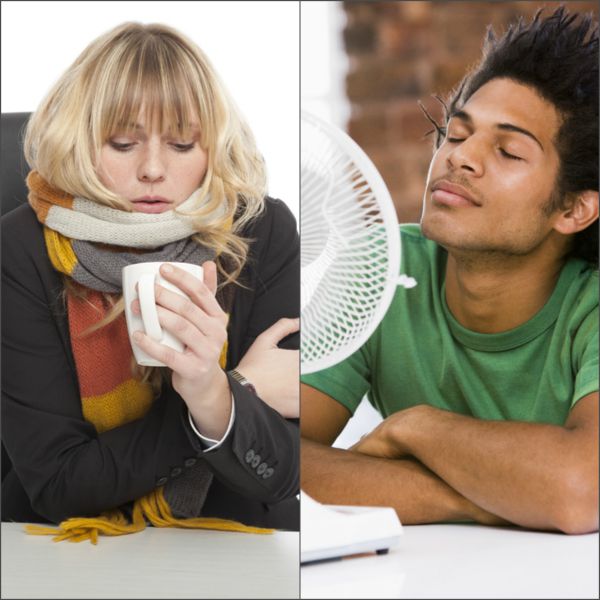 re settings are outdated and biased.
International reports vary on the optimal setting for thermal comfort in office buildings. The United States Department of Labor Occupational and Safety Administration recommends anywhere from 68°F – 76°F. Many offices implement seasonal temperature standards established by the American Society of Heating, Refrigerating and Air-Conditioning Engineers (ASHRAE) in the 1960s; though temperatures vary based on humidity and other factors, ASHRAE recommends thermal comfort temperatures as low as 67°F. Such low temperatures are problematic for two reasons.
Primarily, men set the standards for the workplace in the 1960s. Men’s thermal comfort temperature is lower differs from that of women. Studies published by the US National Library of Medicine reveal that men prefer an environment that is roughly 72°F whereas women are most comfortable in an environment of about 77°F. (Temperature preferences are influenced by metabolism rates and fat to muscle ratios.) The American workplace is more diverse than it was in the 60s, but thermal comfort guidelines have yet to catch up.
Changes in workplace norms also affect our comfort levels. Business attire isn’t what it was in the 1960s. Most noticeably, men and women wear fewer suits. Clothing materials have also changed. In place of traditional wool or gabardine, clothiers now manufacture a host of breathable business wear fabrics. When indoors, modern employees may feel cooler than their 1960s counterparts because of clothing choices.
Changing indoor temperatures could result in cost savings for a business. Decreasing the strain on central cooling systems results in lower utility costs. E Source estimates that HVAC systems require 42 percent of electricity and 86 percent of natural gas consumed by office buildings. Raising the temperature by just one degree can result in a 3 percent saving on cooling costs in warmer months.
Sticking with traditional temperatures could put a business at a financial disadvantage. In cooler temperatures, bodies exert energy to stay warm. For humans, that detracts from the energy available to focus and create. An ergonomics study conducted at Cornell University revealed that employees who felt cold made 44 percent more typing errors and were half as productive as they were when they felt warmer.
There is no catchall solution for achieving thermal comfort. There are, however, a few things that employers can do to improve thermal comfort in the workplace and make the most of cost savings.
- Ensure that your HVAC system is running efficiently and evenly throughout the building. Yardi Load Based Optimization System (LOBOS) does the legwork for you. It is an intelligent automated HVAC platform that improves heating and cooling efficiency throughout large commercial buildings and campuses.
- Research what your employees want. Issue a free, online survey for every floor of your building, and perhaps each wing as well. Use the data to determine the average temperature that is suitable for each region of the office.
- When employees still feel chilly, consider issuing jackets and throws that yield the company logo. Such items set a more professional atmosphere than hoodies and blankets brought from home. They also pose fewer risks than personal space heaters.
- Open a seating exchange. When possible, simply changing the office seating arrangement can quickly resolve temperature discomfort. Set a date and time for seating exchanges to take place and let teams make changes among themselves (with the IT crew on hand).