


 Voyager Suite
 Breeze
 Virtuoso
 Investment Suite
 RentCafe
 CommercialCafe Suite
 Elevate Suite
 Procure to Pay Suite
  Energy Suite
 Aspire
 RightSource
 Care Suite
 Matrix
 WorkCafe
 Yardi Kube Suite
 ScreeningWorks Pro
  Yardi Corom




















In a recent nationwide survey, Yardi office listings platform COMMERCIALCafé investigated what office employees across a variety of industries had to say about their work spaces.
We asked 2,107 respondents from a wide range of ages (from Baby Boomers to Gen Zers), working in different fields (from tech to retail, education and entertainment) some questions about what they view as productivity killers in their current workspace, and what improvements could make a difference.
The Quest for Privacy in the Office
Most Americans work in an open-plan office—roughly 70% of workspaces in the nation currently sport this design. Employers have many reasons to love open-plan offices, as they are cost-effective and grant great flexibility in accommodating a growing workforce. Nevertheless, from our respondents’ point of view, there are several grievances that the offices they work in fail to address.
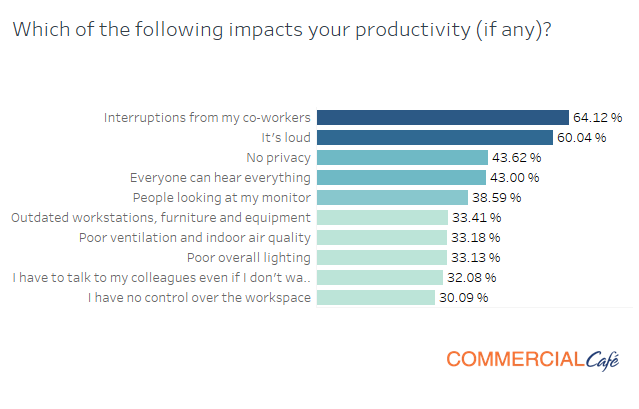
What stands out most is the employees’ concern regarding the lack of privacy and high noise levels. Roughly 64% signaled they had trouble concentrating due to interruptions from their coworkers, while things like outdated equipment, air quality or poor lighting were raised as issues by around 33% of respondents. Designers are trying to address some of these problems and their current range of solutions combine the use of sound-absorbing materials for flooring, walls and furniture, panels and partitions to create a sense of privacy, and soundproofing quiet rooms or pods. Plants in the office can also contribute to bringing down noise levels and improve air quality, not to mention the added aesthetic appeal they provide.
Millennials and Baby Boomers Agree: Private Offices Are Still the Best
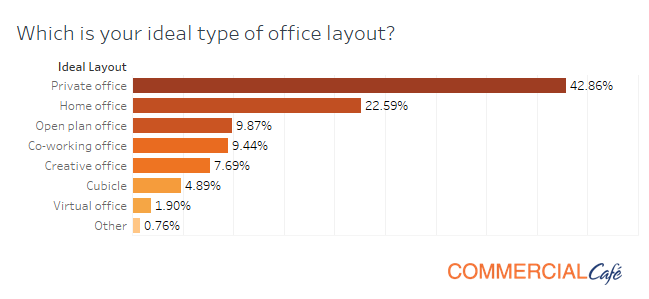
We know open-plan office designs are widespread, but does that mean they are also popular? Only 9.87% of surveyed workers indicated this layout as their ideal workspace. By comparison, roughly 48.9% of respondents cited private offices as their ideal workspace, and 22.6% said they would be happy working from home. Although these choices might look unrealistic in terms of sheer costs and space distribution, they confirm workers’ reported issues in the workplace: the drain on productivity caused by distractions and the overall lack of control over their environment.
To see what else bothers employees in the office and get more details about the survey’s methodology, visit the COMMERCIALCafé blog.