

 Voyager Suite
 Breeze
 Virtuoso
 Investment Suite
 RentCafe
 CommercialCafe Suite
 Elevate Suite
 Procure to Pay Suite
  Energy Suite
 Aspire
 RightSource
 Care Suite
 Matrix
 WorkCafe
 Yardi Kube Suite
 ScreeningWorks Pro
  Yardi Corom



















Some people hate shopping. Like myself . The idea of spending numerous hours walking in and out of countless stores, not finding the items I want, but buying some which I had no idea I needed, exhausts me mentally and physically. The day e-commerce became available, I felt relief. I no longer had to waste my time on never ending shopping trips, but could get what I needed without leaving the comfort of my couch.
In the meantime, the industry has evolved. So have its shortcomings. One shortcoming is related to the wait: you place the order and then you wait. Or you stress out not knowing if you’ll be at home when the delivery guy shows up. Because you don’t like having your packages left on your doorstep. Perhaps you should have used your office address? What if your boss announces you that you have to travel on the exact day your package is due to arrive?
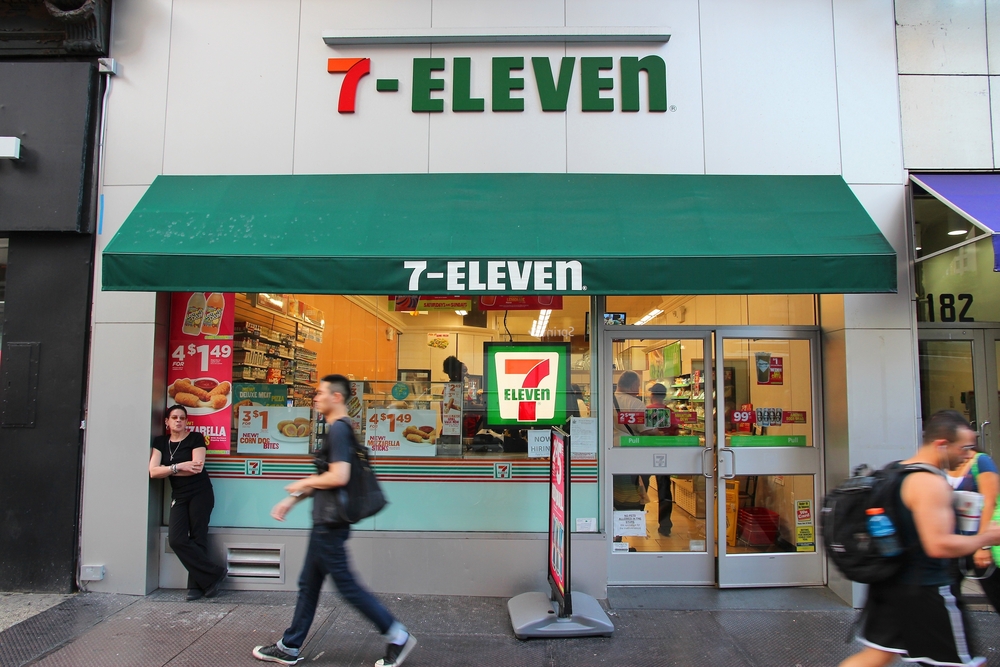
To help solve this problem, Amazon and 7-Eleven have come up with the delivery locker system in 2011. The program proved to be highly successful, as recently 7-Eleven announced it made space for more lockers at a number of its North American stores where customers can pick up packages from FedEx, and United Parcel Service. In fact, any retailer that ships via UPS or FedEx has the locker as a delivery option. Moreover, the company said they will install Wal-Mart lockers in six locations in Toronto.
The locker system is quite simple: anyone who shops online from a retailer who uses UPS or FedEx has the option of having their package sent directly to the nearest 7-Eleven for pick-up. When the package is delivered, the customer receives an email notification along with a bar code to his smartphone. At the 7-Eleven he’ll scan the bar code and will receive a PIN number. Once the PIN number is punched in, the customer can retrieve the package.
This strategy proves to be viable for many and the adage ‘Thank Heaven for 7-Eleven’ just got a whole new meaning. Regardless if you’re traveling or simply not at home throughout the day, you can order your item, select the 7-Eleven that is (or will be) nearest to you, and you’re all set.
Walmart’s move towards lockers comes as a surprise for many. Counting the retailer’s approximately 4,000 stores in the US (compared to 7-Eleven’s 10,000) one would think that Walmart’s existing network is extensive enough. It could be that it has to do with the location for each of the two retailers: Walmart’s stores are not in the dense urban areas where e-commerce volumes are growing rapidly, while 7-Eleven’s are.
At the same time, this seems like a risky move for 7-Eleven as each locker is as big as one large shelf, holding dozens of lockers, and this could mean thousands of dollars in lost sales each year, reports the WSJ. Yet again, the locker system can be part of a broader strategy, one that makes the customers keep on returning to the store as more commerce moves online. And who is better than 7-Eleven to hold these lockers?