


 Voyager Suite
 Breeze
 Virtuoso
 Investment Suite
 RentCafe
 CommercialCafe Suite
 Elevate Suite
 Procure to Pay Suite
  Energy Suite
 Aspire
 RightSource
 Care Suite
 Matrix
 WorkCafe
 Yardi Kube Suite
 ScreeningWorks Pro
  Yardi Corom



















Net-zero building has come a long way since its nascent stages. Designers and engineers once struggled to find methods that allowed occupants to live with modern comforts without relying on unsustainable energy sources. Passive solar heating, solar panels, hydropower and wind turbines posed viable solutions for indoor climate control and power generation but each reaches limitations in select environments. Green builders needed a power source that could be used on buildings across the globe regardless of climate, urban, or rural settings.
All eyes turned to the little green slime that might just save the day.
Algae are plenteous, hardy organisms that can survive in extreme conditions. They need only a bit of water and sunlight to thrive; by simply doing what they do best, algae create the type of energy that can produce electricity, purify water and freshen the air. Innovative scientists have been exploring algae’s potential for well over a decade. What they’ve found has caught the attention of green builders.
Exhibition superstars Splitterwerk Architects is in the process of constructing its latest zero-energy housing community, BIQ. The BIQ building harvests power through the use of a bio-adaptive façade that houses countless microalgae. The façade is composed of louvres that allow the algae to flourish in natural light. (Imagine a building clad in tiny, narrow fish tanks and you’re thinking in the right direction.) Within their transparent homes, the algae transform the sun’s energy into chemical energy through photosynthesis; the algae consume carbon dioxide and release oxygen, creating fatty lipids in the process that can be converted into practical energy for the building’s use. By using algae as a source of power, the BIQ can operate with minimal reliance on the grid and great cost-savings to its inhabitants.
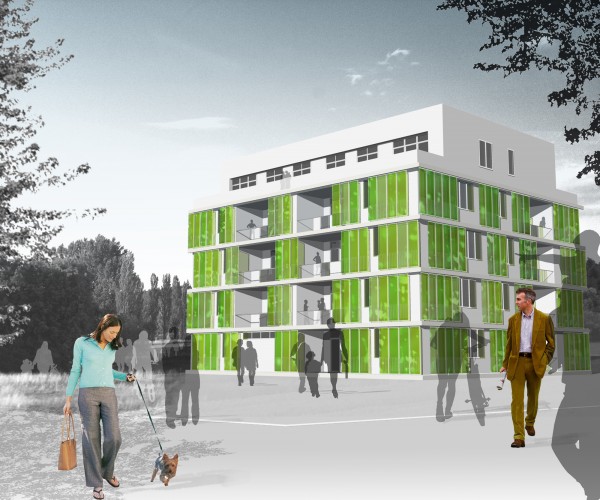
Though BIQ will be the first building to use algae-powered biofuel for a residential building of its scale, Splitterwerk Architects certainly are not the first to consider putting algae to work. MIT’s Isaa Berzin also explored algae as an energy source. The single-celled organisms are used to fuel the site’s main power plant while reducing carbon dioxide emissions by up to 82 percent. Berzin is using his own system that runs on “algae soup,” marketed by his company GreenFuel Technologies Corp.
On the opposite coast, HOK-Vanderweil’s Process Zero gave a mid-century federal building in Los Angeles a truly green makeover. A bio-reactor pumped with algae would serve as the southern face of the building. Thriving on ample sunlight, the algae-powered reactor would simultaneously clean wastewater, purify the air, and produce heat and electricity for the building.
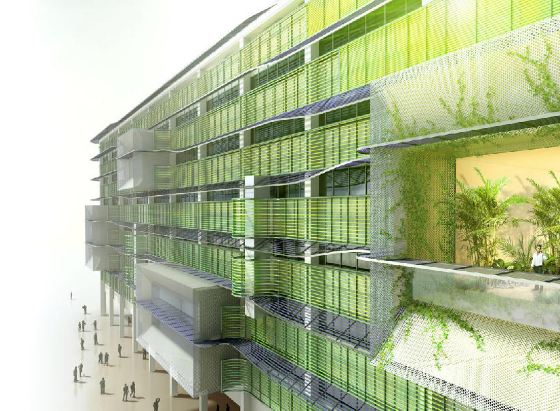
Algae-driven biodiesels are proving to be feasible energy sources for residential and commercial properties alike. Researchers have expressed increased interest in such alternative fuel sources, steadfastly seeking ways to make bio-reactors more affordable for common use in businesses and homes.
What potential drawbacks do you foresee in the use of biofuels within the industry?