Voyager Suite
 Breeze
 Virtuoso
 Investment Suite
 RentCafe
 CommercialCafe Suite
 Elevate Suite
 Procure to Pay Suite
  Energy Suite
 Aspire
 RightSource
 Care Suite
 Matrix
 WorkCafe
 Yardi Kube Suite
 ScreeningWorks Pro
  Yardi Corom



Recent decades have brought about numerous developments in the structure of glass: layered, stronger, lighter, and even energy-producing varieties are used in homes and offices around the globe. Getting rid of glass altogether may be the next big advancement in transparent building materials.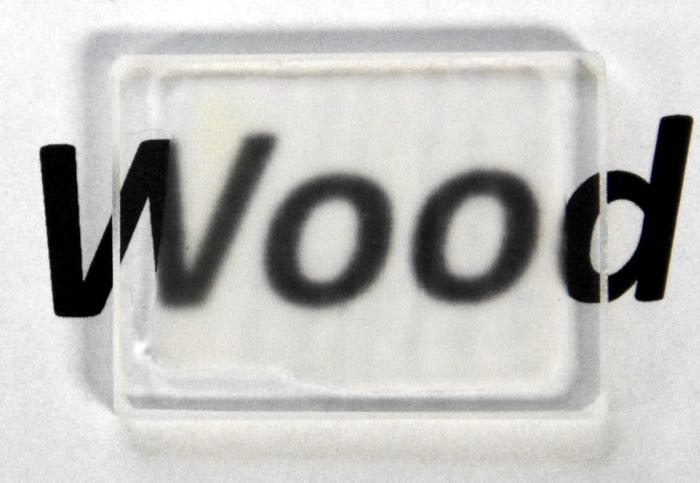
Glass has natural disadvantages. It is a poor thermal insulator, which requires HVAC systems to work harder, and architects to work smarter. Glass is also a relatively weak material.
Wood, on the other hand, is a natural insulator. It moderates indoor temperatures with less drain on the HVAC. Wood is also one of the strongest, renewable, and most versatile building materials around.
Wood is so versatile, in fact, that it can now become transparent.
Sweden and the Unites States have both made large strides in transparent wood research. In both countries, engineers begin by putting wood through a bath of sodium hydroxide, additional chemicals, and hot water. This process (also used in the production of paper) strips the wood of lignin, the polymer that gives wood its color.
The countries vary in what comes next. Lars Berglund, a researcher at Sweden’s KTH Royal Institute of Technology, injects the wood with a polymer. Dr. Liangbing Hu of the University’s Department of Material Science and Engineering injects the channels with an epoxy. Both end with nanoscale tailoring that usher the wood from whitish towards transparent.
The resulting products are similar. The wood becomes translucent, up to 85 percent transparent. The final product is also stronger than the original. As researchers refine their technique, they’re getting closer and closer to true transparency.
The wood composite has roused interest with several major manufacturers. Both engineers believe that they are only a few short years away from bringing transparent wood products to market.
Possible applications for the material are endless. The wood possesses high transmittance qualities that make it ideal for solar cells. When layered with solar cells, the cell can absorb more light and increase efficiency by 30 percent. The wood composite’s lightweight and durable nature make it an ideal material for buildings, cars, and an array of electronic devices.
The biodegradable character of wood is both an advantage and a disadvantage. Biodegradable materials are better for the environment. Transparent wood could replace glass bottles and some plastics.
Polymers and epoxies delay the decomposition of the wood, making it longer lasting than traditional wood—but not as long-lasting, potentially, as glass, brick, and steel. The more durable the wood composite becomes, the less biodegradable, and vice versa.
Hu believes that the wood could be made to exceed the strength of steel per weight, yet still remain lighter than steel. When achieved, this transparent wood could drastically change familiar skylines.
Both countries are further developing the technology for scale and commercial manufacturing.