Voyager Suite
 Breeze
 Virtuoso
 Investment Suite
 RentCafe
 CommercialCafe Suite
 Elevate Suite
 Procure to Pay Suite
 Energy Suite
 Aspire
 RightSource
 Care Suite
 Matrix
 WorkCafe
 Yardi Kube Suite
 ScreeningWorks Pro
 Yardi Corom


Though 11 Dupont Circle commanded a more-than-respectable $89 million when it trad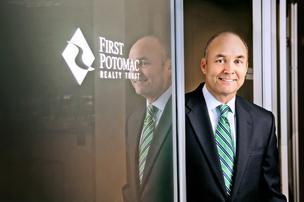 ed in September, it was far from the biggest or most expensive property to change hands this year in Washington, D.C. A number of other office properties in the capital have commanded several times as much. Whatever it appeared to lack in size, however, the deal made, up in savvy. Not only is the 155,713-square-foot building fully leased, its submarket, Dupont Circle, ranks among the most vibrant urban neighborhoods in the country.
And the deal allowed its new owner, Yardi client First Potomac Realty Trust of Bethesda, Md., to reach a major milestone. The acquisition of 11 Dupont Circle boosted the REIT’s holdings in the District past 1 million square feet. Once principally an owner of flex and industrial properties, the 17-year-old REIT has transformed itself in recent years into one of the rising office investors in the nation’s capital.
To this hyper-competitive market Donatelli brings a lifetime of local knowledge, diverse executive experience and a reputation for decisiveness. “He is a very good dealmaker,” said Robert Cohen, CEO Of Washington-based Perseus Realty L.L.C. “He doesn’t lollygag around when he sees something he likes.”
First Potomac is teaming with Perseus on its biggest development project to date. The partners are targeting a 2015 start for Storey Park, a planned $280 million mixed-use development in the city’s NoMa (North of Massachusetts) neighborhood. Located two blocks from the Union Station transit hub, Storey Park will consist of 60,000 square feet of ground-floor retail topped by 280 residential units and about 350,000 square feet of office space.
That project is a vote of confidence in a market that has endured its share of ups and downs during the past several years. After confirming its stature in the elite circle of U.S. investment markets, Washington was posted disappointingly flat fundamentals. Nevertheless, Greater Washington offers an economy of increasing diversity and a growing reputation as a magnet for the young people who create much of its energy. No less significant, it has built-in demand flowing indirectly and directly from the federal government.
Given these advantages, the Washington market seems to have lost little luster among investors. Indeed, some “seem to be almost agnostic in the prices they pay,” said chairman & CEO Douglas Donatelli. “I’ve never seen such a disconnect between leasing fundamentals and the demand to buy properties.”
In a market where sovereign wealth funds, insurance companies and other high-powered players like to flex their muscles, First Potomac’s goal of acquiring top quality assets poses no small challenge. So rather than going head-to-head with deep-pocketed institutional players and international joint ventures for the market’s largest properties, First Potomac takes another approach. As Donatelli summed it up, “If we can find a property where we believe we can add some value in the long run, that’s what we’ll target.”