


 Voyager Suite
 Breeze
 Virtuoso
 Investment Suite
 RentCafe
 CommercialCafe Suite
 Elevate Suite
 Procure to Pay Suite
  Energy Suite
 Aspire
 RightSource
 Care Suite
 Matrix
 WorkCafe
 Yardi Kube Suite
 ScreeningWorks Pro
  Yardi Corom



















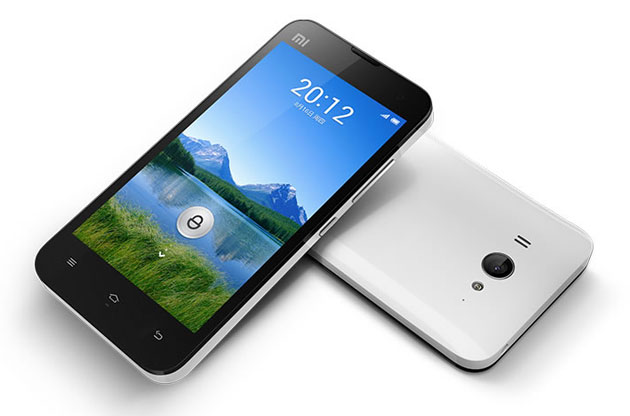
A new word is on the lips of many in the tech world and it’s not one easy to pronou nce by us, westerners – Xiaomi – pronounced She-ow Me. It means Little Rice in Mandarin and is the product of Xiaomi Tech, a three-year old startup led by serial entrepreneur Lei Jun.
Jun and his company are often compared to the late Steve Jobs and Apple, a comparison he recently told CNN he was tired of. He is also famous for co-founding Joyo.com, which he sold to Amazon in 2004 for $75 million, and for chairing the board of UCWeb, China’s largest mobile Web browser.
Xiaomi drew attention through a few essential factors in the industry: an intense growth, an impressive team, savvy marketing, attention to the followers, but firstly, a product that satisfies the high-end demands of the clients. All of these made Xiaomi Tech a relevant competitor on the national market because after just three years in business, the company gained on Lenovo’s market value of $10 billion (which is twice Blackberry’s current figure of $5.5 billion).
Although it only started selling smartphones in October 2011, Xiaomi amplified with 5 million smartphones the 15 million pieces it had set as sales goal for 2013. Considering that after announcing the last phone in April the company received over 7.4 million pre-orders for the device, the new goal doesn’t seem farfetched. Currently the company holds 5 percent of China’s smartphone market, above Apple’s 4.8 percent, but still well behind Samsung (17.6 percent), Lenovo (12.3 percent), ZTE (8.7 percent) and Huawei (8.6 percent).
In an interview for TechCrunch in October 2011 Lei Jun explained with a touch of humor one side of his strategy to take on Apple: merging Microsoft, Google, and Motorola. And that is what he started doing by employing people from the cited companies. First there was Lin Bin, former Vice President of Google’s China’s Engineering Research Institute and Engineering Director of Google; the latest addition that made Xiaomi more popular than ever in the western world is Hugo Barra, Android’s former Vice President of Product Management. Barra will add value through his international experience: before earning a master’s degree in computer science for the Massachusetts Institute of Technology he grew up and was educated in Brazil. In 2008 he joined Google as product manager on the mobile team in London for three years and then he relocated to the Mountain View office, but before this had a similar role at speech-recognition company Nuance Communications.
The marketing strategies Xiaomi chose show disposition towards innovation. The company decided to sell the phones directly from China’s top micro blogging platform that has over 400 million members – in December 2012, within two days of the announcement, they had sold 50,000 smartphones in five minutes and had 1.3 million reservations. The handsets run a custom Android skin, MIUI, that Xiaomi engineers update weekly with new tasks and features extracted from customer opinion. The crowdsourcing model has been one of the major drivers for the company’s success, contributing to the word-of-mouth marketing and creating loyal clients, believes the founder. “If I don’t feel the phones are good enough, I want to change it. But I myself don’t have the power to change the phones,” Xiaomi CEO Lei Jun said in an interview in May. “For example, if I gave my advice to Nokia’s R&D vice president, will he change it? No, he won’t change it.”
On September 5th Xiaomi launched a new version of smartphone, the MI3, named also MiPhone 3. The device flaunts either a 1.8GHz Tegra 4 processor (on China Mobile’s TD-SCDMA network) or Snapdragon 800 CPU (China Unicom and China Telecom) that boost performance with a good 40 percent over the previous MI2S. The 5-inch 1080p IPS LCD built by Sharp or LG with “ultra-sensitive touch” works even when the user is wearing gloves. Specs include 2GB of RAM, 16GB or 64GB for storage, a 3,050mAh battery, double camera of 13MP/2MP, and NFC. Price-wise, the 16GB version runs at $327 and the 64GB one at $408. The MIUI Product Convention thread announces that the Xiaomi MiCloud Service has now 10.5 million users, while MIUI ROM reached 20 million users.
Is this the Apple of China?