


 Voyager Suite
 Breeze
 Virtuoso
 Investment Suite
 RentCafe
 CommercialCafe Suite
 Elevate Suite
 Procure to Pay Suite
  Energy Suite
 Aspire
 RightSource
 Care Suite
 Matrix
 WorkCafe
 Yardi Kube Suite
 ScreeningWorks Pro
  Yardi Corom



















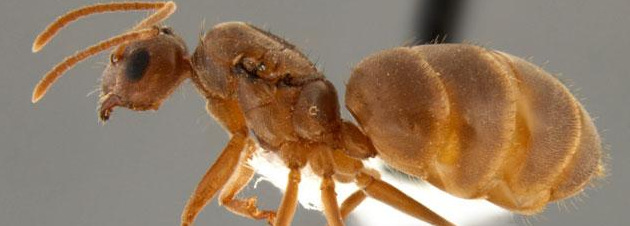
Just as the bed bugs craziness fades from the media, a new pest is working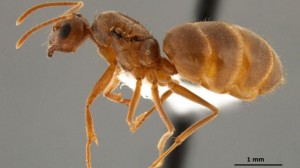 its way through the nation. Tawny crazy ants have caused more than $146.5 million in property damage in the state of Texas alone. And they’re spreading.
Nylanderia fulva, simply called the crazy ant, is a tawny-colored, hairy critter that’s about 2mm long. Some males have wings (but the merciful Mother Nature has at least prevented them from flying). Unlike most ants that move with a calculated sense of purpose, crazy ants move erratically. They enjoy the warm, humid climates of the Gulf Coast and have been spotted on properties in Florida, Mississippi, Louisiana, and Texas.
Crazy ants do not pose the traditional threats. Their bite may leave an itchy red spot but they don’t have a stinger and will rarely cause an allergic reaction. They do not swarm when their mound is interrupted because they don’t form mounds. That’s the beginning of the problem.
Rather than building an easily visible mound, crazy ants love settling into nooks and crannies. They don’t stick to the rocks and trees outside. The like to enter crawl spaces, cabinetry, car engines, potted plants, pipes, and even hide out in electrical equipment—and therein begins the costly property damage.
The crazy ants seek the cozy warmth of electrical boxes. Invariably, one of them will be electrocuted by a hot wire. Rather than just dying peacefully, the corpse releases pheromones that summon all of the ant’s family, friends and neighbors to come avenge its death. If the ant had been attacked by an enemy, the battle cry would be worthwhile, helping to protect the group and the queen. But since the enemy is a live wire, the carnage continues, which often causes short circuits and damage.
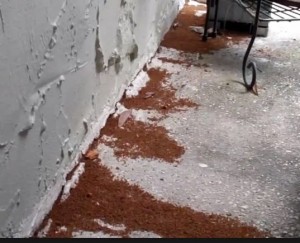 In other cases, crazy ants can cause damage simply by their numbers. They congregate in groups so tight that they resemble dirt (left). The massive clustering of their little bodies can cause congestion in pipes or cause electrical components to overheat.
In the long term, the presence of crazy ants can lead to ecological problems. If your property prided itself on the lovely birds and butterflies in your gardens, you may be seeing fewer of those flying beauties. Crazy ants can eliminate entire fire ant colonies—which is excellent according to popular opinion—but they also eradicate other arthropods and small insects like spiders, centipedes and caterpillars. Animals that feast on tiny insects will lose their food source and have to seek it elsewhere. Inconveniently, birds don’t eat crazy ants.
Researchers at Sam Houston University are working to create an eradication plan but have yet to release a definitive solution. Using current methods, a pest control specialist can issue three or four treatments of Termidor SC or Phantom Termicide/Insecticide over several months to keep the critters under control. But crazy ants are resistant to most commercial treatments. And even if one community is destroyed, another will likely form. Colonies tend to have multiple queens, so they rebuild quickly.
To minimize damage to your property, consider a few best practices:
Stay on top of your landscaping After spring storms, promptly clear fallen leaves and limbs to minimizing crazy ants’ favorite outdoor hideouts.
Improve drainage Crazy ants breed quickly in moist areas. Leaky exterior pipes should be fixes. It’s also a good idea to improve drainage throughout the property; if there are areas of the landscape that tend to pool, consider creating a rain garden that will control moisture.
Minimize moisture inside the building Tawny Crazy ants enjoy tight spaces with moisture. Aim to keep basements and crawl spaces dry. In the humid southeast, it may be helpful to use dehumidifiers throughout the building.
Remove food sources Crazy ants eat like any other ant. They are particularly drawn to sugary substances. Hummingbird feeders and birdbaths are like buffets to crazy ants. Find ant deterrent models or drain them, leaving them up for decorative purposes only until the ant problem is under control. Though ants find creative ways into units, it may be helpful to ensure that windows and doors are properly sealed.
Proper disposal Avoid dumping infested debris in another part of the property. This will only cause the crazy ants to spread.