Voyager Suite
 Breeze
 Virtuoso
 Investment Suite
 RentCafe
 CommercialCafe Suite
 Elevate Suite
 Procure to Pay Suite
  Energy Suite
 Aspire
 RightSource
 Care Suite
 Matrix
 WorkCafe
 Yardi Kube Suite
 ScreeningWorks Pro
  Yardi Corom



















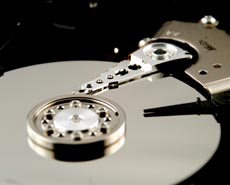
Solid-state drives are not new, but price has previously kept them beyond the reach of consumer electronics technology. The format originated in the ’50s and matured through use in the supercomputers of the ’70s and ’80s. SSDs use integrated circuit assemblies to store data. There are no moving parts, and they retain their data even without electrical power. Memory capacity is steadily increasing, which has made possible the format’s debut into the consumer market.
Today, affordability is driving the switch for mainstream users. By the end of the year prices for SSDs in the most popular PCs could fall to around $1 per gigabyte, a level which is seen as the tipping point that pushes consumers through the door en masse – at that price, they are no longer faced with the unpalatable choice of supplementing their $800 computer with a SSD that costs almost half as much.
With the price barrier removed, the advantages of SSD memory over rival formats are almost irresistible:
- faster transfer rates
- instant boot
- lesser power requirement
- much improved resistance to shock & vibration
- less heat generation
- smaller size
- completely silent
The world received an early preview of the coming dominance of SSDs in November of last year, when flooding in Thailand shut down the factories that produce nearly half of the world’s hard disk drives. With hard drives in short supply and future orders in question, the market panicked and rush orders for SSDs inundated manufacturers. In the six months since the floods the hard disk market has demonstrated signs of recovering… but once consumers are accustomed to the advantages of SSDs, will any of them be willing to go back to magnetic?
Hard drives will be harder to find in the future, but they will not completely disappear. Magnetic memory still offers the highest capacity and applications that value that capacity over speed (such as servers) will still have a demand for hard disks. The robustness and reliability is still in magnetic memory’s favor as well. The price break for a hard drive is still very enticing to consumers – $0.10 to $0.50 per gigabyte is practically giving storage away for free.
The switch to SSD format is not necessarily a sea change for consumers, and it will not rewrite the rules for businesses in general or real estate management in particular. But watching a technology come of age is always exciting, and the advances that build upon solid-state drive technology may be the ones that reshape the world in the decade to come.
Are you considering SSDs for your business? What additional proof points are needed before these devices can become mainstream?