Voyager Suite
 Breeze
 Virtuoso
 Investment Suite
 RentCafe
 CommercialCafe Suite
 Elevate Suite
 Procure to Pay Suite
  Energy Suite
 Aspire
 RightSource
 Care Suite
 Matrix
 WorkCafe
 Yardi Kube Suite
 ScreeningWorks Pro
  Yardi Corom



















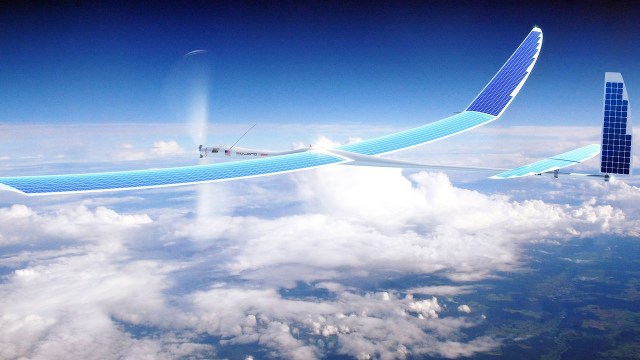
Google’s playfulness in domains ruled by curiosity and ambition is never-ending. The giant seems to be working on a new and very secretive project dubbed SkyBender, as reported by The Guardian. This is a new Internet-in-the-sky program designed to bring the next-generation 5G net work.
work.
Unlike Project Loon, but part of the Google Access team that includes the balloon project, SkyBender wants to use outfitted drones with millimeter wave transceivers.
First, let’s have a look at these millimeter waves—they are longer than infrared waves or x-rays, but shorter than radio waves or microwaves. The millimeter wave region of the electromagnetic spectrum corresponds to radio band frequencies of 30GHz to 300GHz, sometimes called the Extremely High Frequency (EHF) range.
These are thought to be the future of high-speed data transmission technology and the backbone of 5G mobile networks. Millimeter waves have a shorter range than that of the mobile phone signal, they fade sooner and are easily disrupted by weather conditions like rain, fog, and snow. However, using the so called phased array antennas and focused beams, Google and others could potentially focus the transmissions over greater distances. But this requires a lot more power. The FCC said that 5G millimeter wave networks could hit speeds between 1GBps and 10GBps, or up to 40 times more than today’s 4G LTE systems.
In case you’re wondering why millimeter waves, Jacques Rudell, a professor of electrical engineering at the University of Washington in Seattle and specialist in this technology, justified to The Guardian: “The huge advantage of millimeter wave is access to new spectrum because the existing cellphone spectrum is overcrowded. It’s packed and there’s nowhere else to go”.
Google is not the first to work with millimeter wave technology and drones. In 2014, DARPA—the research arm of the U.S. military, announced a program called Mobile Hotspots with the mission to make a fleet of drones able to provide 1GBps communications for troops operating in remote areas.
Google seems to already have drones buzzing around the airspace of Spaceport America in New Mexico, where the SkyBender project shares a hangar with Virgin Galactic. Currently, the drone hardware appears to be an “optionally piloted” commercial aircraft called the “Centaur” along with solar-powered drones from Google Titan, the entity Google created after it acquired drone maker Titan Aerospace in 2014.
Both aircraft are “plane like” drones with wings and front-facing propellers. The solar powered Titan drones have wingspans of up to 50 meters (164 feet). Google has permission from the FCC to continue testing the drone-internet system in New Mexico until July.