


 Voyager Suite
 Breeze
 Virtuoso
 Investment Suite
 RentCafe Suite
 REACH by RentCafe
 CommercialCafe Suite
 Elevate Suite
 Procure to Pay Suite
  Energy Suite
 Aspire
 RightSource
 Care Suite
 Matrix
 Yardi Kube Suite
 ScreeningWorks Pro
  Yardi Corom

















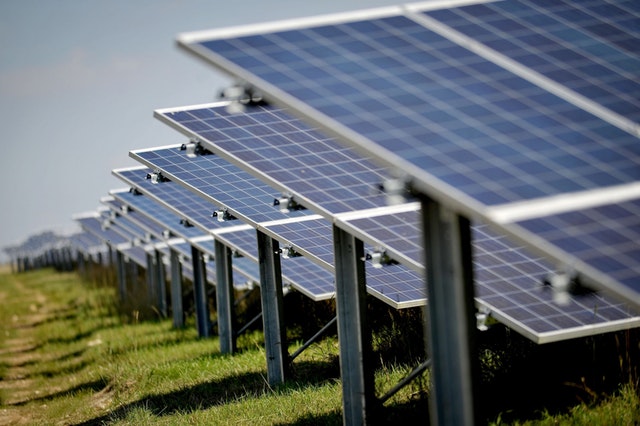
The energy industry is reinventing itself in combined efforts to limit as much as possible the effects of climate change. Evermore photovoltaic farms emerge around the world, evermore wind projects spring up onshore, offshore near shore, and even air borne—the industry is still in perfecting mode, new ideas turning into new ways to harvest green energy. There’s one more breakthrough in the solar energy world, coming from the scientists at the University of British Columbia.
The Canadian researchers managed to develop a bacteria-powered solar cell that can convert light to energy, regardless of the weather, working as efficiently in dim and bright light, which could be a step forward in places like British Columbia and parts of northern Europe where overcast skies are common. Called biogenic cells, these solar cells made of living organism, are intriguing. This new cell generated a current stronger than any previously recorded from such a device.
This is the first time when researchers connected nine biological-solar (bio-solar) cells into a bio-solar panel, in an attempt to replicate photosynthesis—the natural way to convert light energy into chemical energy that is later released to fuel the organism’s activities. Previous endeavors were centered around extracting light-sensitive dye from genetically modified bacteria, but the process proved to be quite costly, complex and also not quite safe as during the extraction process, the dye was often damaged by the solvents used.
The Canadian team tried something different—they used E.coli genetically engineered to produce ample amounts of lycopene—the molecule that gives tomatoes their orange-red tint. Now, some of you might startle at the sight of E.coli, but this bacteria was chosen for cloning due to its low mutation and recombination rates. Lycopene is considered an excellent natural dye and is fantastic at harvesting sunlight. Their coloring is very well suited for a broader range of weather conditions. So the researchers coated the bacteria with a mineral that could act as a semiconductor, and applied the mixture to a glass surface.
The coated glass acts like an anode at one end of their cell and generated a current density of 0.686 milliamps per square centimeter—a clear improvement on the 0.362 achieved by others in the field.
“We recorded the highest current density for a biogenic solar cell,” said Vikramaditya Yadav, a professor in UBC’s department of chemical and biological engineering who led the project. “These hybrid materials that we are developing can be manufactured economically and sustainably, and, with sufficient optimization, could perform at comparable efficiencies as conventional solar cells.”
Although cost savings are difficult to estimate, Yadav believes their process reduces the cost of dye production to about one-tenth of what it would be otherwise. However, the most prized process would be one that doesn’t kill the bacteria, so it can produce dye indefinitely. Perfecting this process would prove beneficial not only to the energy efficiency field, but also in other areas including mining, deep-sea exploration and other low-light environments.