

 Voyager Suite
 Breeze
 Virtuoso
 Investment Suite
 RentCafe
 CommercialCafe Suite
 Elevate Suite
 Procure to Pay Suite
  Energy Suite
 Aspire
 RightSource
 Care Suite
 Matrix
 WorkCafe
 Yardi Kube Suite
 ScreeningWorks Pro
  Yardi Corom



















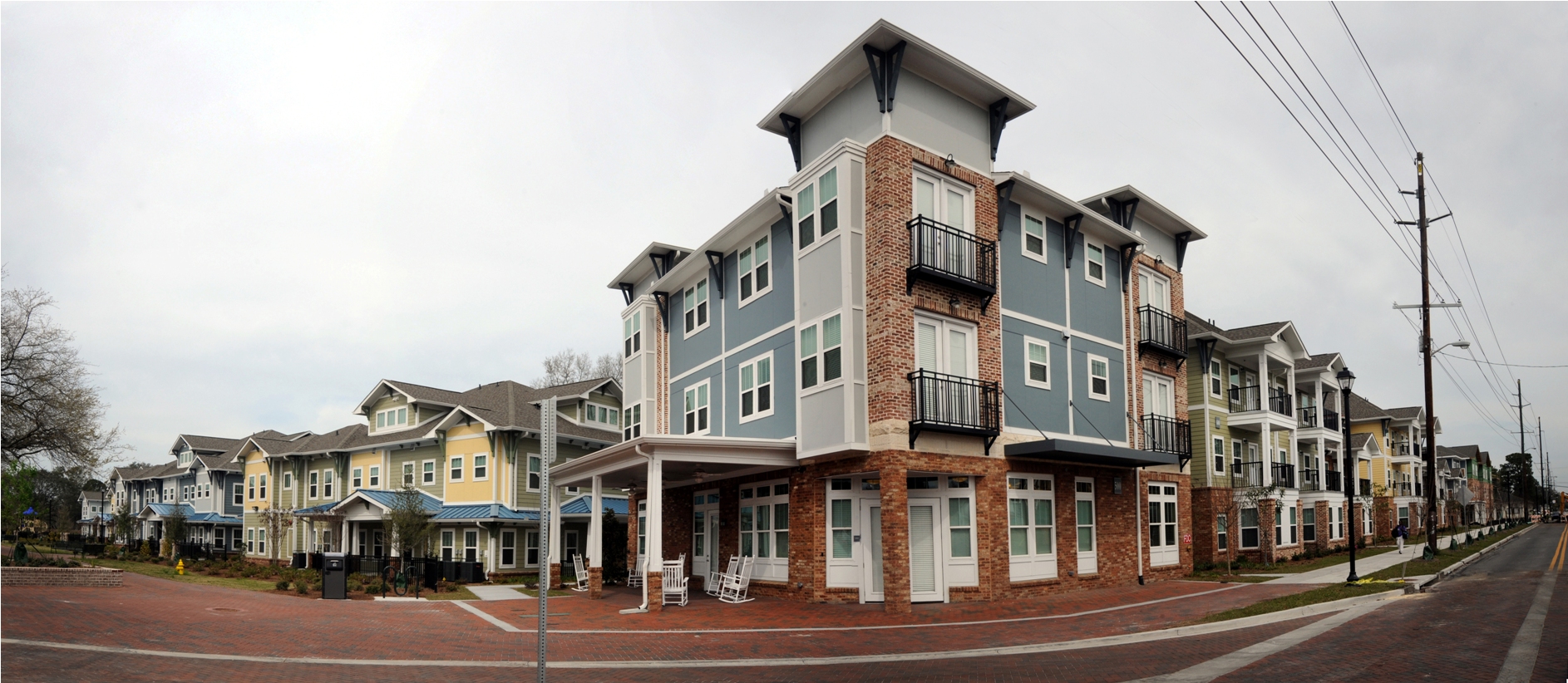
Every morning at 8am, the construction crews begin working on the neighborhood behind my home in an Atlanta suburb. The sounds of hammers, trucks, and lively music are a sign that the housing market is recovering. While these lots will make lovely homes for some, their $250,000+ price tags exclude buyers most in need of housing relief. The nationwide shortage of affordable housing is getting worse.
There’s no housing shortage. Skylines receive new jewels every quarter as developers jump on the luxury high-rise trend. Even single-family builders are stretching their legs with post-recession vigor. Big spenders have an increasing number of options. Middle- and low-income families, however, are the ones scrambling to find shelter while making ends meet.
There are two notable causes for the affordable housing shortage: the widening chasm between incomes and rents, and investors’ lack of interest in affordable housing.
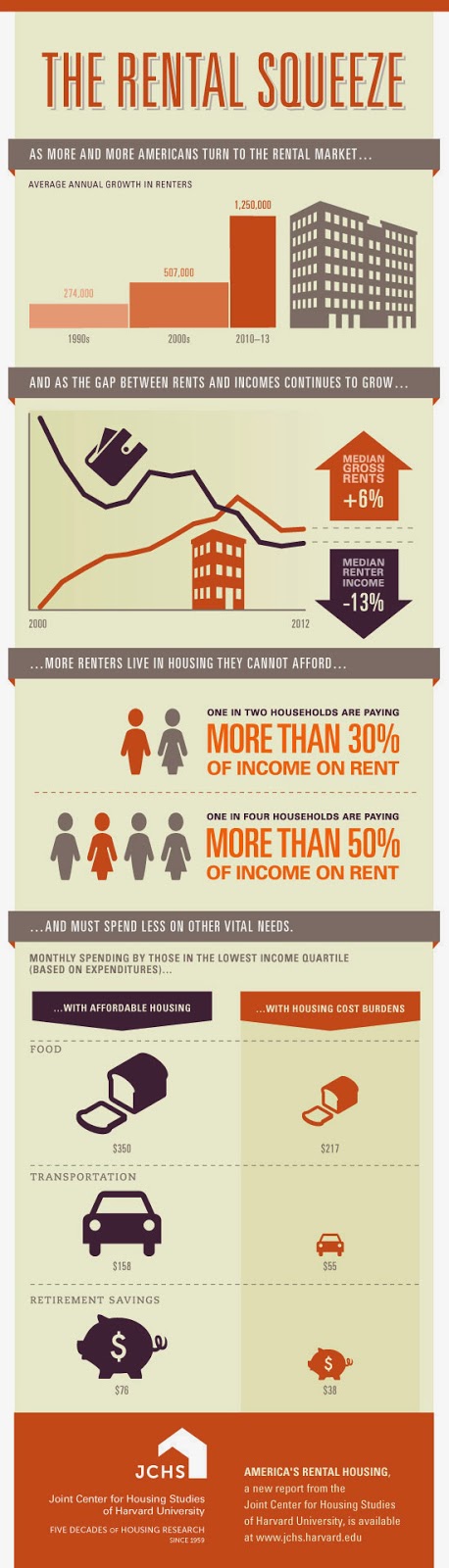
The gap between incomes and rents grows wider. Research conducted by the Joint Center for Housing Studies (JCHS) shows median incomes plummet by 13 percent between 2000 -2012. While incomes decreased, the population of extremely low-income renters doubled in less than a decade. Of renters making less than $15,000 per year, 24 percent reported hardships with lease payments.
Rent—not transportation, electronics, or clothing—is continually absorbing a larger amount of American’s income. The lowest-income renters are scaling back on food, sacrificing about $100 each month to pay for housing. The JCHS study revealed that half of today’s renters spend more than 30 percent of their income on housing; one in four families spend more than 50 percent. A study by National Low Income Housing Coalition (NLIHC) places that percentage closer to 75 percent.
Incomes shrink while rent rates are continuing to increase. From 2000-2012, median rents skyrocketed by 6 percent. Rising costs can’t dissuade renters. There aren’t many other options. The influx of post-recession renters to the market drives fierce competition, turning even the priciest, tiniest rentals into a battleground. In these cost wars, low-income renters have been left out of the negotiations.
There simply aren’t enough affordable units to go around. NLIHC estimates that there are 10.1 million extremely low-income households and only 5.6 million housing units to accommodate them. Almost half of these household contain children and are at high-risk for homelessness if more housing is not created.
But affordable housing has not been on the top of many agendas. In 2008, President George W. Bush initiated The National Housing Trust Fund. The fund would create, maintain, and renovate affordable rental housing communities. Though he gained support from both sides of the aisle, the trust never received funds.
Affordable housing faces local setbacks as well. Some local governments and community groups refuse to approve affordable housing in their areas. Their concerns are rooted in antiquated views and stigmas surrounding affordable housing.
Home Matters was created in 2013 to educate local powers about the new and improved face of affordable housing: eco-friendly, stylish neighborhoods that are rich with engaging community programs and increasingly self-sufficient tenants. Nearly 200 local and national organizations have joined forces under Home Matters. They hope to change public opinion about affordable housing and in turn increase support and funding for these vital communities.