Voyager Suite
 Breeze
 Virtuoso
 Investment Suite
 RentCafe Suite
 REACH by RentCafe
 CommercialCafe Suite
 Elevate Suite
 Procure to Pay Suite
  Energy Suite
 Aspire
 RightSource
 Care Suite
 Matrix
 Yardi Kube Suite
 ScreeningWorks Pro
  Yardi Corom

















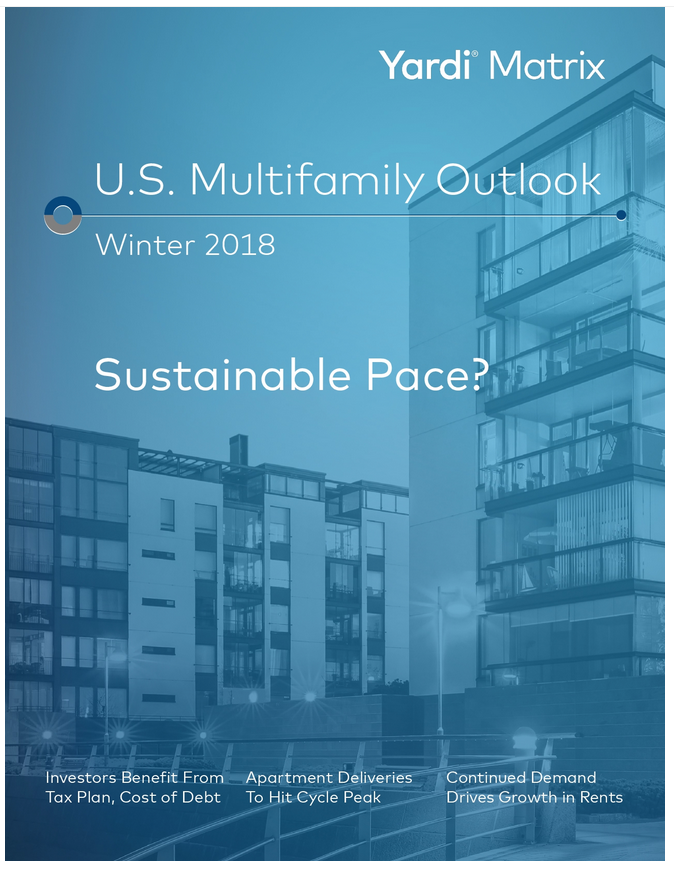
What does a largely stagnant year for the multifamily industry in 2017 imply for this year? How will economic, tax policy, demographic, capital market and supply factors impact the segment? These and other issues comprise the content of “Sustainable Pace?”, a new market analysis compiled by Yardi Matrix.
The Yardi Matrix research team’s study suggests that there’s enough steam left in the sector’s bull run to make multifamily a solid, dependable real estate market segment over the next 18 to 24 months for property owners, residents and investors.
Rent growth cooled in 2017 amid robust development and occupancy levels began to trend down in some metros. On the upside, demand for multifamily shows no signs of slowing in 2018, as the renter cohort ages 20-34 keep growing while retirees continue to downsize. Urbanization and other social trends will also conspire to keep rental demand steady.
Economy: Bright Prospects
With regard to the national economy, “we expect another year of moderate economic growth, which potential upside from the recently passed tax reform bill that will lower tax rates and encourage corporate investment,” the report says, adding, “Job growth could slow as the labor market nears full employment, but should remain healthy.” A 17-year high in consumer confidence plus healthy housing, automobile, manufacturing and other segments are additional positive indicators.
Rent Growth: Modest but Steady
Following multifamily’s significant deceleration in 2017, the report forecasts rent growth in the 2.5% range nationally this year, with increases in supply and lack of affordability in high-cost metros checking growth. “Supply is the biggest headwind,” the report says, forecasting apartment deliveries in 2018 to increase by 20% to 360,000. This new supply will outstrip demand and prompt a slow slide in the occupancy rate.
Sacramento, Calif., is the projected leader in rent growth in 2018 due to low inventory growth and job market growth. The report predicts high growth rates as well in Colorado Springs, Colo., Phoenix, California’s Inland Empire and Salt Lake City. Metros with the slowest project rent growth are Oklahoma City, Washington, D.C., New Orleans, Portland, Ore., and Baltimore, with New York City expected to be the only major metro to contract due to its fast addition of multifamily units coupled with existing high rents.
Capital Markets: Safe Haven
On the capital market front, “capital forces remain robust,” the report says, as debt availability is “as strong as ever, led by Fannie Mae and Freddie Mac, which could hit another year of record lending.” Both equity and debt capital remain abundant in the market, which multifamily “still a popular investment class due to its sterling performance—the segment has had several years of above-trend rent growth, high occupancy rates and extremely low levels of distress. Even if the rate of growth cools off, multifamily should be a safe investment over the next few years.” Multifamily mortgage debt rose 2.1% through in the third quarter of 2017, up 2.1% year-over-year. Apartment property sales totaled $126.7 billion through November, down 7.8% year-over year from the cycle peak in 2016.
Learn how real estate investors use Yardi Matrix to make quicker, more informed decisions.