Voyager Suite
 Breeze
 Virtuoso
 Investment Suite
 RentCafe
 CommercialCafe Suite
 Elevate Suite
 Procure to Pay Suite
  Energy Suite
 Aspire
 RightSource
 Care Suite
 Matrix
 WorkCafe
 Yardi Kube Suite
 ScreeningWorks Pro
  Yardi Corom



















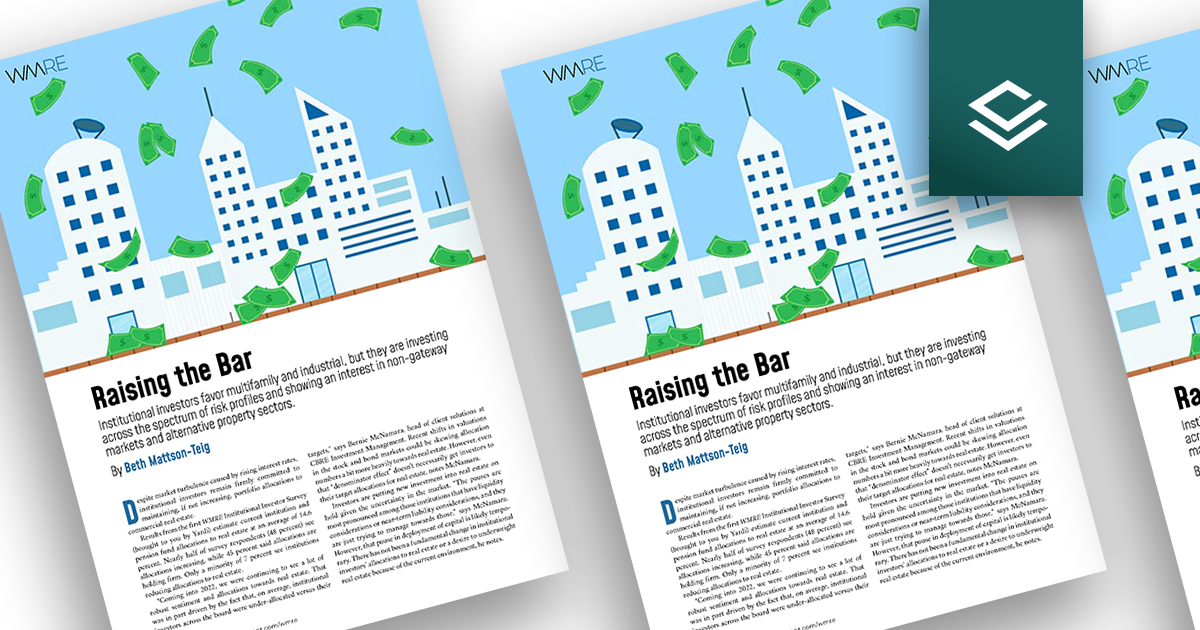
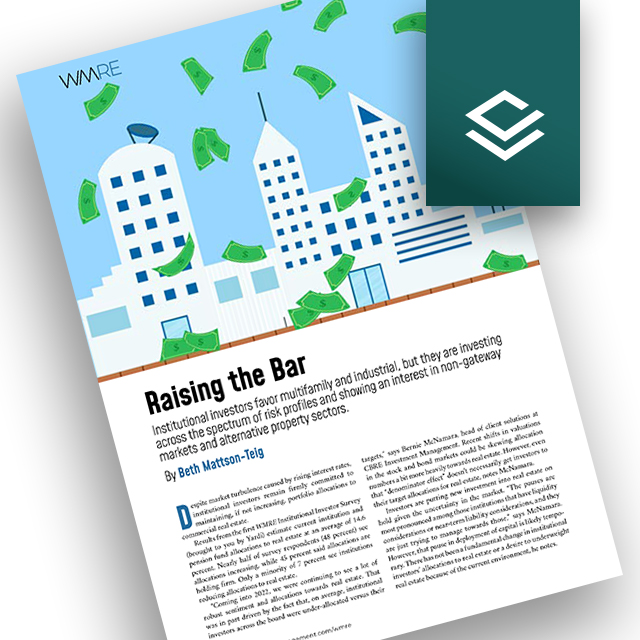
Real estate represents stability and remains a cornerstone investment option in an era of increasing economic uncertainty, according to the inaugural WMRE Institutional Investor Survey of real estate industry participants across the U.S. The survey was sponsored this year by Yardi and originally published by WMRE magazine.
As a measure of the industry’s standing as an investment asset, more than 90% of respondents to the survey – which canvassed high-net-worth family advisors, private real estate investors, pension fund managers, institutional investors and life insurance companies – anticipate holding or increasing their real estate allocations. Just 7% anticipate that institutions will reduce such allocations.
Instability in the stock and bond markets has spurred investors to value real estate for its status as a stable asset, a portfolio diversifier, a hedge against inflation and a steady source of income. “Real estate tends to be less volatile and more consistent” than stocks and many other assets, the report notes.
Multifamily, industrial widely favored
The survey also reveals institutional investors’ favored real estate markets, with multifamily (preferred by 67% of respondents), industrial (47%) and data centers (36%) leading the way. The $154.6 billion in multifamily sales in the first half of 2022 represented about 41% of all property transactions in that period, with industrial coming in second with $74.6 billion.
The office and retail sectors were rated favorably by 14% and 12% of survey respondents, respectively, reflecting the reduced need for central physical work locations during the pandemic.
Broadening geographic focus
Whereas institutions traditionally favored the six gateway cities – San Francisco, Los Angeles, New York, Boston, Washington and Chicago – investment activity now encompasses some 25 other top markets, principally Sun Belt areas with more affordable living. Growing metros previously considered secondary, such as Phoenix, Seattle and Denver, are receiving more attention from investors.
“What COVID did was really rip off the cover and accelerated the movement of … institutional money to those places where people were already moving,” Jeff Adler, vice president of Yardi Matrix, notes in the report.
Investment tech’s role expands
Although only 35% of survey respondents use an investment management system to calculate promotes, waterfalls and other structures, “a number of factors are driving technology further into the industry,” the report says, including growing demand from institutional clients for real-time data and analytics.
This set of expectations has given rise to automated investment management systems that connect information from the asset level through the investment structure to the investment with a previously unattainable degree of efficiency.
Other topics covered in the report include:
- Key factors that influence institutional investors’ allocations to real estate.
- The investment vehicles most and least in favor among real estate investment managers.
- Niches within the office world that are impressively outperforming the general office market.
- The annual rate of return that institutional investors seek from their real estate investments.
Get details on these issues and more by downloading the full WMRE report.