Voyager Suite
 Breeze
 Virtuoso
 Investment Suite
 RentCafe
 CommercialCafe Suite
 Elevate Suite
 Procure to Pay Suite
  Energy Suite
 Aspire
 RightSource
 Care Suite
 Matrix
 WorkCafe
 Yardi Kube Suite
 ScreeningWorks Pro
  Yardi Corom


With 40% of the U.S. west of the continental divide classified as being in “exceptional drought” and two-thirds of the world’s population facing water shortages by 2025, an old tactic is getting a fresh look.
Authorities around the world are increasingly employing artificial weather modification to spur more rainfall. That usually means seeding clouds, which involves using aircraft or drones to add small particles of silver iodide, whose structure is similar to ice, to clouds. Water droplets cluster around the particles, and when enough droplets combine, they become heavy enough to fall to the ground as precipitation. Another technique, hygroscopic seeding, uses salt to encourage water droplets to collide and produce rain in warm clouds. The practice doesn’t create clouds but maximizes rain from naturally occurring ones.
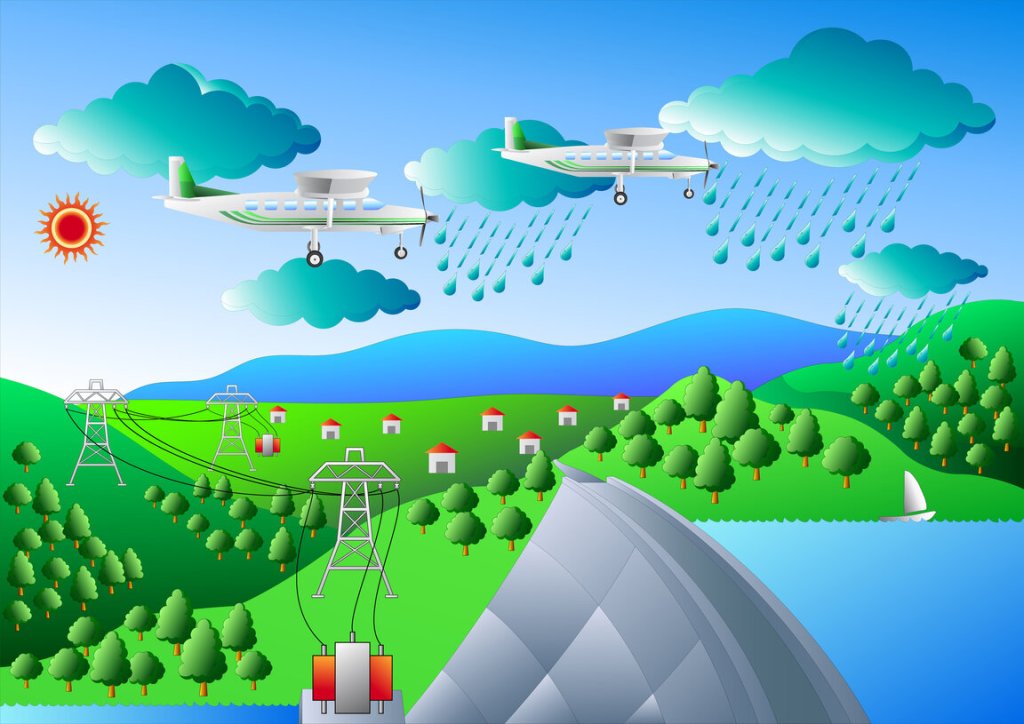
“With drought still a major concern, cloud seeding is an encouraged technology for Wyoming to use based on our drought contingency plan,” says Julie Gondzar, an official in the state’s water development office. “It is an inexpensive way to help add water to our basins, in small, incremental amounts over long periods of time.”
“Rain enhancement has the potential to offer a more cost effective, sustainable and much less environmentally damaging option than other solutions, such as desalination” that relies on energy-intensive thermal desalination plants and produces waste that can damage marine ecosystems, adds Alya Al Mazroui, director of the United Arab Emirates’ Research Program for Rain Enhancement Science.
Induced rain carries benefits, risks
The practice of cloud seeding dates to the 1940s. Today, more than 50 countries around the world have weather modification programs. China reportedly cleared the skies by shooting salt-filled bullets into clouds ahead of the 2008 Beijing Olympics. In 2017 alone, the UAE, which gets about 4 inches of rain annually, carried out 242 cloud seeding missions, primarily hygroscopic seeding in the mountains to add water to aquifers and reservoirs. The UAE also uses electrical charges from drones to manipulate the weather and force rainfall across the desert nation.
Benefits of seeding include boosting agricultural production with economic and living standard increases, along with the ability to limit storms that cause mass destruction and even generate smaller, less damaging hailstones.
Potential risks of using chemicals to induce rainfall include the possibility of contaminated water, ocean acidification, hazardous consequences to people from silver iodide exposure and abuse as an adversarial tactic. And the practice doesn’t solve the systemic causes of drought and can be tricky to implement at the desired place and time.
But, says Rick Ledbetter, a soil and water district official in New Mexico, “I believe that there will be no choice in the future but to look at weather modification.”
Technology adds a new dimension to the decades-old practice. “What has changed is we now can be pretty sure that it works because of new types of radar and vast increases in computing power” that allow scientists to build virtual clouds and simulate the silver iodide application before the process is executed, according to Dan Baum, a Colorado journalist and author of “Summon the Rain,” an examination of cloud seeding published in Scientific American.
Debate over the merits of cloud seeding figures to continue as global climate pressures intensify. “I don’t think cloud seeding will solve the problem but it can help,” says Katja Friedrich, a University of Colorado researcher. “It needs to be part of a broader water plan that involves conserving water efficiently, we can’t just focus on one thing.”