

 Voyager Suite
 Breeze
 Virtuoso
 Investment Suite
 RentCafe
 CommercialCafe Suite
 Elevate Suite
 Procure to Pay Suite
  Energy Suite
 Aspire
 RightSource
 Care Suite
 Matrix
 WorkCafe
 Yardi Kube Suite
 ScreeningWorks Pro
  Yardi Corom



















With rising demand, workforce challenges and evolving resident expectations, the senior living industry is under pressure to rethink how to operate. The 2026 Changemakers of senior living are leading the way.
The annual Changemakers series, celebrating innovators in the senior living industry, kicks off this month. Each conversation published in Senior Housing News (SHN) honors a bold leader who is rewriting the rules of senior living and keeping residents at the center of a changing industry.
As sponsor for the eighth year in a row, we’re proud to join SHN in presenting the 2026 class of honorees. Their interviews reveal how these leaders got to where they are today and their insights into challenges faced by the industry.
Congratulations to the 2026 Changemakers
Scott Hames, chief operating officer, Blake Management Group
Wayne Sanner, CEO & president, Silverado
Chris Bird, president & CEO, LCS
Loe Hornbuckle, founder & CEO, Sage Oak Assisted Living & Memory Care
Allison Pendroy, CEO, WesleyLife
Paul Boethel, CEO, Watermark Retirement Communities
Quintin King, president & principal, Brightwater Senior Living
Nick Stengle, CEO & director, Brookdale Senior Living
Scott Hames, 2026 Changemaker
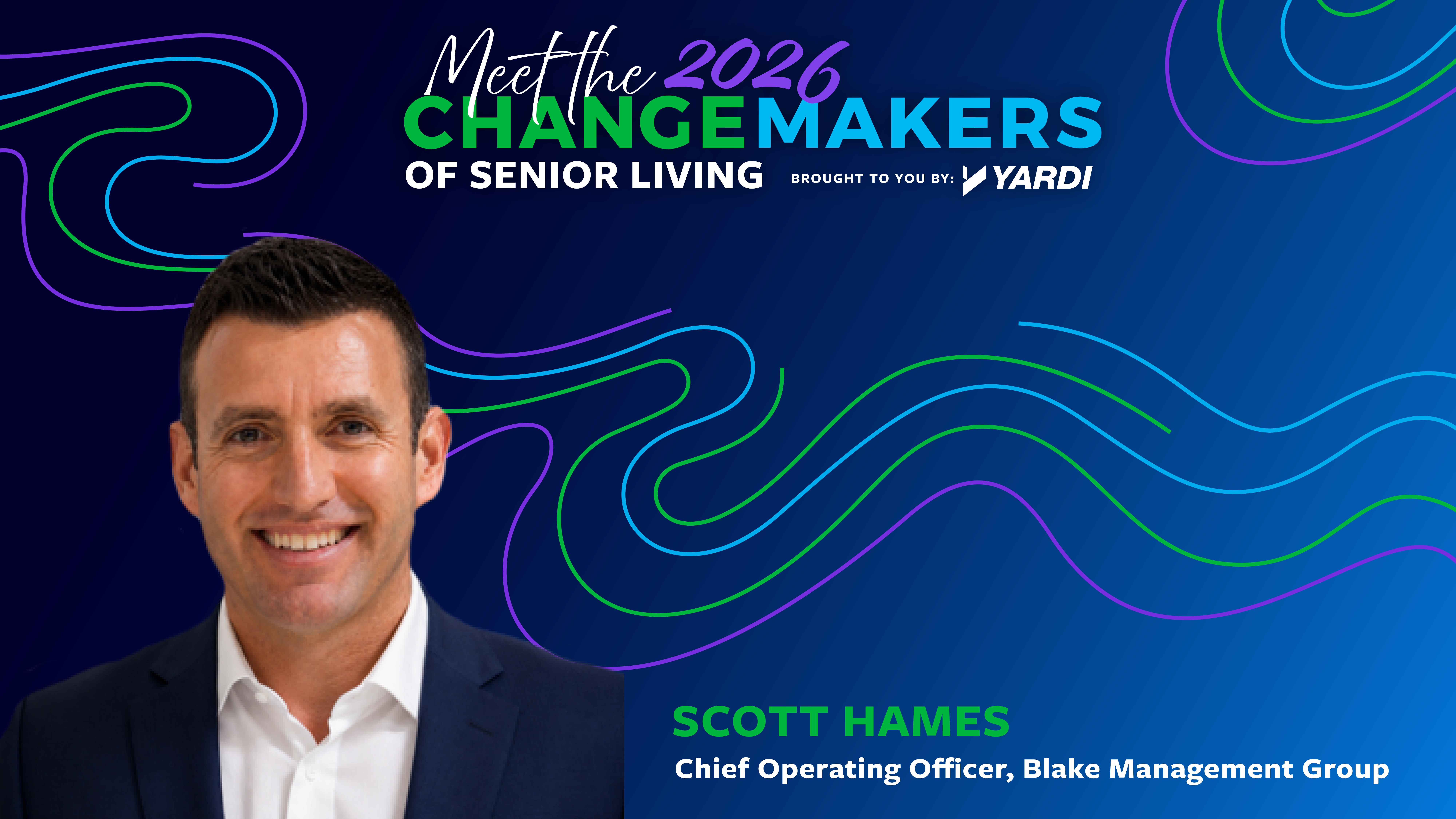
Scott Hames, chief operating officer at Blake Management Group, a Yardi Senior Living Suite client, guides every decision with a simple question: “What would we want for our own family?” He’s focused on shifting his organization from a task-oriented to a relationship-oriented mindset, investing in leadership development and using technology to reduce administrative burden so teams have more time with residents. For Hames, the operators who will thrive are those who can balance strong financial discipline with an exceptional experience for both residents and associates.
Get the highlights here and explore the full interview.
How should senior living operators adapt for the next generation of older adults?
I believe our industry needs to move away from the idea that senior living is simply a place people go when they can no longer live independently. The next generation of residents will expect choice, independence, purpose and personalization. They will want to bring their lifestyle into the community with them rather than feel like they are leaving their lifestyle behind.
At Blake Management Group, we think about this in terms of creating communities where people can continue to live meaningful, active lives. That means rethinking dining, programming, technology, apartment design, wellness, transportation, social engagement and family communication.
It also means recognizing that the resident is often not the only decision-maker. Adult children play an enormous role in choosing a community, and they want timely communication, transparency and confidence that their loved one is genuinely known as an individual.
Ultimately, I want our Blake communities to create the reaction “I want to live there” rather than “I guess I need to move there.” That distinction is incredibly important. Our goal at BMG is to create communities that people are excited to be part of, not simply places they feel they need when they reach a certain point in life.
Is the senior living industry moving quickly enough to change in the ways it needs to? Why or why not?
I would say no, not yet.
There are certainly operators who are moving quickly, and I see some very innovative things happening throughout our industry. But collectively, I believe senior living remains too slow to change.
We operate in a highly regulated environment, care for a vulnerable population and face significant risk when implementing change. We cannot experiment in exactly the same way other industries can. But I also think we sometimes allow regulation, risk and “the way we’ve always done it” to become excuses for not moving forward.
At Blake Management Group, I try to challenge our team to ask whether a process or practice still makes sense simply because it has always been done that way.
Technology, consumer expectations, the workforce and health care are all evolving rapidly. Senior living has to evolve with them.
The operators that ultimately succeed will not necessarily be the organizations with the largest buildings or the most communities. I believe they will be the organizations that can adapt quickly while maintaining quality, compassion and consistency.
What senior living technology do you find most promising or interesting right now?
Artificial intelligence is probably the technology opportunity I find most exciting for our industry — not simply because it is the latest trend, but because of its potential to give time back to our associates.
Our leaders and caregivers spend enormous amounts of time documenting, entering and searching for information, generating reports, scheduling and completing administrative tasks. If technology can reduce that burden, we can give our people something incredibly valuable: more time with residents.
At Blake Management Group, I am particularly interested in technology that can improve family communication, identify changes in resident needs earlier, improve workforce planning, streamline documentation and reduce administrative responsibilities.
But I have a very simple test for technology: Does it make life better for the residents, the families or the Blake teams?
If it doesn’t, then we probably don’t need it.
Technology should enhance the human experience, not replace it. The most successful senior living companies will use technology to make their people more effective while preserving the human connection that makes senior living special.
Sean Kelly, 2026 Changemaker
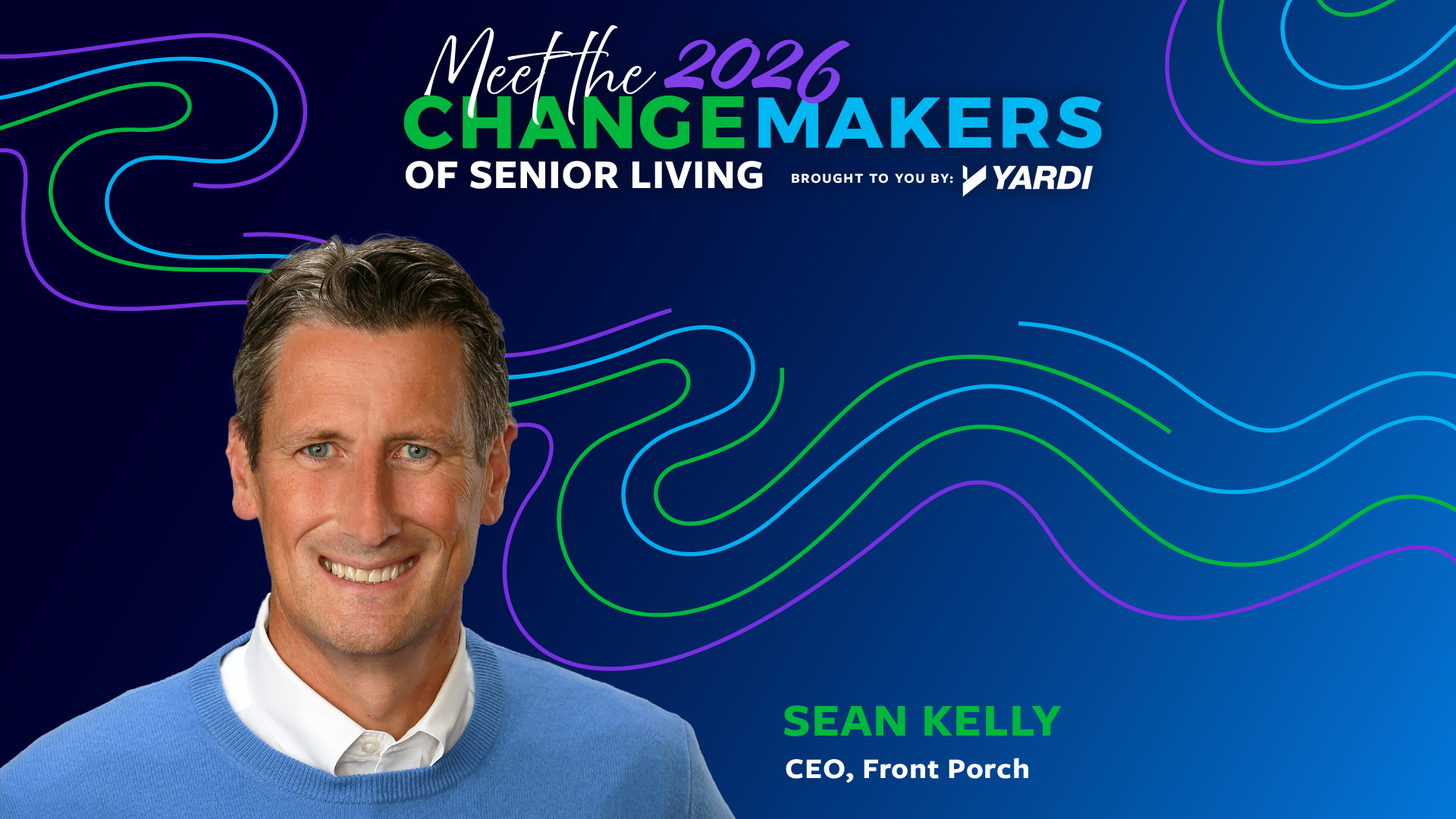
Sean Kelly, CEO of Front Porch, believes meaningful change in senior living starts with connection, inclusion and challenging the industry’s long-standing narrative of decline. He’s invested in building organizational culture, launching a systemwide service excellence program and creating genuine dialogue with residents and the broader community. For Kelly, senior living’s best opportunity is to speak about what is actually possible as people age.
Read on for a snapshot of the conversation or see the full interview.
In what ways can senior living companies change the public’s perception of the industry?
It’s a huge order, and while I would say that we as a sector have the most unique and aspirational views of any professional group, sharing them among ourselves and in our marketing materials is not nearly enough. We can be a “cacophony in our own echo chamber.” We have to stand up and speak aloud about those things that are actually possible in the life of each person. Speak against an overwhelmingly declinist attitude that too often prevails. Speak powerfully to our own experiences and the experiences of the millions of people whose lives have been enriched in communities — people who have enriched others and the world around them as they have continued on in their lives.
While a massively tall order, we are fortunate that in this day and age, there are generations coming along that do not intend to be put away, to be told what to do, to be demeaned, to be ignored. We are living in an era where change-makers are coming of age, and they don’t intend to stop making change. It needs to be a part of our job to walk with them and be another megaphone for what’s actually possible versus that tired declinist narrative we’ve accepted for too long.
What staffing changes does the larger senior living industry need to make to meet the staggering level of demand ahead from new residents?
We have an awful lot of work to do if we are going to attract enough people to our sector. For starters, we have to help the larger world understand what this work actually is, apropos of the discussion above on how “getting older” (and henceforth aging services and senior living) is perceived.
At the same time, we have to attract more good people to this sector. No longer can we wring our hands over not having enough people to do the work that we have before us, let alone the work that will be coming down the pike. As stated earlier, we all need to be thinking about how to generate more interest in the sector. We’ll also need to focus organizationally and as a sector on learning and development programs. Then when we draw people in they can find themselves in a place where they can grow and be satisfied personally and professionally over a long career.
While it’s a massive positive aspect, higher purpose is no longer enough to draw folks in and keep them. We have to pay better wages, provide improving and relevant benefits, invest in ongoing training and education across the workforce — and begin to generate greater prestige for our colleagues who have been doing this vital and impactful work all along. The Vision Centre is doing great work matching providers with colleges, universities and other learning organizations in such a way that more students are being made aware of what it is to work in senior living. Likewise, the Vision Centre is assisting colleges and universities in building out curriculum to help build senior living leaders for the future.
At the same time, we’ll continue to need to meet the pace of change and leverage technologies that can help us get further faster with fewer people.
Change is hard. Can you talk about a time when you tried to execute a change and things didn’t go according to plan? How did you pivot, and what did you learn as a leader?
I had a vision, a timeline and a rough schedule in mind for where we might go at Front Porch since the day I started three years ago. All of it was very interesting and useful … only academically …
Despite any experience, expertise or perspective I might have had, until I could truly know my colleagues and the people we hoped to serve, I really couldn’t offer the best counsel to a plan forward. Luckily, I was given a chance to get to know so many great people including my teammates. I was able to say what I thought about things and I learned from the people around me. What we are building now really does bear some resemblance to what I saw the day I arrived, but it’s far better and brings about far more possibility because it’s guided by a great team and owned by thousands of people at and around Front Porch.
Every day, there’s one thing or another that doesn’t go according to plan. So among the many things that I hope to have learned — and will need to keep learning — is that I just don’t deserve an expectation that things will always go according to plan. Having said that, the whole practice of planning and process development is absolutely essential. We have to give ourselves something to move toward, and within a framework that allows for motion to occur in a way that anticipates ongoing adjustment and adaptation. Constantly sharing the vision for where we may go, affirming the direction always, asking for help daily and owning the bumps in the road we may be carving — all can all go a long way in “leading” the way.
Wayne Sanner, 2026 Changemaker
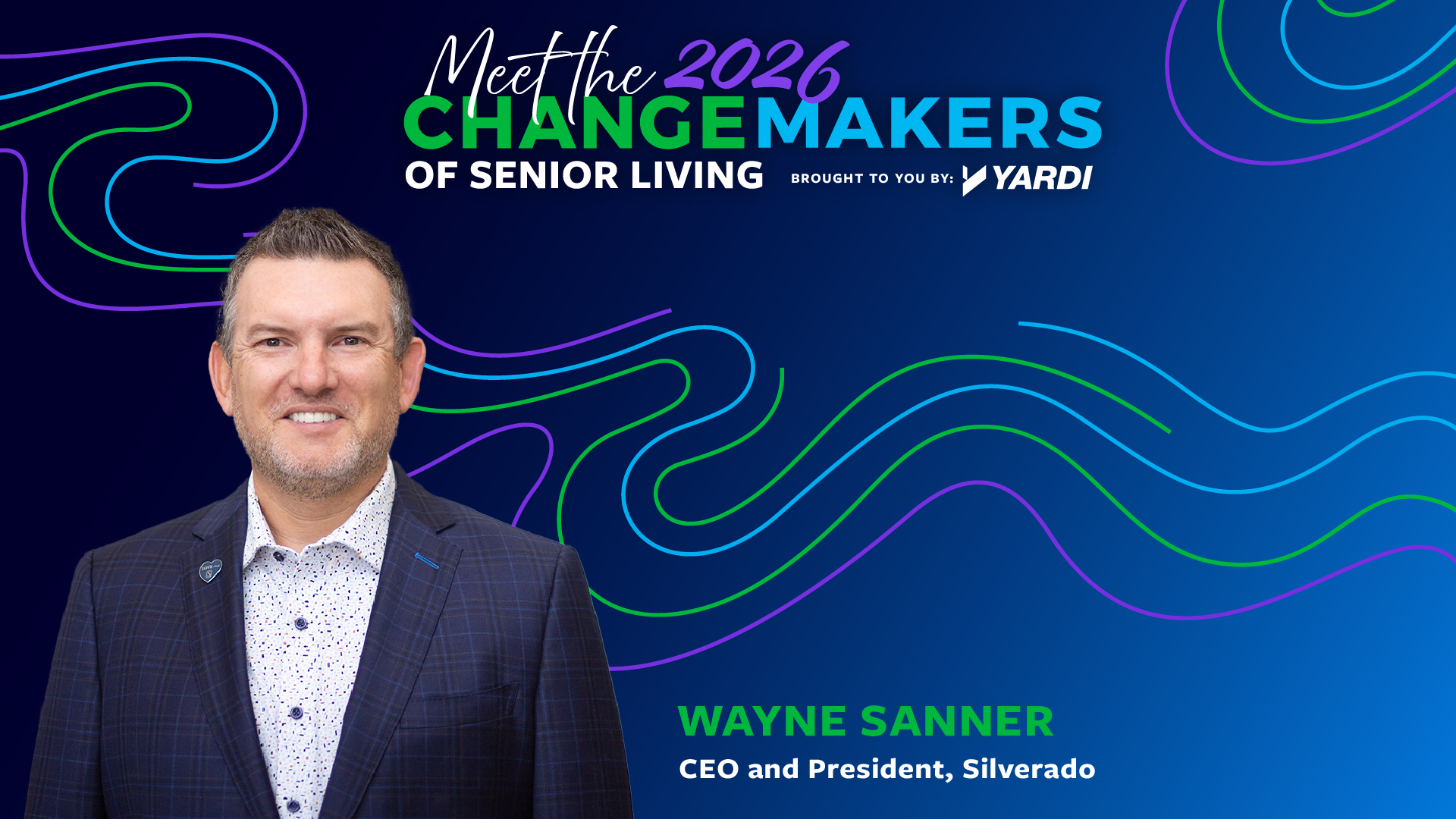
Wayne Sanner, CEO and president of Silverado, a Yardi Senior Living Suite client, believes change in senior living begins with reimagining what is possible for people living with dementia. He’s focused on expanding capacity through new housing and service models, supporting families earlier in the dementia journey and using technology to give caregivers more time for human connection. For Sanner, a dementia diagnosis changes a person’s abilities, but it should never erase their identity, purpose or the possibility of living meaningfully.
Get the highlights here and explore the full interview with SHN.
What economic forces or market trends are currently changing the senior living industry?
We are entering a period when demand is accelerating much faster than supply. The first baby boomers are turning 80. Occupancy is rising. And new development remains constrained by construction costs, interest rates, access to capital and operating expenses. At the same time, families are facing real affordability concerns, while providers continue to experience wage pressure and workforce shortages.
These pressures are especially significant in memory care. As the number of people living with dementia grows, communities will serve residents with greater clinical complexity and behavioral expressions, while families will need guidance across a journey that often begins long before move-in.
We must expand capacity, but we cannot simply build more of the same. The industry needs more creative housing and service models, stronger partnerships across the health care continuum, earlier support for families, and innovations that help us deliver better outcomes and experiences.
Demand is accelerating, particularly in memory care. Simply building more of the same — rooted in existing service models — will not be enough.
In what ways do you think senior living operators need to change for the incoming generation of older adults?
The incoming generation will expect greater choice, autonomy, transparency, personalization and connection to the broader community. They will not want their lives defined by a building, a diagnosis or a predetermined schedule.
That is particularly important in memory care. A dementia diagnosis may change a person’s abilities, but it does not erase identity, relationships, purpose or the capacity to experience joy. Operators must move beyond managing symptoms and safety to understanding the whole person — who they have been, what gives their life meaning, and what they can still experience and accomplish.
Technology will play a role, but the ultimate goal is not a more technological experience. It is a more personal one. The next generation will not want us to manage their aging. They will want us to help them keep living well.
A diagnosis may change someone’s abilities, but it should never be allowed to erase their identity.
What senior living technology do you find most promising or interesting right now?
I am especially interested in early-detection and predictive technologies that can identify meaningful changes in memory before they become crises. This can include changes in cognition, mobility, sleep, behavior, fall risk or overall brain health.
In memory care, what appears to be a behavioral issue can sometimes reflect pain, infection, medication effects, fear or another unmet need. Technology may help associates recognize subtle changes sooner and respond more precisely and compassionately.
The promise is not simply collecting more data. It is transforming the right information into an earlier and more effective human response. I am also optimistic about responsible uses of AI that reduce documentation and administrative burdens, giving associates more time to engage with residents and support families.
The best technology does not replace human connection. It creates more room for it. In memory care, technology should help us understand the person more clearly — not reduce the person to data.
Chris Bird, 2026 Changemaker
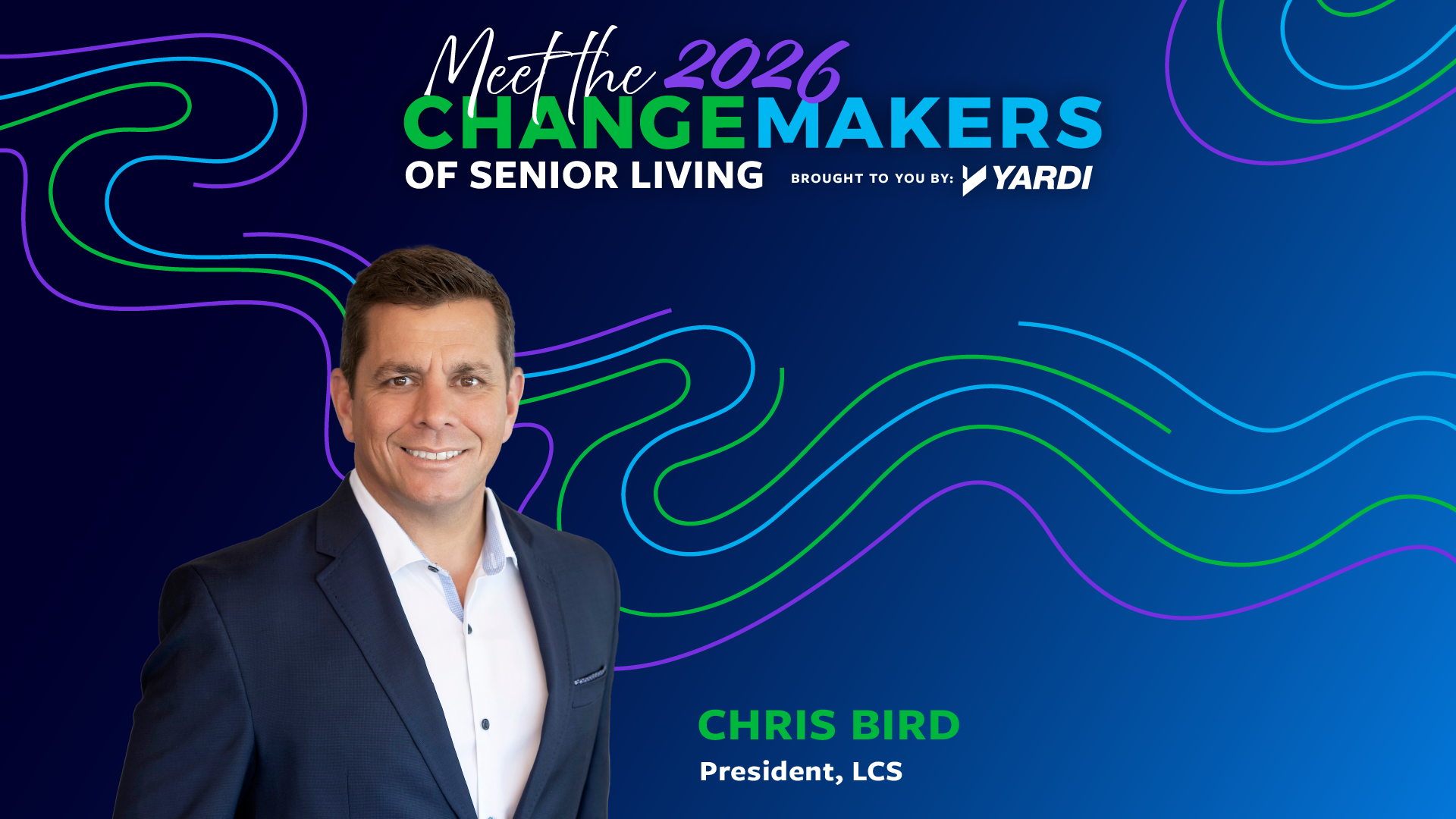
Chris Bird, president and CEO of LCS, a Yardi Senior Living Suite client, believes meaningful change in senior living starts with greater choice, stronger wellness programming and more personalized experiences for residents. He also calls out the need for middle-market and affordable options as the biggest industry challenge. He’s focused on rethinking how work gets done, using technology to free caregivers from administrative tasks so they can spend more time with residents. For Bird, every innovation should begin with one question: Does this improve the lives of the people we serve?
Read on for a glimpse into the conversation or see the full interview with SHN.
In what ways do you think senior living operators need to change for the incoming generation of older adults?
The next generation of older adults will expect choice, flexibility and experiences that reflect the lifestyles they’ve enjoyed throughout their lives. That starts with offering more housing options across a broader range of price points. One of our industry’s biggest challenges is the lack of a middle market and more affordable senior living options, and addressing that gap will be essential.
Technology also has to become foundational. Residents expect seamless Wi-Fi, connected living environments and technology that enhances convenience, communication and safety.
Is the senior living industry moving quickly enough to change in the ways it needs to? Why or why not?
In some areas, yes. In others, we’re constrained by how long it takes to develop new communities. Even if demand continues to accelerate, planning, financing and constructing new senior living communities takes years. That means we’ll likely continue falling behind demand as more baby boomers seek senior living options.
The encouraging news is that many existing communities can evolve through renovations and technology upgrades. We don’t always need to build from scratch to improve the resident experience. Our team is constantly working with our communities to ensure we are reimagining what each community can be and how it should be repositioned to meet the desires of the customer of the future.
My greatest concern is that limited supply will continue driving prices higher, making senior living less affordable. That represents a significant opportunity and responsibility for our industry to develop solutions that serve a broader segment of the aging population.
What senior living technology do you find most promising or interesting right now?
The technologies that interest me most are those that improve safety, wellness and human connection while allowing caregivers to spend more time building relationships with residents.
Passive monitoring technologies and fall prevention systems are becoming increasingly sophisticated, allowing us to identify potential issues before they become emergencies. Advances in nurse call technology are also creating faster, more personalized responses.
Artificial intelligence is another exciting area. Beyond operational efficiencies, AI has the potential to identify residents who may be experiencing isolation or changes in behavior, allowing caregivers to intervene earlier and provide more meaningful support.
Loe Hornbuckle, 2026 Changemaker
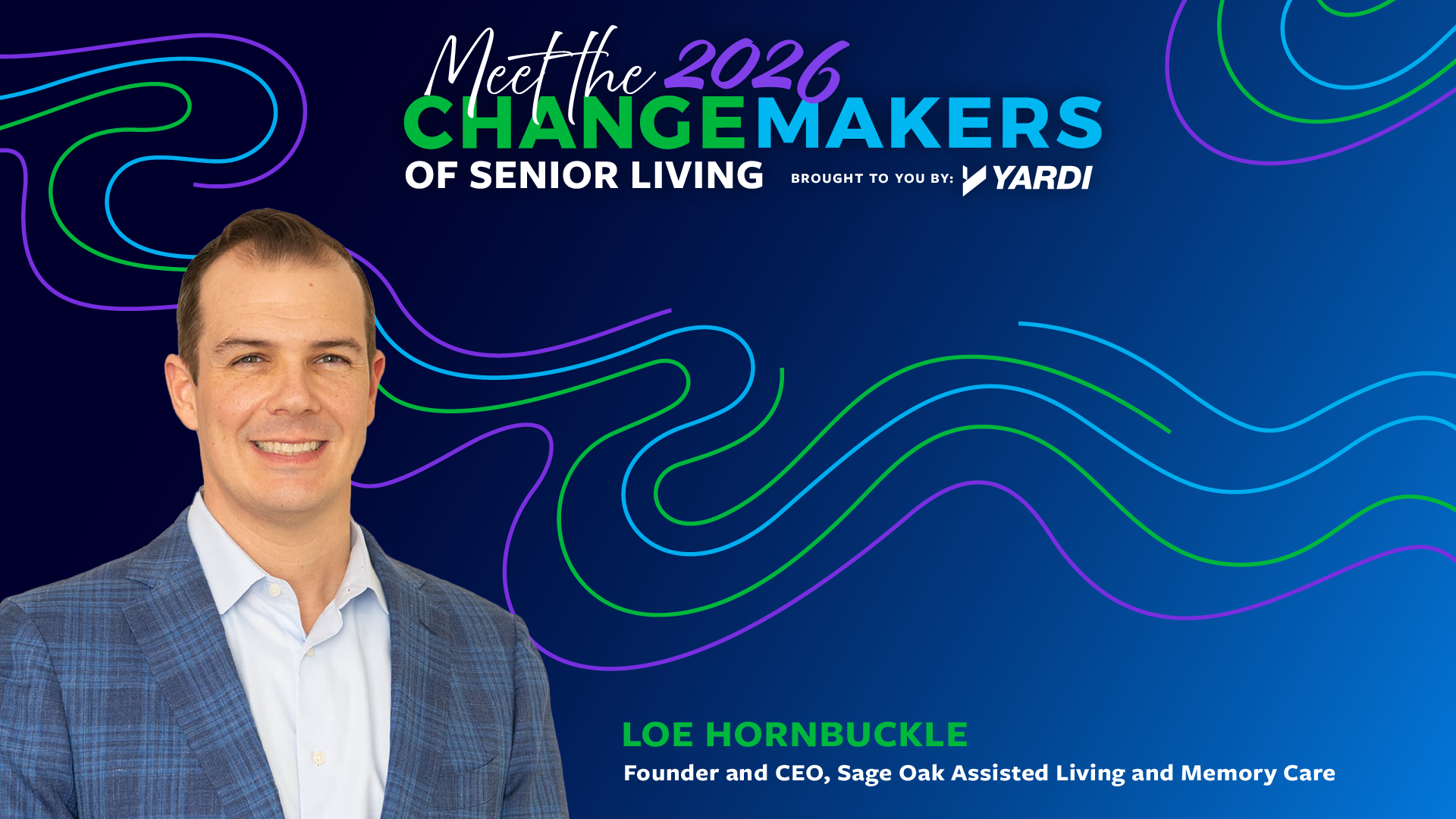
Loe Hornbuckle, founder and CEO of Sage Oak Assisted Living and Memory Care, is betting on small. While much of the industry focuses on scale, Hornbuckle believes the future of senior living lies in smaller, more personalized settings that feel less institutional and more home-like. He’s growing Sage Oak’s community count while staying deliberately focused on eight- to 16-bed communities, innovating at a scale larger operators aren’t pursuing.
Get the highlights here and explore the full interview with SHN.
Tell us about some of your efforts to change the senior living industry for the better.
We’ve done some acquisitions recently, growing our community count and bed count by about 20%. But we’ve done that while remaining very focused on scaling small.
All of our acquisitions have been between eight- and 16-bed communities. We’ve bought several of those either adjacent to one another or close to existing Sage Oak locations. From our point of view, the way we’re trying to innovate is by scaling something that larger institutional players don’t seem intellectually interested in learning how to scale.
Ultimately, it is very hard to scale small buildings. The solution to that is a more portfolio-based approach.
Can you talk about a time when you tried to execute a change? Things didn’t go according to plan. How did you pivot? What did you learn as a leader?
Assisted living and dementia care operations are dynamic environments. Change is constant. No day is identical to the day before, and no two nurses or caregivers are ever going to be exactly the same.
Ultimately, pivoting is baked into the business model. People sometimes talk about pivoting like it is a huge accomplishment, but the reality is that it is literally part of what we do for a living. In order to be great at this, you have to be flexible. You have to be willing to pivot and change.
It is similar to the old Mike Tyson adage: everyone has a plan until they get punched in the mouth. In this business, getting punched in the mouth can be both figuratively true and, occasionally in dementia care, literally true.
What advice do you have for other senior living companies implementing their own changemaking efforts?
Always test-drive concepts from the customer experience or staff experience.
As a company grows, people roll out all kinds of initiatives for staff and clients. But in my experience, they often do not actually replicate the experience of the person they are trying to reach.
If you put out a social media ad, what is the customer experience when someone clicks on it? Where do they go? What happens next? If you roll out new HR software, what is the staff experience with that software?
You always have the best intentions, but you have to get out of the intention space and see how it actually gets executed. You’re trying to solve a problem when you roll something out, but you don’t know whether it will solve that problem until you test-drive what the customer, staff member or intended target of the initiative is actually going to experience.
Allison Pendroy, 2026 Changemaker
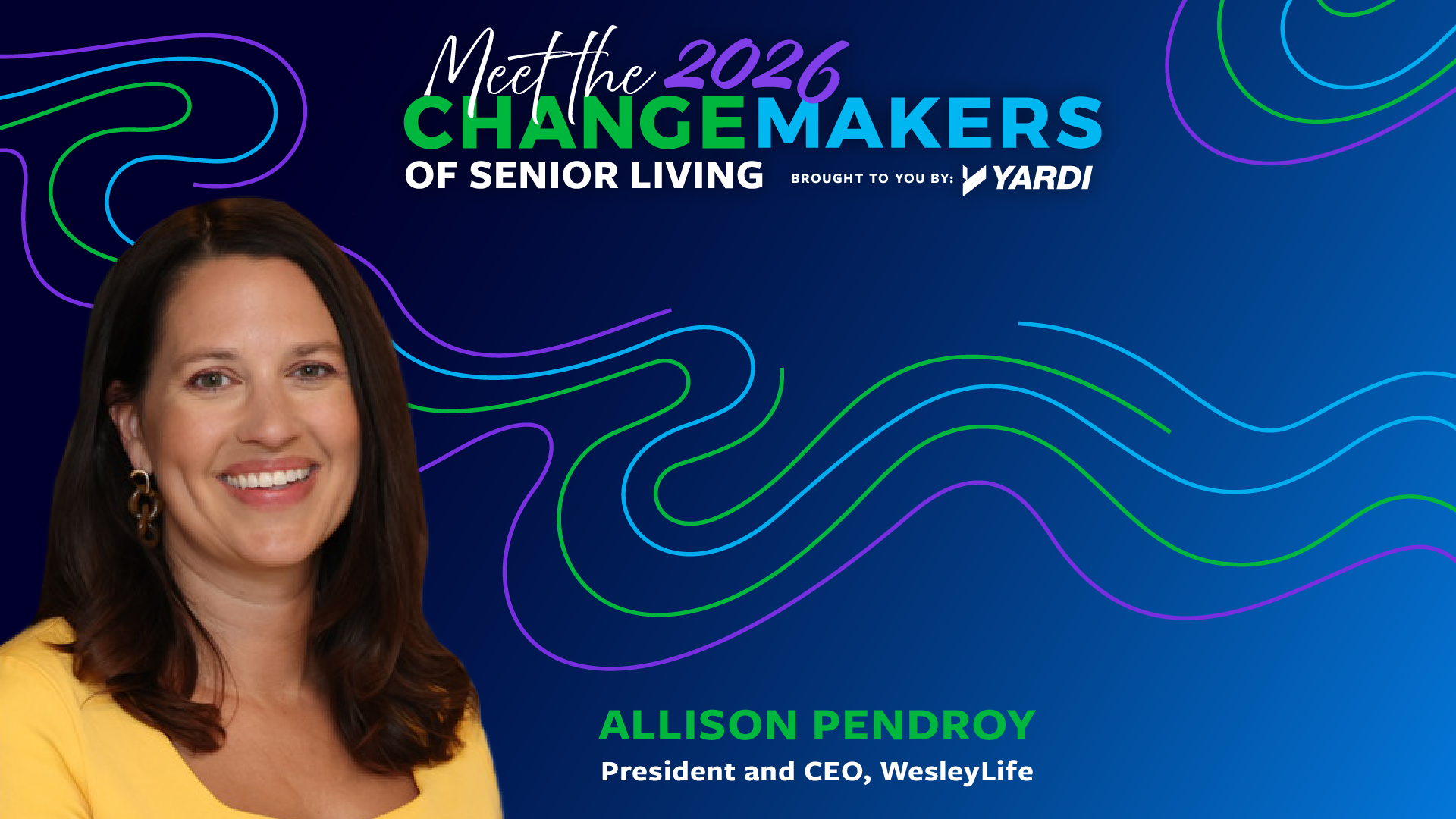
Allison Pendroy, CEO of WesleyLife, says change begins with reframing how the industry itself talks about aging. She’s intentional about language, replacing terms like “levels of care” and “facility” with words that reflect dignity, possibility and purpose. For Pendroy, human-centered technology and long-term workforce strategy are how senior living keeps that promise to residents.
Read on for a snapshot of the conversation or see the full interview.
Tell us about some of your recent efforts to change the senior living industry for the better.
At WesleyLife, we are intentional about how we use language because language shapes perception, and perception drives experience.
We developed and actively use our “Language for Living.” It guides how we communicate both internally and externally. It’s designed to reflect dignity, personhood and possibility, rather than decline or limitation.
For example, our employees are referred to as “team members,” reflecting shared purpose and belonging. Our communities are not CCRCs or life plan communities. They are “communities for healthy living” because we are a health and well-being organization at our core. We’ve moved from “levels of care” to “levels of living,” and instead of saying, for example, that someone “has dementia,” we reframe it by saying they are “living with dementia.” Most obvious is the fact that we’ve eliminated the word “facility” from our vocabulary altogether.
Taking this a step further, we’ve even challenged ourselves to move beyond the term “senior living,” which coincidentally is carried in this question. We find its use is outdated or has limiting connotations.
These shifts may seem small, but they are deeply intentional. They influence how people feel about aging, how team members show up in their work and how those we serve experience belonging and purpose. We are proud of this differentiator at WesleyLife.
Ultimately, our goal is to help reframe aging, not as a period of decline, but as a continued opportunity to live well. Language is one of the most powerful tools we have to lead that change.
What’s the biggest change you ever made in your career or life? How did it go and what did you learn?
One of the biggest shifts in my career was leaving the safety and comfort of my previous employer of 15 years to join WesleyLife as COO. Joining a completely new organization requires a leap into the unknown: new systems, new people and a new culture. It required me to learn and adapt from the ground up again.
Now, looking back three years later, it has been one of the most fulfilling decisions of my career. What I’ve learned is that growth rarely happens in comfort. Time and again, I’ve found that periods of uncertainty are where the most meaningful personal and professional development occurs.
My advice: Embrace change, stay curious and lead with humility when stepping into something new.
What book are you reading right now?
I’m currently reading Joyspan by Dr. Kerry Burnight. It resonates because it aligns so well with WesleyLife’s focus on health span and our belief that joy is an essential part of well-being. It’s a thoughtful reminder that aging well is not only about living longer, but about living with purpose, connection and meaning.
Paul Boethel, 2026 Changemaker
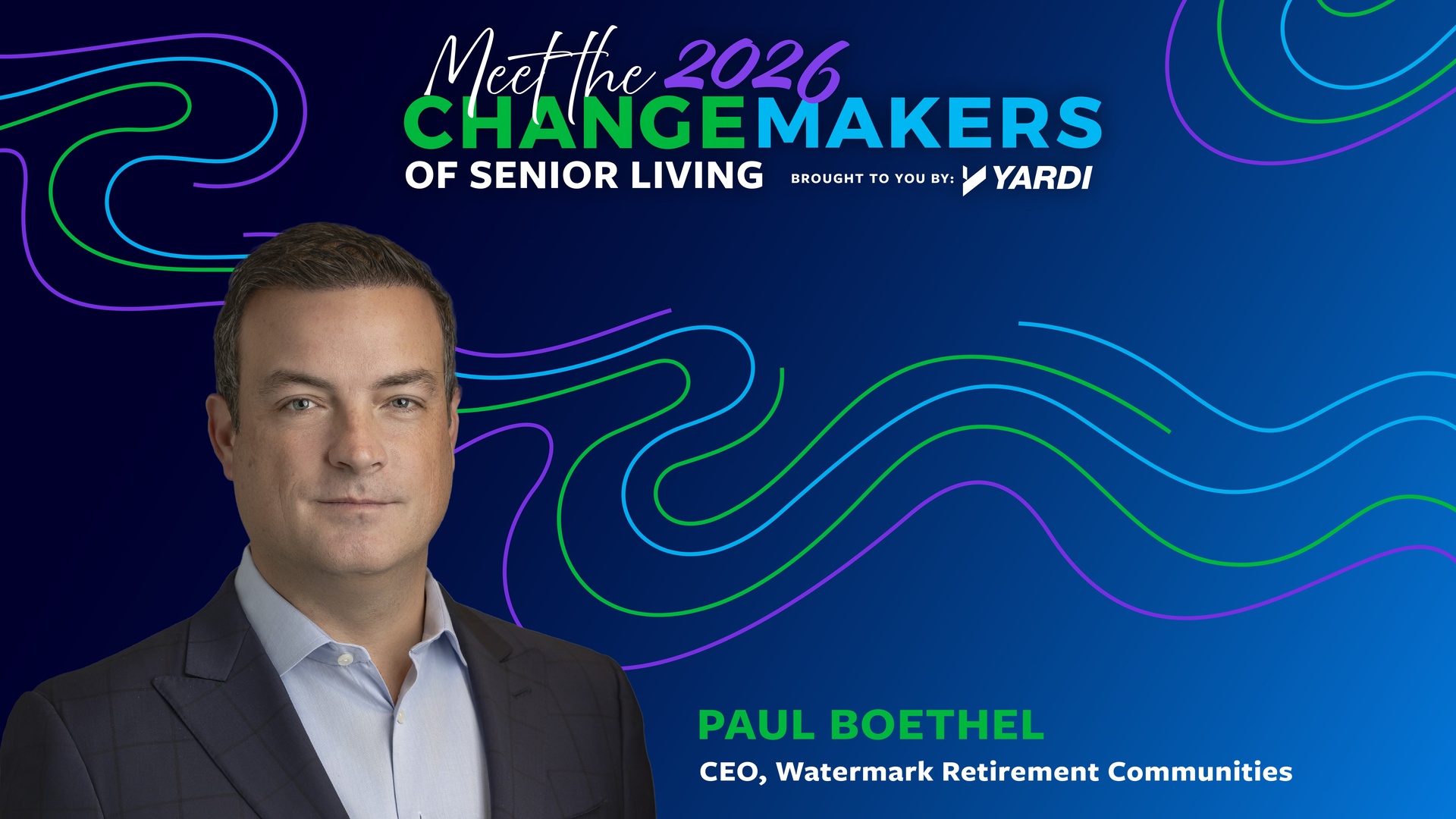
Paul Boethel, CEO of Watermark Retirement Communities, is rethinking how senior living grows, staffs, markets and delivers the resident experience. He’s standardizing operations across Watermark communities and leaning into technology and data to keep teams responsive. He advocates for the industry becoming more agile to meet the expectations of the next generation of older adults.
Read on for a glimpse into the conversation or see the full interview with SHN.
In what ways can senior living companies change the public’s perception of the industry?
The best way to change the public’s perception is for the public to experience it. That’s difficult to do at scale physically, but with a strong social media presence and engagement, we can display the experience and benefits of living in a senior living community.
As an industry, we are far behind others when it comes to social media presence and authentic engagement. We have an opportunity to showcase the experience and benefits of senior living more effectively and tell our story in a more meaningful way. As that improves, sharing more intimate, real experiences on these platforms can help deliver consistent, meaningful messages at scale.
What staffing changes does the larger senior living industry need to make to meet the staggering level of demand ahead from new residents?
In the immediate term, operators need to drive stronger rental rate growth as we approach high occupancy levels and minimal new supply. Historically, hospitals have outpaced senior housing in top-line revenue growth, achieving a 4 to 5% CAGR compared to senior housing CAGR closer to 3 to 3.5%. That disparity has contributed to a significant wage gap.
The more we’re able to push rates relative to other health care sectors, the more we can close that gap, become more competitive for high-quality talent and expand the pool of individuals willing to consider senior housing.
Long term, we’ll need to explore technologies that support care delivery. Some countries, like Japan, are already facing significant labor shortages. They are leaning heavily on robotics and predictive technologies, and they offer valuable insight into how we can improve efficiency without sacrificing the quality of the resident experience.
What advice do you have for other senior living companies implementing their own changemaking efforts?
I don’t think this will be controversial, but the planning and execution of the rollout of something new is as important as the change itself. We often spend significant time researching, modeling and testing new initiatives, but less time on implementation and execution.
An experienced project manager is invaluable. The difference between success and failure often comes down to how well a change is rolled out and adopted by the field and by residents.
Quintin King, 2026 Changemaker
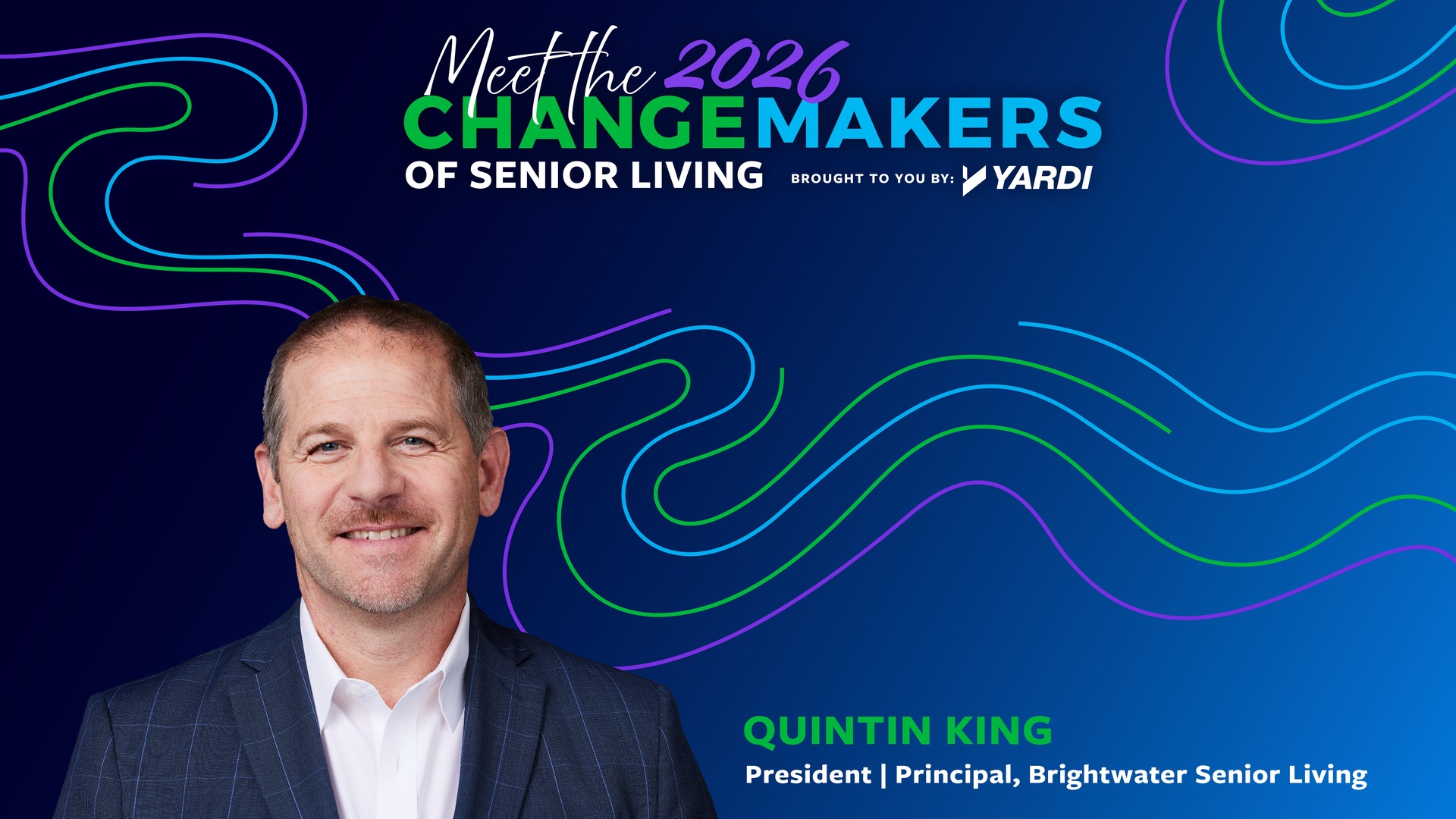
For Quintin King, the path forward in senior living follows a deliberate sequence: people, process, then technology. King is president and principal of Brightwater Senior Living, a Yardi Senior Living Suite client. He’s focused on reducing friction for staff through connected systems, bringing CRM, EHR and financial tools into a single environment. Then teams spend less time chasing information and more time focused on residents and families.
Get the highlights here and explore the full interview with SHN.
What economic forces or market trends are currently changing the senior living industry?
The industry is being shaped by a growing older population with a direct opposite effect of staffing shortages. We’re seeing a disconnect between where operating fundamentals are going and how capital is underwriting those fundamentals. Labor volatility, interest rates, and insurance pressures have fundamentally changed how deals pencil, which is driving consolidation.
REITs and private equity are grabbing up a majority of the class A and B product. Consolidation is happening!
How can senior living companies change the public’s perception of the industry?
By being more transparent and telling real stories. Showing what day-to-day life actually looks like in communities, including the care, relationships and sense of purpose residents experience, can go a long way toward building trust.
At the same time, companies need to be upfront about costs and outcomes. The more honest and clear the industry can be, the easier it becomes for the public to understand the value senior living provides.
Tell us about some of your recent efforts to change the senior living industry for the better.
I’ve focused more deeply on staffing and our teams, especially understanding team members and how to make their workday less challenging. Not necessarily easier, but more efficient.
That includes cutting unnecessary processes by using more connected systems. Instead of reporting back and forth through emails, timelines and separate updates, we can use systems that already have the information and are connected to each other.
When the CRM, EHR and financial systems are connected in the same environment, there is less need to pass information along manually because it is already there. That helps reduce friction for teams and allows them to spend more time focused on the work that matters.
Nick Stengle, 2026 Changemaker
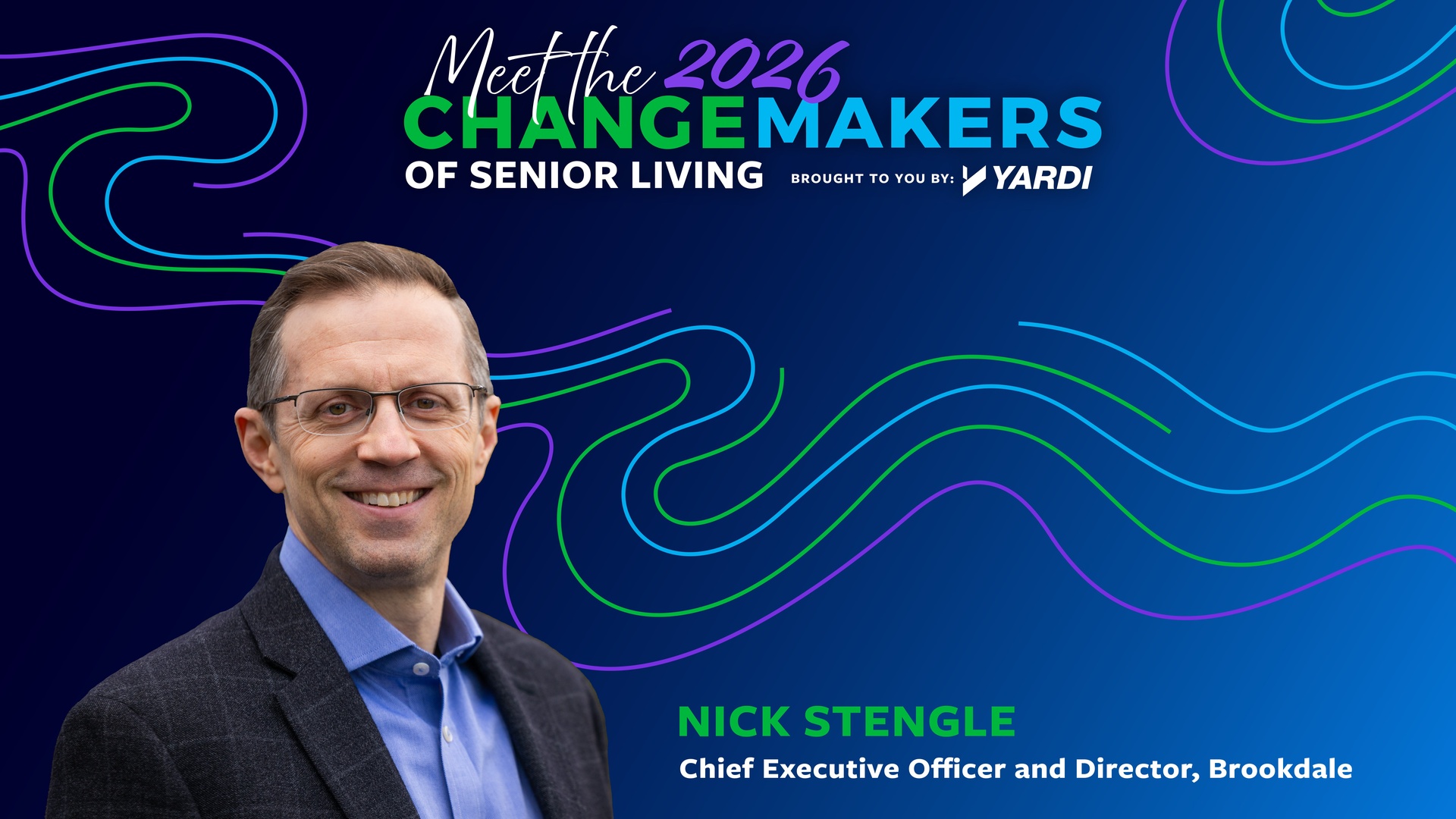
Nick Stengle sees the supply-demand dynamic as the defining force shaping senior living. Stengle, CEO and director of Brookdale Senior Living, a Yardi Senior Living Suite client, says the industry’s response is rooted in fundamentals: great service, great care and a great product. He’s thinking about workforce, technology and how AI can help senior living tell its story more boldly to a public that still doesn’t fully understand what the industry offers.
Read on for a snapshot of the conversation or see the full interview.
Is the senior living industry moving quickly enough to change in the ways that it needs to?
I’m going to be maybe a bit provocative and say I think we’re on the right pace. Where we maybe have some shortcomings is on the workforce development side. Could we do that better and more effectively?
Yes, I think so.
Some other industries and companies have beat us to it. People join those companies because of the brand and because of the industry. It would be great if we had a similar kind of connection with the burgeoning workforce. That is where I think there is still some work to do.
Can you talk about a time when you tried to execute a change & things didn’t go according to plan?
Change is definitely hard. I was CEO of the largest home health company, and we implemented a bonus program for our nurses to increase our admission rates, especially during off hours. It was truly a supplemental bonus program. They already got paid a certain amount, and we were giving them more money.
There was a massive backlash to the entire program because we did not communicate it well. We did not explain it well. There was a belief that we were taking something away, when in fact, we were giving an additional opportunity. Nothing was being taken away.
That was the moment that taught me you have to communicate. When you think someone hears you, they really don’t always hear you. You have to provide examples and be specific.
Also, sometimes when you cascade things down, you lose the message.
Now, if we have a big change, I want everyone to hear it from me first. Then we can cascade it out and do the implementation. Quite often, there is a loss in the message at every layer, and the spirit of what you are trying to drive can start getting broken apart very rapidly.
I learned that change, even if it is 100% positive, can very quickly go sideways if you do not manage it well.
What are you sick of hearing about in senior living?
I’m sick of hearing that older buildings cannot be amazingly beautiful, great products with great service. Coming from Brookdale, maybe I feel this even more, but I will tell you, we were at a big investor conference in Las Vegas in a 20-year-old building, the Encore, and it was beautiful.
Our buildings are 20 years old too. We were also in a 100-year-old building for another conference in New York, the Barclay, and that was an amazing building as well. With the right care and the right service, it works. That is what I’m tired of hearing: that older buildings cannot be amazing.