Voyager Suite
 Breeze
 Virtuoso
 Investment Suite
 RentCafe
 CommercialCafe Suite
 Elevate Suite
 Procure to Pay Suite
  Energy Suite
 Aspire
 RightSource
 Care Suite
 Matrix
 WorkCafe
 Yardi Kube Suite
 ScreeningWorks Pro
  Yardi Corom


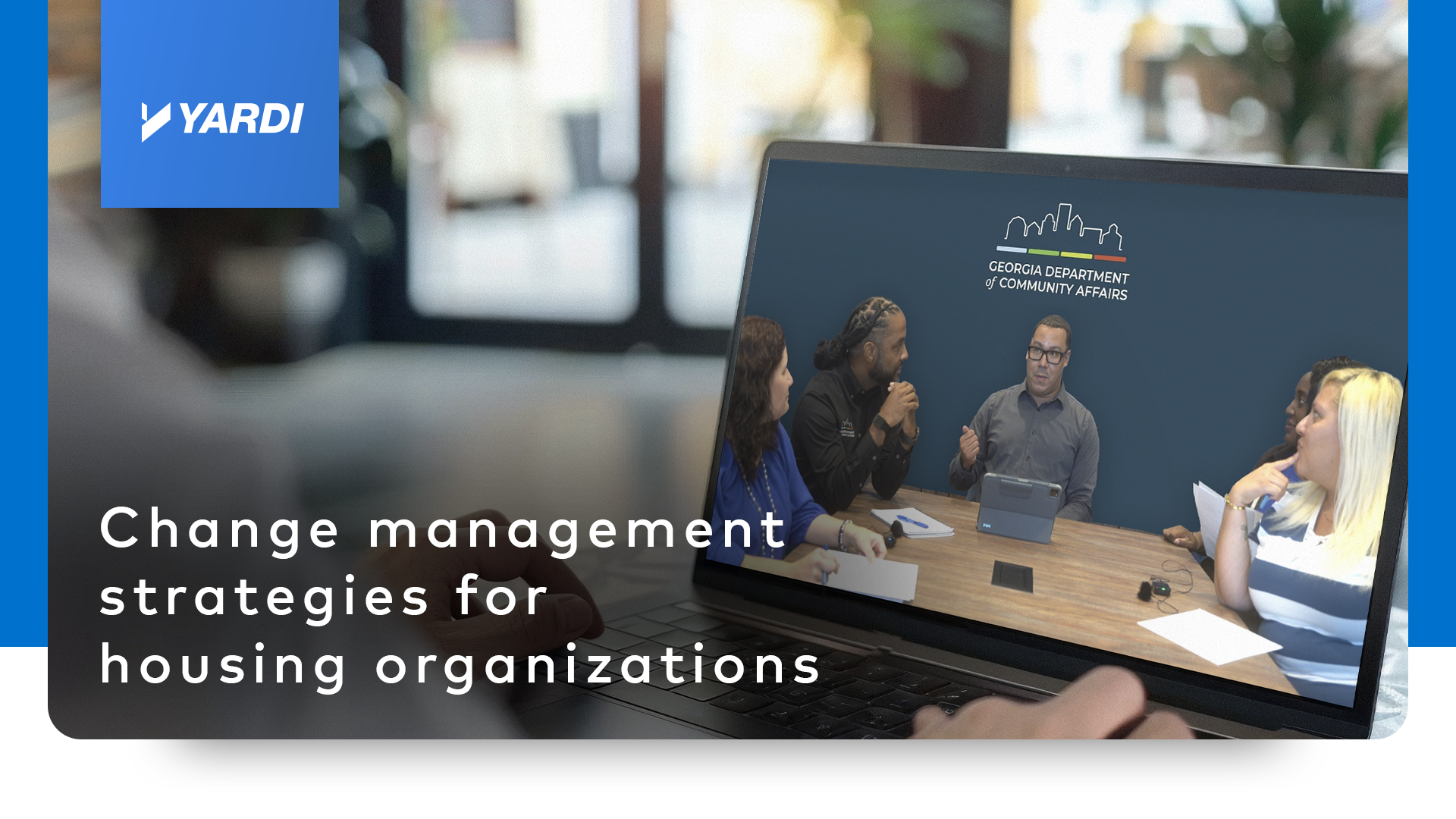
In this post we’ll cover change management in housing and strategies to prepare your team. It’s based on the presentation “Change Management: Adapting to Evolving Property Operations,” led by Sydney Anderson, compliance director at Yardi.
At the 2026 Yardi Forum, this session was the third-most attended course, which speaks to how much agencies value learning to approach change management the right way. Introducing change in housing and property management is not an easy task. In fact, 70% of change initiatives fail to achieve their goals, according to research from McKinsey & Company.
Why change management can be hard
People resist what they don’t understand
When context and instructions are missing, compliance managers, site staff and regional teams see change as a disruption to their already busy day. And while this new change feels like a game changer to leadership, your staff might view it as disruption if they don’t see the value or understand why the change is happening.
When systems change, behavior doesn’t always follow suit
Adding new software is only part of the equation. No matter how intuitive a system is, it still requires people to change the way they work. Employees must build new habits and trust that the new workflows will help them do their jobs better.
Affordable housing never stops
Housing is unique because operations can’t simply pause while everyone learns a new system. Management and Occupancy Reviews (MORs) can’t pause and recertifications can’t be put off. (That would impact the ability of someone to find or maintain a roof over their head.) Because of this, implementing mid-operation changes requires a different playbook, which is exactly what makes change management in housing so difficult.
Frameworks for change: ADKAR model for PHA teams
The ADKAR model is a change management framework based on the individual level. Research shows that change typically fails at the individual level. Let’s say you’re introducing new technology with changes in workflows. If your employees don’t commit to using the system, it will likely fail, risking your investment, efficiency gains and improved end user experience.
But enough with what can go wrong. Let’s look at how to get change management right with the ADKAR model.
A (Awareness)
First and foremost, your employees need to know just why change is needed at your organization. Say HUD has new income documentations that are going into effect in Q1. Make sure your staff understand exactly what is changing and why. Communicate early and frequently through emails, chat and team meetings so everyone has the context they need.
Oftentimes in public housing, employees get stuck in this phase, especially when it comes to technology. Maybe they’ve been at the housing authority for a long time and paper applications are just how they’ve always done it. And it works (just maybe not as fast). For some employees, introducing a new and seemingly complicated technology tool might be daunting, so take the time to explain to them why it’s necessary for long-term growth.
D (Desire)
Now, you need to get them on board and make sure they want to support the change. When introducing new software tools, you need to clearly explain how it’s going to make their life easier. For example, RentCafe’s recertification portal might reduce their recertification error rate or encourage fewer correction letters and audit findings. Before beginning the training, make sure employees understand why change is so impactful and how it can streamline their own duties.
K (Knowledge)
Next, it’s time to educate. Make sure your employees know how to change. When introducing a new Yardi workflow, give them step-by-step instructions and make sure it’s specific to their role to avoid confusion.
With proper training, you can set each employee up for success. Aspire, Yardi’s learning management system, could be the key to making this change stick. Aspire offers a range of interactive courses that help employees learn new Yardi workflows in a unique, hands-on way. With Aspire, you can set up training courses based on each of the Yardi products. It even allows managers to track progress and identify areas needing extra support.
A (Ability)
For continued success, you must ensure they can implement this change consistently. To do this, make sure they are practicing in a sandbox before implementing the real deal. Have people in place to shadow the individual. Once you go live, ensure support is readily available.
R (Reinforcement)
Next, make sure the change sticks. This is where people often get lost. Maybe you implemented change, your team understands what to do and the investment is paying off. But to make sure those wins last, you need to check in and make sure the tools are being used correctly. This could include monthly compliance office hours, role-based refresher courses or attending Knowledge Central at Yardi events for PHA and affordable housing clients. Check out Yardi Forum or YASC, Yardi’s biggest property management event.
This year, YASC takes place October 7-9, in San Diego. Register now and send employees to learn more about Yardi products and get one-on-one help.
One action you can take today: Find your “stuck” person
If there’s one takeaway from the session, it’s that a single person could be the reason your team hasn’t fully embraced a change. Instead of assuming they need more training, take time to understand what’s getting in the way. Ask questions and attempt to understand their perspective. Maybe they’re unclear on why the change is happening (Awareness). Do they need additional guidance or training tools based on their specific role (Desire)? Or what if they just need continued reinforcement after implementation (Reinforcement)?