Voyager Suite
 Breeze
 Virtuoso
 Investment Suite
 RentCafe
 CommercialCafe Suite
 Elevate Suite
 Procure to Pay Suite
 Energy Suite
 Aspire
 RightSource
 Care Suite
 Matrix
 WorkCafe
 Yardi Kube Suite
 ScreeningWorks Pro
 Yardi Corom



Every new tool promises to make work easier. But what happens when it won’t work with the systems your team already uses?
Rose Associates knows that frustration well. As the New York-based property management company worked to expand its residential business, its technology kept getting in the way. Promising new capabilities were out of reach, and attempts to improve the existing setup weren’t solving the problem.
For Scott Marino, chief property management officer, and Chris Blackman, chief technology officer, the experience helped clarify that they needed a platform they could build on as the business grew. Their experience offers a few lessons for operators weighing software decisions, especially as AI adds more options to consider.
Finding room to grow
Rose’s technology overhaul was part of a larger change. The family-owned company began shifting its focus to residential apartment management in 2016, with ambitions to become a regional operator with national-level experience.
Getting there meant rethinking the systems supporting the business. The team brought in consultants and invested in customization, but the limitations remained. At conferences, they’d see a CRM, reporting tool or AI capability they wanted to explore, only to find it wouldn’t work with their platform.
“There was no amount of money, no amount of consultants and no amount of internal resources that could make it work,” Marino said.
Moving to Yardi gave Rose more ways to access its data, pull reports and connect other tools. When Blackman joined in late 2023, the transition was underway. His team continued building on that foundation.
“We’ve expanded into Procure to Pay, RentCafe, AI and other areas. The underlying platform was there and we were able to build off of it,” Blackman said.
For Rose, the change opened up possibilities that had been out of reach. The team could put its data to use across more of the business and explore new capabilities without running into the same limitations.
Reducing complexity across the business
A new tool may solve one team’s problem, but Rose also considers how it will fit into the wider operation.
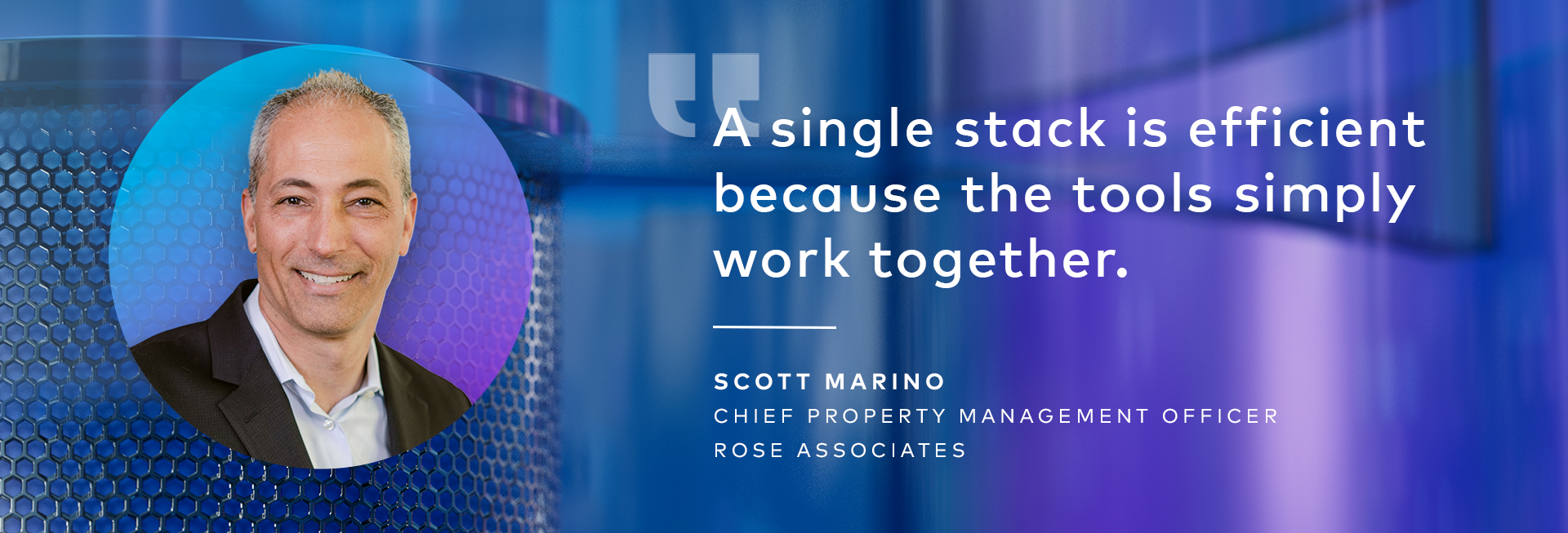
“A single stack is efficient because the tools simply work together,” Marino said.
As a third-party manager, Rose doesn’t always choose every system it uses. Clients sometimes bring their own CRM, business intelligence tool or other technology. The team accommodates those choices, but Marino says they can introduce inefficiencies and make problems harder to resolve.
“When clients ask us to plug in their own CRM, BI tool or other system, it creates inefficiencies and challenges. It becomes difficult when we’re asked to solve problems with systems we didn’t choose,” he said.
That experience has made Rose selective about adding complexity. Connecting another tool may be possible, but the team still has to support it and manage the problems that arise. Bringing more work onto one platform helps reduce that burden.
Familiarity matters, too. Blackman says the majority of Rose’s new hires already have Yardi experience. Previously, those employees needed training on a different platform. Using a system they already know removes one adjustment as they settle into their roles.
Understanding the commitment after launch
Rose also learned to look beyond the initial investment in technology.
The company once built its own resident app. Marino says it offered features the team was excited about, but within two and a half years, resident apps had become common. Larger software providers were continually updating theirs, and keeping Rose’s app competitive meant continuing to invest.
“We learned very quickly that building our own tech was a bad investment, because you have to keep reinvesting in technology to stay out front. That’s not the business we want to be in. That’s Yardi’s business,” Marino said.
Bringing the same thinking to AI
As Rose explores AI, its leaders are watching for the same complexity they’ve worked to reduce elsewhere.
“We can’t have 20 different AI agents for 20 different software tools,” Blackman said.
He also sees the issue from the team member’s perspective.
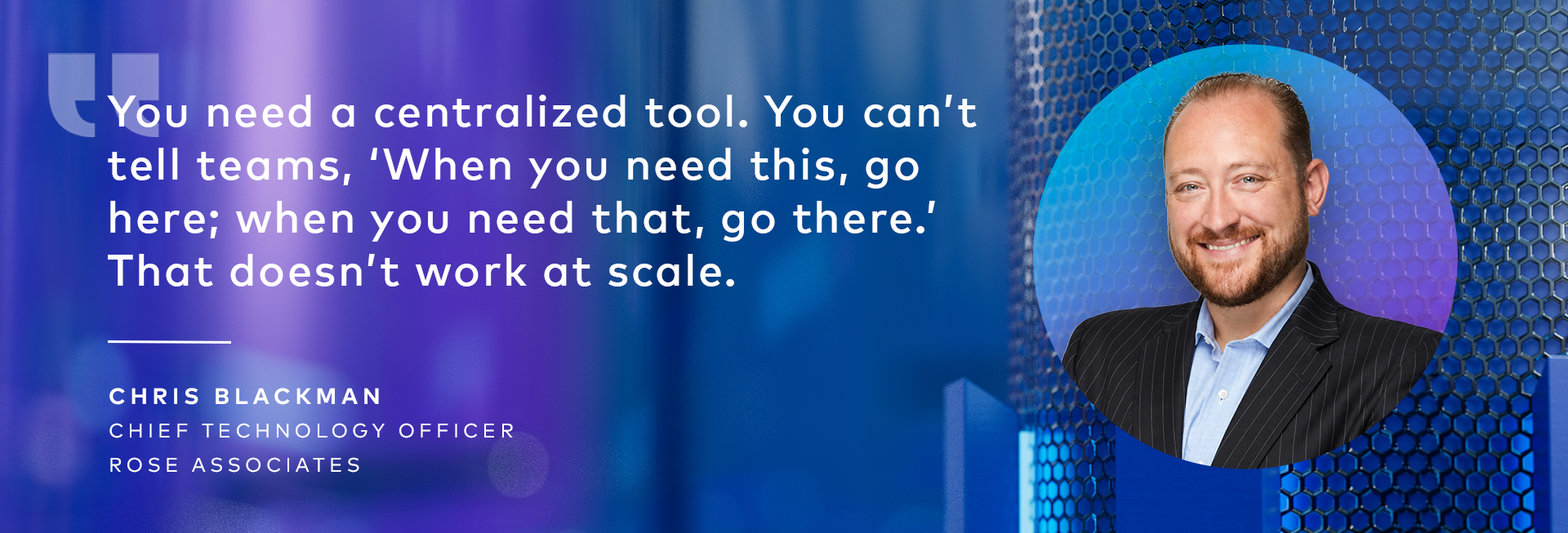
“You need a centralized tool. You can’t tell teams: When you need this, go here. When you need that, go there. That doesn’t work at scale,” he said.
That connection matters behind the scenes, too. When systems hold different versions of the same information, an agent may be working with an incomplete or outdated picture. A shared source of truth helps agents work from consistent information as they move between tasks.
For Rose, AI’s value is tied to making work easier. A collection of separate agents could leave employees with more systems to navigate, even if each one helps with a particular task. Its leaders want a connected experience that helps people get answers and complete work with less effort.
Rose has participated in beta testing for Virtuoso, giving its team an opportunity to help shape that experience.
“Being part of Virtuoso is not only about testing and providing feedback. It’s about being able to offer something new and different to our internal team members and to our clients,” Marino said.
That participation reflects how Rose views AI’s role in its future: helping its people take on more as the business grows.
“I don’t think about AI as reducing human capital. I think about what more we can do and how we can grow,” Blackman said.
Questions to ask when considering new software
Rose’s experience shows how much of a software decision extends beyond the features available at purchase. How tools connect, who maintains them and what employees need to learn all shape their value over time.
For operators considering a new platform or an addition to their existing stack, these questions can help guide the conversation:
- What work will this remove? Ask which tasks it simplifies and whether it creates any new steps for employees.
- How will it work with existing systems? Confirm what information carries over automatically, what requires manual work and whether connections cost extra.
- What will it take to maintain? Clarify who handles updates and support, especially when a problem involves more than one provider.
- What will employees need to learn? Consider training needs and whether the software adds another place for teams to find information or complete tasks.
- Can it support what comes next? Understand what adding properties, users or capabilities will require.
For Rose, a connected platform created more room to expand how the business uses technology. Their experience offers a useful measure for any software decision: whether it makes work easier today and leaves the team better prepared for what comes next.
Learn more about their success story with Yardi.