

 Voyager Suite
 Breeze
 Virtuoso
 Investment Suite
 RentCafe
 CommercialCafe Suite
 Elevate Suite
 Procure to Pay Suite
  Energy Suite
 Aspire
 RightSource
 Care Suite
 Matrix
 WorkCafe
 Yardi Kube Suite
 ScreeningWorks Pro
  Yardi Corom



















Finance teams face constant pressure to close the books quickly and accurately. For real estate organizations, that challenge is amplified by the complexity of fixed assets management. It often requires thousands of records spanning properties, entities and capital improvements. Many finance teams still rely on spreadsheets or disconnected systems involving manual processes that slow reporting, increase reconciliation effort and obscure visibility into asset performance.
When fixed assets management outgrows spreadsheets
For many real estate organizations, spreadsheets have served as the default tool for tracking fixed assets. They offer a simple way to record asset details and calculate depreciation schedules. But as portfolios expand, spreadsheets often evolve into complex workbooks requiring constant updates. Controllers and accounting staff spend considerable time reconciling asset records with accounting systems, validating depreciation schedules and preparing audit documentation. These manual processes slow financial reporting and add pressure during month-end and year-end close.
The hidden cost of spreadsheet-based tracking
Over time, spreadsheets that once felt manageable can introduce risk, from formula errors and version control issues to inconsistent depreciation assumptions. Spreadsheet-based asset management also limits visibility across the portfolio; when asset data is fragmented across files or systems, finance leaders struggle to see the full financial picture.
Beyond accuracy concerns, spreadsheet-based asset tracking can also create a significant operational burden for finance teams.
“Controllers are expected to deliver faster reporting while maintaining absolute precision,” said Patty Evans, industry principal of cross-market products for Yardi. “When asset data lives in disconnected tools, finance teams spend valuable time reconciling spreadsheets instead of analyzing results.”
Controllers using spreadsheets may struggle to quickly answer questions such as:
- What is the total value of assets across the portfolio?
- Which assets are approaching the end of their useful life?
- How might upcoming replacements affect capital planning?
Better visibility with modern fixed assets management
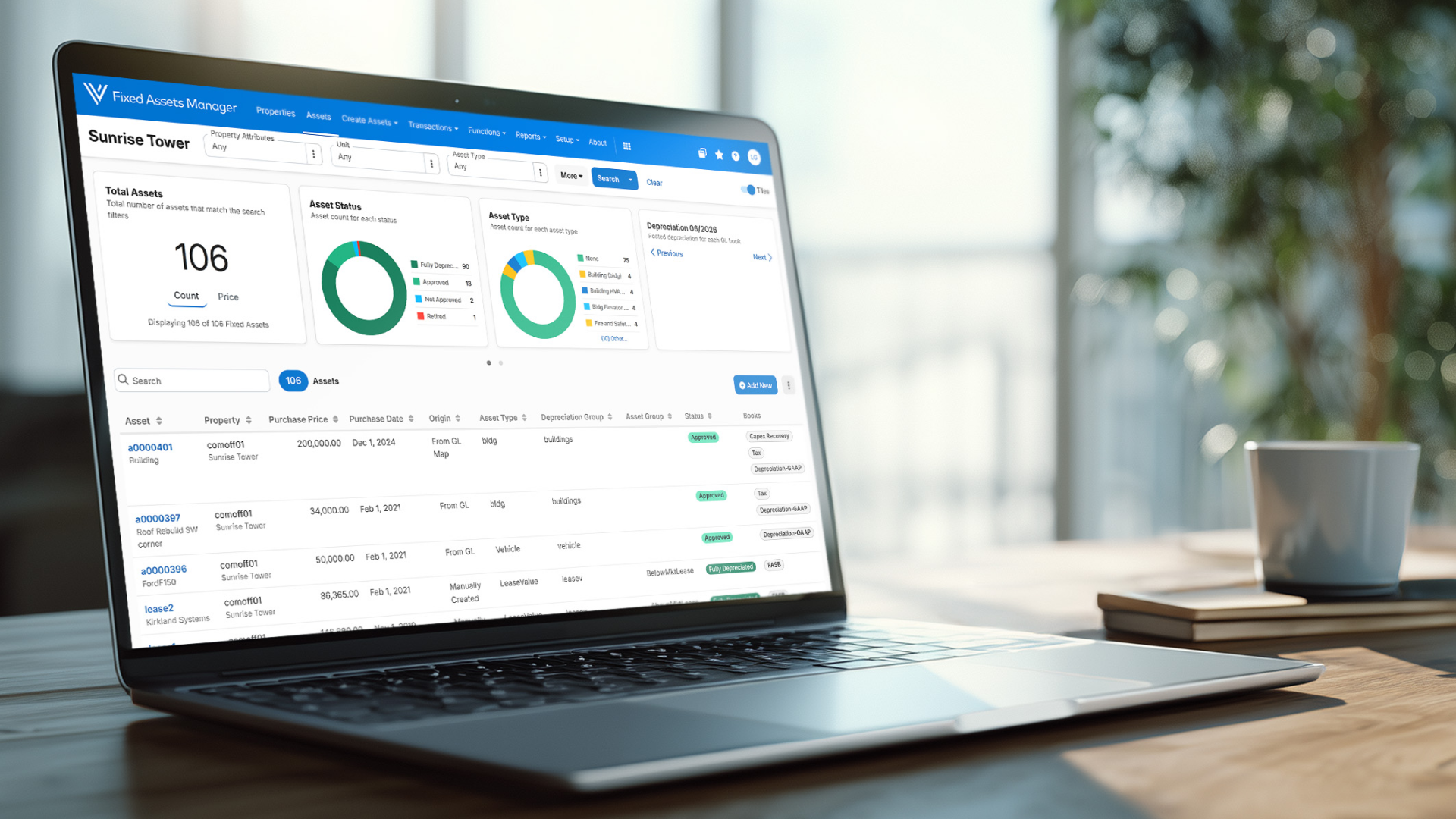
As portfolios grow and reporting demands increase, many organizations are beginning to rethink how they manage asset data. Rather than treating fixed assets management as a collection of static records, finance leaders are finding ways to turn data into actionable insight with advanced asset management technology platforms such as Yardi Fixed Assets Manager.
Such systems help organizations centralize asset data, automate depreciation calculations and align asset records with financial systems. This shift reduces manual work while giving finance teams clearer visibility into portfolio assets.
To see how Fixed Assets Manager can simplify asset tracking and strengthen financial reporting, book a demo today.