

 Voyager Suite
 Breeze
 Virtuoso
 Investment Suite
 RentCafe
 CommercialCafe Suite
 Elevate Suite
 Procure to Pay Suite
  Energy Suite
 Aspire
 RightSource
 Care Suite
 Matrix
 WorkCafe
 Yardi Kube Suite
 ScreeningWorks Pro
  Yardi Corom



















Architecture is one of the great powers to enhance our lives, but it boasts some serious communication issues. Designers, even though they mean well, may present homeowners with tough to understand drawings, or renderings that don’t really reflect how to navigate a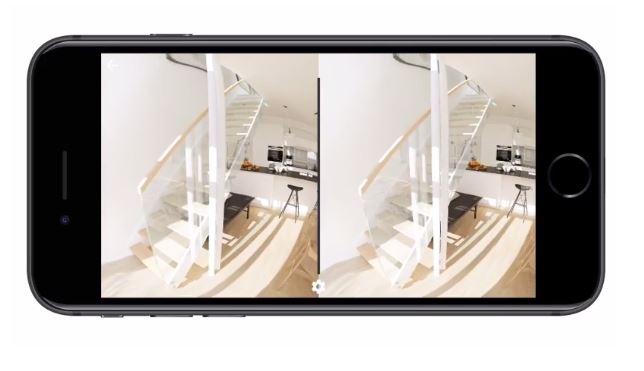 finished room. As a consequence, homeowners end up paying for space without knowing precisely how it will look. Yet, times are changing and homeowners, architects and builders have now the option to walk through a new house before it’s built.
When Virtual Reality first made an appearance through Oculus, it was regarded with plenty of criticism and disbelief, but as time passed, industries started engaging in using VR in business. The real estate industry is one of the most immediately applicable to VR as it enables potential homebuyers view spaces without having to travel to them. Here’s where New York-based IrisVR enters the stage with the launch of two new apps.
“Most of our team started their careers in AEC before coming to the tech world. We pulled from our industry expertise to design tools that are comfortable, easy to use, and non-technical,” IrisVR CEO & co-founder Shane Scranton said in a prepared statement. “Our virtual environments can be generated within seconds from multiple file formats and provide true-to-scale perspectives that both inspire design and reduce errors. We’re also seeing significant added value to our clients as they offer virtual reality as a selling point.”
The startup announced that it has raised $8 million in Series A funding, which it plans to use to bring virtual reality to architecture and design. Iris Prospect and Iris Scope encompass a wide range of VR headsets. The former allows customers to take their 3D plans and blueprints and turn them into VR experiences, viewable on devices like Oculus Rift, HTC Vive, GearVR and Cardboard. This can be done through a free ‘Basic’ account. However, for $200 a month, the customer can upgrade to a Pro account, which adds features like dynamic lighting, annotations, screenshot capture and even a scale model mode. Think of it as a way to teleport yourself throughout a location with the press of a mouse.
Iris Scope was designed to convert images into VR experiences for smartphones. Instead of 3D models, it enables users to create 360 degree videos of spaces. The app is available for both iOS and Android devices. The company is also offering a bundle package with Pro versions of both apps for $210 a month and claims it has 15,000 customers, 75 percent of them working in architecture, engineering and construction fields.
“There are real, industry-changing applications for this technology and IrisVR is building one of them,” Scranton said. “Simply put, we’re reinventing the canvas on which a vast, global industry communicates. For design and construction professionals, the vision is the core of every project. IrisVR brings that vision to life.”