Voyager Suite
 Breeze
 Virtuoso
 Investment Suite
 RentCafe Suite
 REACH by RentCafe
 CommercialCafe Suite
 Elevate Suite
 Procure to Pay Suite
  Energy Suite
 Aspire
 RightSource
 Care Suite
 Matrix
 Yardi Kube Suite
 ScreeningWorks Pro
  Yardi Corom


















We’ve discussed the challenges, benefits and methods of building higher in these pages. This time we’ll look at building lower – specifically, underwater.
Although it’s largely hidden, underwater construction is prevalent and necessary to many aspects of commerce and recreation. A study in 2020 found that infrastructure such as marine tunnels, bridges, oil and gas rigs, wind farms, ports, marinas, aquaculture farms, artificial reefs, cables, coastal defense and breakwaters cover about 11,600 square miles – an area about 500 square miles larger than Albania.
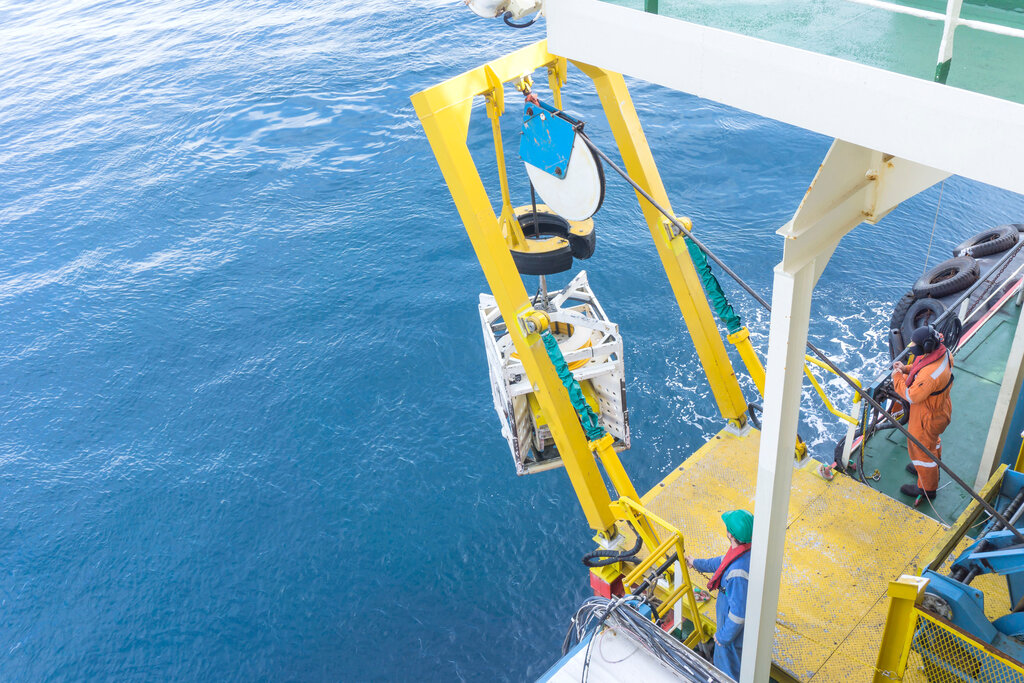
Underwater structures face special challenges such as ocean currents, corrosive water and pressure. They must be positioned to avoid interfering with ships and be sturdy enough to withstand impacts from large sea animals. Moreover, many construction materials commonly used on land, such as wood, aren’t suitable for underwater use.
Then there’s the actual construction process. Since it’s nearly impossible to build in water, sea-based structures are usually built on land, transported to their destination and lowered into place. Some pieces are lowered using their own weight while other parts are loaded with weights that help them reach the seafloor. One structure that was built this way is the Utter Inn, a small hotel in Sweden that was built on shore then submerged in the middle of a lake. Its entrance is only accessible by boat.
If builders need to reach the bottom of a body of water, they might use a caisson, a watertight structure that creates dry interior. Once the structure is built, the caisson is released, allowing water to enter. Building the Brooklyn Bridge, for example, involved using large caissons to dig to the bedrock and form the bridge towers’ foundations.
Cofferdams, another type of support structure, are temporary enclosures that pump water out to create a dry working area, giving builders space to create wharfs, piers and other structures. Cofferdams were erected to divert water from the Colorado River in the construction of the Hoover Dam.
Another technique involves inserting steel columns called driven piles into the soil. Filled with concrete and steel, they can provide a foundation for buildings that are constructed offsite then lowered into the water. Apple’s partially submerged store in Singapore is an example of driven piles used as an anchor.
Offsite building, caissons, cofferdams and driven piles have produced other notable underwater structures, including:
- The Transbay Tube, a 3.6-mile underwater railroad tunnel built in 1974 that connects San Francisco and West Oakland. The tunnel was built offsite, then lowered into place 135 feet below sea level after being towed into the San Francisco Bay.
- The Atlantis Hotel in Dubai, located on an artificial island, which features several underwater suites 20 feet below sea level.
- The Ithaa Undersea Restaurant in the Republic of Maldives, an acrylic structure 16 feet below sea level.
Is underwater construction feasible on a larger, longer scale? After all, Tektite 1, a project coordinated by the U.S. Office of Naval Research, successfully housed four “aquanauts” for 58 days in a steel habitat 43 feet deep off the U.S. Virgin Islands in 1969, proving the concept of underwater living.
But for the foreseeable future, locating even modest-size metropolises underwater remains prohibitively expensive. Still, “human innovation has made it possible to build underwater structures in ways that seemed impossible just a short time ago. It may not be long before floating cities, submerged cities or cities on the seafloor become a reality,” says BigRentz, the nation’s largest online construction equipment rental network.