Voyager Suite
 Breeze
 Virtuoso
 Investment Suite
 RentCafe Suite
 REACH by RentCafe
 CommercialCafe Suite
 Elevate Suite
 Procure to Pay Suite
  Energy Suite
 Aspire
 RightSource
 Care Suite
 Matrix
 Yardi Kube Suite
 ScreeningWorks Pro
  Yardi Corom

















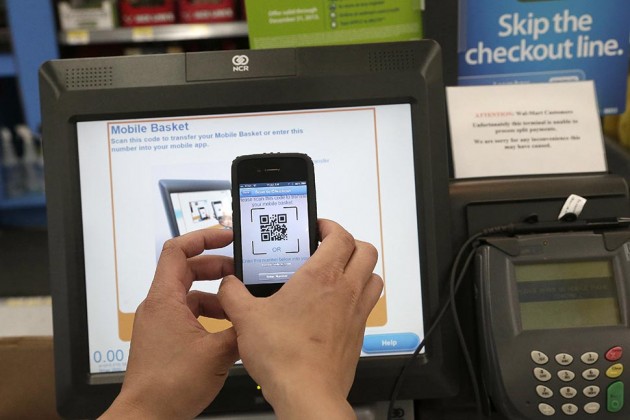
The mobile payments war is far from over. In fact, it just got much mor e interesting since Walmart entered the scene—yes, mega retailer Walmart announced recently that it plans to offer mobile payments to its shoppers.
Walmart Pay has launched as a feature in the retailer’s existing smartphone app. That will be compatible with all credit cards, debit cards, and Walmart gift cards. Considering that the company accounts for about 10 percent of the retail sales in the country, the service can potentially pose a challenge to Apple Pay and Android Pay.
“Walmart Pay is the latest example – and a powerful addition – of how we are transforming the shopping experience by seamlessly connecting online, mobile and stores for the 140 million customers who shop with us weekly,” said Neil Ashe, president & CEO of Walmart Global eCommerce.
Open, Scan, Done
Walmart’s payment method won’t be using the near field communication (NFC) technology (adopted by Apple, Android, and other “tap to pay” systems). Instead, it enables payments by scanning QR codes at point of sale terminals in the store. Additionally, the user will have to set a 4-digit passcode (or use Touch ID, if you have an iPhone) to authenticate purchase. Once set up, the user can pay for purchases in the checkout line by selecting Walmart Pay from the app’s “Shop” menu. Here’s a catch: since its system relied in a smartphone’s camera, rather than an NFC chip, it’s compatible with a larger number of devices—Apple added NFC capabilities starting with iPhone 6 and let’s not forget that many lower-end Android handsets don’t support the feature, either.
Walmart’s move doesn’t come as a surprise. The company claims it already has 22 million people using its app every month, so building payments into its own app comes more as a natural next step, even though the process isn’t as simple to setup and use as Apple Pay and Android Pay.
Some believe that Walmart is not competing with Apple and Android, but with an Apple Pay competitor called CurrentC and owned by MCX, the Walmart-led consortium formed in 2012. Their apparition resulted in strange reactions when Apple Pay launched last year: drugstores CVS and RiteAid explicitly disabled their NFC to thwart the use of iPhone payment (RiteAid has since restored Apple Pay functionality), Target (another MCX partner) allowed Apple Pay in its app, but not in stores.
With the mobile payment system, Walmart has basically taken the technology behind MCX and rolled-out a single-merchant version for its own store. Yes, its implementation is a bit cumbersome, but the receipt functionality hasn’t yet been made available from Apple.
Walmart Pay will begin to roll out to stores in select cities—undisclosed ones. The broader rollout is expected in the first half of 2016.