

 Voyager Suite
 Breeze
 Virtuoso
 Investment Suite
 RentCafe
 CommercialCafe Suite
 Elevate Suite
 Procure to Pay Suite
  Energy Suite
 Aspire
 RightSource
 Care Suite
 Matrix
 WorkCafe
 Yardi Kube Suite
 ScreeningWorks Pro
  Yardi Corom



















CRE is operating in a more complex environment now than it did even a few years ago. Portfolios now stretch across regions, asset classes and ownership structures. Mixed use developments bring retail, office and residential operations together under one roof. At the same time, investors expect faster reporting and deeper transparency while regulatory and lender requirements continue to expand.
For leadership teams, the conversation about technology is shifting. The question is no longer whether systems help run the business, it’s whether they can keep up with the scale, visibility and speed needed to manage modern portfolios.
From singular functions to the bigger picture
For years, technology decisions in CRE were made function by function. Leasing teams adopted CRM platforms to manage pipelines and tenant relationships, finance teams implemented accounting systems for financial controls and reporting. Property operations invested in tools to streamline maintenance and service workflows. As portfolios grew, these disparate tools were operating alongside one another rather than together. Data moved between systems through integrations, spreadsheets and manual workarounds. Reporting often required reconciling numbers and slowed down analysis, and strategic planning sometimes meant validating data across multiple systems before teams could act on it.
But what worked well for smaller portfolios becomes harder to manage at enterprise scale. The focus shifts from improving individual departments to understanding and managing performance across a portfolio.
Losing the plot with fragmented systems
Fragmented systems create small, persistent inefficiencies that add up over time. Quarter end reporting can turn into a process of aligning numbers across platforms. Budget cycles may require exporting and consolidating data from multiple sources. Asset managers and finance teams spend time confirming accuracy instead of focusing on performance and strategy. Decisions take longer because teams want to verify the numbers first. IT staff spend too much time on maintaining integrations.
For organizations focused on growth, capital strategy and competitive advantage, that friction can start to limit what the business can do.
Why the single platform model is gaining traction
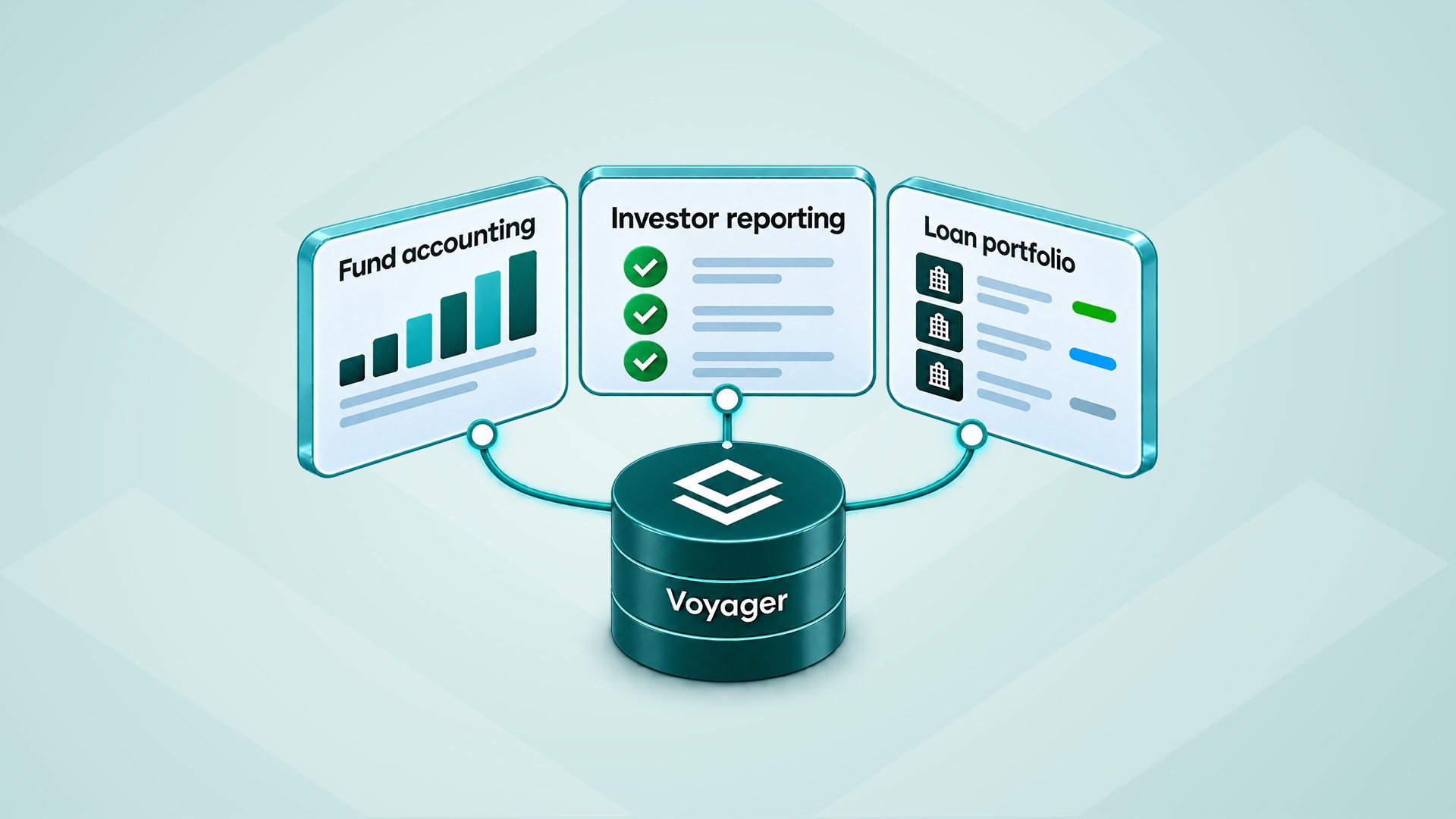
Instead of connecting multiple specialized tools, a single platform operates from a shared data model across leasing, accounting, asset management and operations. Information is entered once and becomes available everywhere it’s needed.
That shift changes how teams work together. Leasing activity can flow directly into financial projections. Operational performance can inform asset strategy as it happens, and portfolio level reporting reflects the same underlying data across departments.
For leadership, the conversation changes as well. Meetings spend less time reconciling numbers and more time discussing performance and opportunities. Decisions move faster because teams trust the data they are working with. It also makes advanced planning easier. Scenario modeling, forecasting and capital planning can draw from the same system that supports daily operations. That means organizations can evaluate and act on new opportunities without waiting for long validation cycles.
Why scale depends on standardization
Moving toward a single platform is not just a technology decision. It’s also a governance decision. As CRE organizations grow, consistent processes and reporting become increasingly important. Standardized workflows, controls and data structures help reduce risk and improve visibility across the business. They also make it easier to scale through acquisitions, new developments or expansion into new markets. A unified platform becomes shared infrastructure that connects the organization rather than a collection of disconnected systems.
Looking ahead for CRE leaders
The decision to consolidate platforms is ultimately about preparing for growth. Leadership needs to see what is happening across the portfolio in real time, and teams must move from insight to action without delays caused by fragmented data. And this is key: tech solutions need to support expansion without adding new layers of complexity.
Check out how ACF Property Management thrives on Yardi’s single connected platform.