

 Voyager Suite
 Breeze
 Virtuoso
 Investment Suite
 RentCafe Suite
 REACH by RentCafe
 CommercialCafe Suite
 Elevate Suite
 Procure to Pay Suite
  Energy Suite
 Aspire
 RightSource
 Care Suite
 Matrix
 Yardi Kube Suite
 ScreeningWorks Pro
  Yardi Corom

















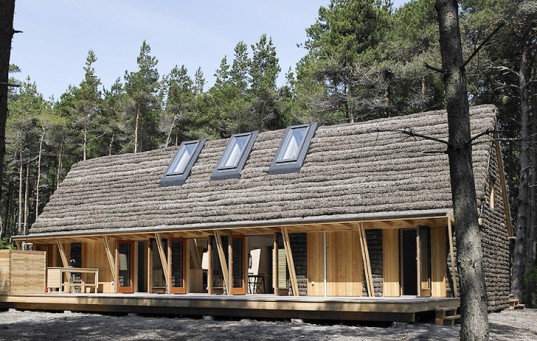
Building smarter requires low upfront costs, quick returns, and mechanisms to protect the longevity of our investments. A new wave of insulating materials can reportedly do all of that for our properties, so why haven’t they gained more buzz?
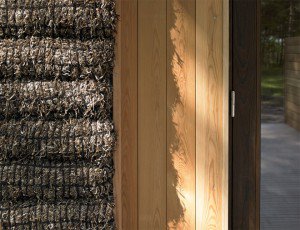
Insulation that’s affordably priced, durable, fire resistant, and long-lasting is hard to come by, though not impossible. Seaweed had been used by residents on the Danish island of Læsø for hundreds of years before falling out of fashion. It could be making a comeback in the nation and throughout the world.
Læsø’s seaweed cottages of old are reminiscent of scenes from The Hobbit: tiny abodes with low roofs and shady interiors nestled in idyllic forests. Those aren’t the living conditions that many of us face. Fortunately, Realdania has created a modern seaweed material that fits into even the most metropolitan landscape.
Why seaweed? Why not? A properly laid seaweed roof or “siding” can last for 100-150 years with basic upkeep, drastically reducing maintenance and replacement costs in comparison to even the best architectural shingles or Hardieplank. Seaweed insulates naturally, comparable to mineral wool, while providing a fireproof, non-toxic, CO2-neutral and easily renewable building material. It’s the sustainable solution that should be a serious competitor but simply hasn’t gained much traction in the States.
Part of its unpopularity goes back to the aesthetic. To most, it’s ugly. The traditional thatching techniques—artfully piling and twisting loose seaweed—result in a home fit for Middle-earth. The more modern approach still looks heavy and otherworldly but its presentation is slightly more suitable for modern tastes. It holds promise as an insulating alternative that serves double-duty as an exterior covering.
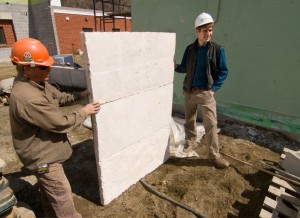
For those who have no interest in the textured appearance of seaweed, Ecovative has introduced a series of Mushroom© Materials to the market that offer crisp angles and endless versatility. Mushroom Materials are made of agricultural byproducts and mushroom mycelium, which is a naturally occurring “self-assembling glue” that digests crop waste to produce the product.
Mushroom© Insulation is a rapidly renewable resource with a Class A fire rating, ultra-low VOC emissions, and low embodied energy. It’s simple to install and can be molded into many forms, expanding possible applications. Unlike its plastic foam competitors, the R-value of Mushroom© Insulation never decreases. To avoid moisture problems in exterior applications, the insulation is combined with a weather resistive barrier. There are now five types of Mushroom© Insulation in development for interior and exterior purposes.
Seaweed and mushroom-based products have the environmental, health, and safety benefits needed to be game changers in the building industry yet the technology hasn’t gained as
much attention as home automation or LEDs had in their nascent stages.
Primarily, they both lack adequate international marketing. Aside from Inhabitat readers, very few people have heard of either product or seriously considered their applications. No major brands or organizations have picked up the alternative insulations for a new project. Such headlines could easily boost the products’ signal online, breathing new life into the companies’ efforts.
Secondly, building crews in America are notoriously hesitant to adapt to new materials, and their employers are slow to spend time and cash on training. Again, it only takes one notable client to wake up others to the vast possibilities and make their efforts seem worth it. That big break hasn’t happened for either company.
Perhaps you could change that. How would seaweed or mushroom technologies be received in your professional community?