


 Voyager Suite
 Breeze
 Virtuoso
 Investment Suite
 RentCafe Suite
 REACH by RentCafe
 CommercialCafe Suite
 Elevate Suite
 Procure to Pay Suite
  Energy Suite
 Aspire
 RightSource
 Care Suite
 Matrix
 Yardi Kube Suite
 ScreeningWorks Pro
  Yardi Corom

















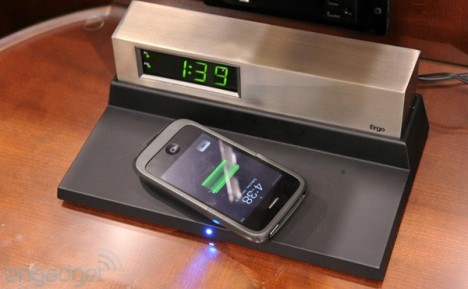
Perhaps more than anyone, business travelers understand the importance of rapidly charging a mobile device. Business professionals are expected to be connected, accessible, and up-to-date. A dead smartphone or tablet simply doesn’t lend itself to the lifestyle.
A few new developments will help business travelers fulfill their commitments at home, abroad, and everywhere in between.
Several international companies have developed ultra-fast capacitors for batteries. Eesha Kare, an 18 year old student from California, has become the poster child for the success of such technology. She created a device that could charge a smartphone in less than 30 seconds. The device also allows the battery to store energy for 10,000 cycles rather than the standard 1,000 cycles seen on most batteries. Kare won The Young Scientist award for the invention this summer, though similar devices have been around for at least a year. Strangely, no industry leaders have pushed the capacitors to the public just yet.
Qi (pronounced “chee”) wireless is today’s standard for rapid charging. Users place their device on top of a power transmission pad, which then uses electromagnetic induction to charge the device. The technology has been around since 2008 but it has been slow to catch on mainly because of costs. Qi Hotspots have popped up in places such as the Tulsa International Airport but more are in the works at transportation hubs and coffee shops around the globe.
Further refinement has made Qi technology more affordable. By mid-2014, Samsung aims to present a consumer-friendly wireless charger, allowing users to charge their phones from a distance while using it. You won’t be constrained to the airport charging kiosk, hovering over half a dozen other users while attempting to process sensitive information. Even at home, you will be able to charge a device without being limited by a cord’s length. Sounds excellent, right?
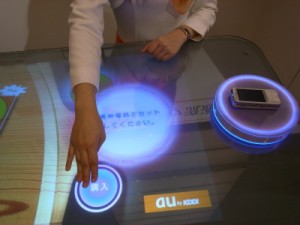 In the meantime, Toshiba’s TransferJet (left) is available. The miniature touchscreen kiosk offer Qi wireless charging. Users can also download and pay for content via NFC. We can look forward to more Toshiba TransferJets in public, likely before Samsung’s release in 2014.
For fast charging with a cord, The Halo Pocket Charger 2200 and 2800 (right) are lightening cable chargers suitable fo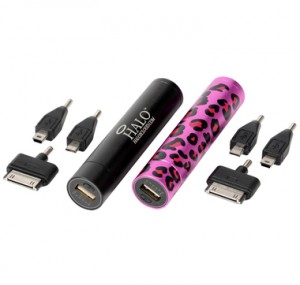 r numerous devices; they come with double-tipped USB cords and several adapter plugs. In a consumer test, the 2200 took an iPhone 5 from 28 percent charged to 84 percent in 1:20. Only half of the Halo’s charge was used. The Halo itself requires about five hours to power up. You can let The Halo charge while it and its power source are in use.
What rapid-charge technology have you relied on during business travel?