

 Voyager Suite
 Breeze
 Virtuoso
 Investment Suite
 RentCafe Suite
 REACH by RentCafe
 CommercialCafe Suite
 Elevate Suite
 Procure to Pay Suite
  Energy Suite
 Aspire
 RightSource
 Care Suite
 Matrix
 Yardi Kube Suite
 ScreeningWorks Pro
  Yardi Corom

















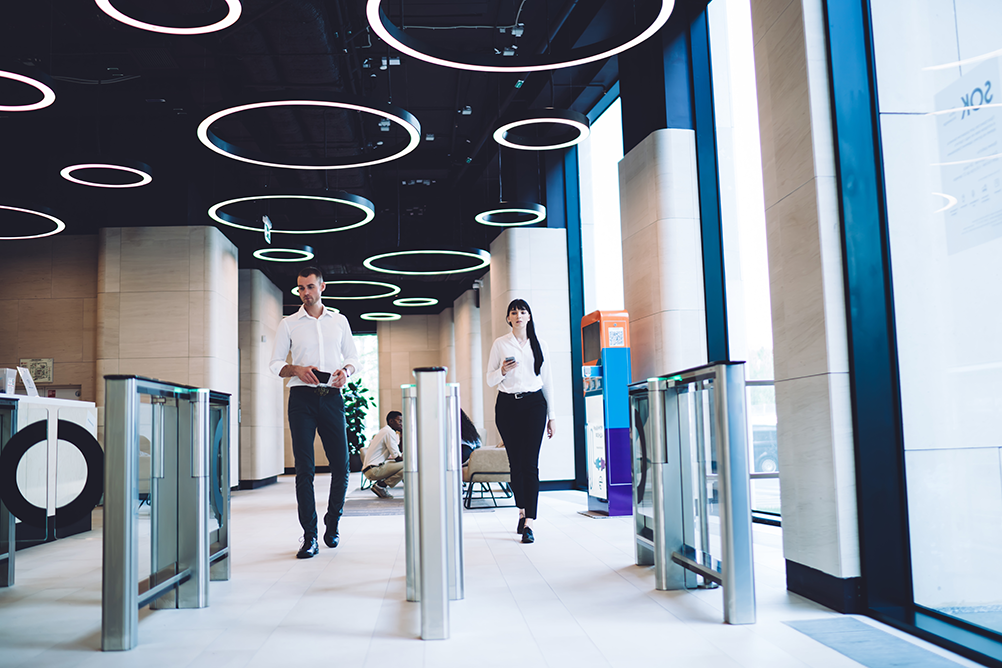
With many workers staying at home during the pandemic, commercial buildings emptied but the obligation to maintain security for buildings, technology, hardware and data remained.
Now that many of those employees are on the verge of returning to work, managers of residential as well as commercial properties are bolstering traditional physical security – the protection of outer and inner perimeters and interiors with guards, fences, locks, video surveillance, fire detection and more – with new capabilities.
Seventy-five percent of respondents to a recent survey of U.S. physical security and facility management professionals said the pandemic increased the importance of physical security in their organizations. Propmodo, which covers the global property industry, notes, “The expectations about safety and security have changed [after the pandemic] and security teams and the buildings they manage need to be prepared to meet these new higher standards.”
Enhanced systems for evolving needs
As a result, many property owners seeking to mitigate risk are embracing a notion of security that combines traditional physical security elements with access control technologies that have evolved, as Georgia-based real estate investment advisement firm Think Realty says, “to support a digital environment for tenants and property managers.”
Advanced access systems encompass door entry, video surveillance and intrusion detectors, and real-time monitoring of entrants and the property. Many such systems are cloud-based, enabling remote management and scalability. Many employ voice, retinal, and facial recognition, thermal imaging and artificial intelligence.
Engaging a technology platform capable of seamlessly physical and data security operations with other Internet of Things building infrastructure elements gives security and facility managers “the opportunity to create an environment that is not only safe and secure, but promotes productivity, collaboration and success,” Propmodo says.
Commercial and residential property owners most likely will adopt other new practices in the post-COVID world, including pre-screening entrants and managing occupancy levels.
Enhancing security brings benefits beyond protecting a property and its residents or tenants. “Modern access control solutions are no longer just a function of physical security, they are a building amenity. They offer convenience and better security, increasing building reputation. This supports tenant retention, decreases vacancy rates and consequently increases revenue,” according to Think Realty. “Access control solutions are quickly evolving, and real estate professionals who embrace change will emerge resilient.”
Earlier this year, Yardi acquired visitor management and smart access control software supplier We Are Forge Ltd., whose cloud-based Forge Bluepoint product allows real estate asset operators to manage visitors flexibly and securely.