

 Voyager Suite
 Breeze
 Virtuoso
 Investment Suite
 RentCafe Suite
 REACH by RentCafe
 CommercialCafe Suite
 Elevate Suite
 Procure to Pay Suite
  Energy Suite
 Aspire
 RightSource
 Care Suite
 Matrix
 Yardi Kube Suite
 ScreeningWorks Pro
  Yardi Corom

















Modular data centers are one of the latest innovations in the IT world. In many cases, they are capable of increasing business productivity while reducing costs. We went looking for answers to some common questions about these data centers and what implications they have for the future.
So, what is a modular data center?
A modular data center, unlike a traditional data center, can be defined as a portable method of deploying data center capacity anywhere and everywhere it is needed. It incorporates contained units and standardized deployment options that give you flexibility and scalability.
What’s so important about these ‘mobile facilities’?
Modular data centers are designed for rapid deployment, are energy efficient and high-density computing systems that deliver services at lower costs than traditional construction methods, as well as reducing the construction time from years to a matter of months.
In what kind of shape or form are these data centers available?
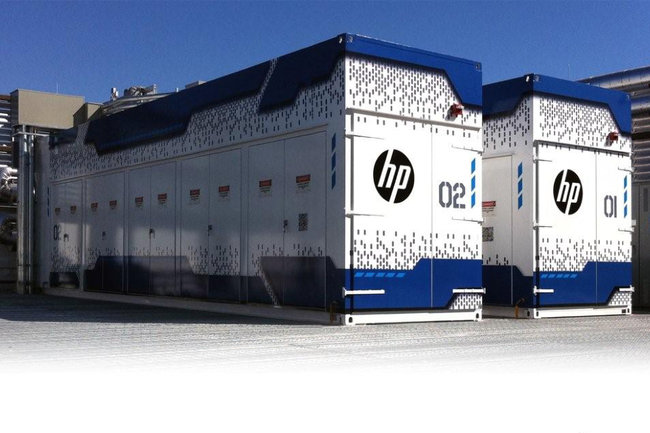
Modular data centers typically come in two forms: The more common type, referred to as containerized data centers or portable modular data centers, fit data center equipment into a standard shipping container, which is then transported to a desired location. Containerized data centers typically come outfitted with their own cooling systems. For example, Cisco’s Containerized Data Centers fit in to this category.
The other form of modular data center fits data center equipment into a facility composed of prefabricated components that can be quickly built on a site and added to as capacity is needed. HP’s version of this type of modular data center, Flexible Data Center, is constructed of sheet metal components that are formed into four data center halls linked by a central operating building.
Modular data centers can be defined as more of an approach to a design that incorporates contained units, many times in the form of prefabricated modules. A container is not the same thing as module; a container, or more containers, form or can be a part of a modular data center.
Anything interesting in terms of new constructions or exotic locations?
Most recently, Aceco TI built its largest outdoor modular data center in South America. Aceco was selected by Johnson & Johnson Family of Companies to deliver a state-of-the-art facility for its consumer healthcare, medical devices, and pharmaceuticals companies. The contract planning, design and construction of the data center is the first signed between the two companies.
Aceco TI’s infrastructure is set in Brazil, in the state of São Paulo, in São José dos Campos, one of the leading industrial and research centers in Latin America. The center, already in operation, features 130 terabytes for storing applications and 170 terabytes for storage of user data. The current capacity is 200 servers and it is expected to be quintuple of that. The complex is monitored 24/7 and has Tier 1 backup systems ensuring integrity and data confidentiality, anti-fire and smoke protection, corrosive gas walls and more.
“For us, the data center represents how we prioritize the concept of innovation in our company not only in the IT area, but also with regard to sustainability, since this is a project with specifications of green computing,” said Lourenço Miranda, senior director of Infrastructure Latin America of Johnson & Johnson.
Any other big modular data centers I need to know about?
The world’s largest modular data center is actually located in the United States, in Edison, New Jersey. The 830,000-square-foot building transformed in to a cutting-edge facility by IO Data Centers was previously a printing plant owned by The New York Times, which was decommissioned in 2008. Now, IO New Jersey is one of the largest and most robust power switching stations in the region.
Across the Atlantic, Europe’s largest modular data center is located in Barcelona, Spain. Emerson Network Power built the facility for Deutsche Telecom subsidiary T-Systems over the span of 9 months, which is around a quarter of the time needed for a traditional ‘stick build’ data center.
Are there any drawbacks to these modular data centers?
One of the negative aspects is that the containers can be damaged while being moved or transported, always needing recalibration and re-torqueing. Facility modules located outside are susceptible to damage from a variety of sources, including weather, vandals, wildlife and also traffic. Prefabricated modular systems come in pre-determined sizes, so users might not be able to always build a data center to the exact size they’d like, but this can be categorized as a design preference.