Voyager Suite
 Breeze
 Virtuoso
 Investment Suite
 RentCafe Suite
 REACH by RentCafe
 CommercialCafe Suite
 Elevate Suite
 Procure to Pay Suite
  Energy Suite
 Aspire
 RightSource
 Care Suite
 Matrix
 Yardi Kube Suite
 ScreeningWorks Pro
  Yardi Corom

















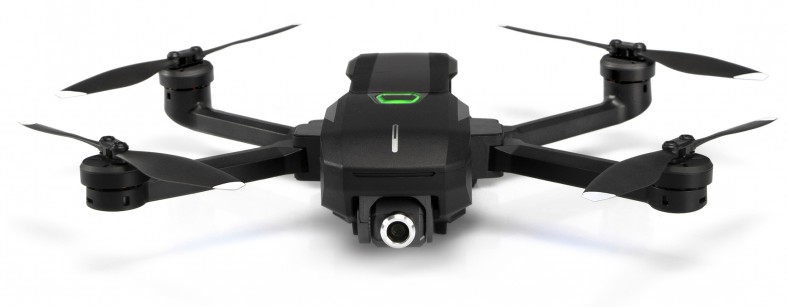
Drones have been increasingly popular in recent years, disrupting various industries with their aerial perspective. Until recently, the more professional models were prohibitively expensive, unless being purchas ed for a specific business venture. This summer saw the launch of a new drone that’s designed for the masses—Yuneec’s Mantis Q, a small, relatively powerful drone with a semi-reasonable price tag (about $500).
Weighting a little over one pound, its in the sweet spot between budget drones like DJI’s Spark, and higher-end models like DJI’s Mavic Air. It holds in its 9 x 7 x 2 inch body (expanded) some of the features usually reserved for more sophisticated drones: 4K video recording, voice control, face detection, speed of up to 44 miles per hour and a lengthy 33-minute flight time. What’s more, it’s also equipped with infrared- and sonar-based stabilization and foldable arms that make it easy to shove in a backpack.
The little drone has three automatic flight modes: journey mode—which flies on a straight, designated path; point of interest—which circles an assigned object; and return home—which automatically returns the drone near its takeoff area.
In addition, sonar and infrared detection allow the drone to avoid obstacles and achieve stabilized flights indoors, without the aid of GPS. The face detection feature is said to recognize faces from up to 13 feet away and can take photos either through gesture control mode if the user waves their hand or through a voice command such as “Take a selfie.”
Voice control can also be used to wake up the drone. We’re not sure how close one needs to be in order for the drone to hear the commands and how much environmental noise affects it. The range for video transmission is between 0.5 miles (800 meters) and 1 mile (1.5 kilometers), in accordance with the CE and FCC standards, respectively.
Mantis’ most impressive feature is the integrated camera, able to capture pictures with a resolution of 4800 x 2700 (16:9) or 4160 x 3120 (4:3) pixels, saved in JPEG or DNG format on the included MicroSD card; the same goes for 4K videos. The camera’s 1/3.1-inch CMOS sensor is relatively small comapred to handheld cameras, but what the device lacks in sensor size, it makes up for with a 3-axis electronic gimbal for stabilization.
Downsides include the lack of an obstacle avoidance feature and the vertical-only camera gimbal (which professional videographers will probably hate), keeping Mantis firmly in the consumer category
The drone ships with a controller to which you’ll attach your smartphone for video uplink and its app is suitable for both iOS and Android devices. Price is set at $500, and for $650, clients can upgrade their purchase to also include three spare batteries, travel shoulder bag and a three-port charger.