Voyager Suite
 Breeze
 Virtuoso
 Investment Suite
 RentCafe
 CommercialCafe Suite
 Elevate Suite
 Procure to Pay Suite
  Energy Suite
 Aspire
 RightSource
 Care Suite
 Matrix
 WorkCafe
 Yardi Kube Suite
 ScreeningWorks Pro
  Yardi Corom




















Adapting the 2009 and 2012 International Energy Conservation Code (IECC) will add hundreds of thousands of dollars to construction costs for apartment buildings. Traditional construction costs are determined by estimated market revenues. Revenues, in turn, are determined by rent rates. International energy codes by nature cannot be catered to specific markets, therefore such codes commonly remove projects from their intended markets. Affordable housing is most noticeably affected by these changes.
A document entitled “Impact of the 2009 and 2012 International Energy Conservation Code In Multifamily Buildings” was released by the National Multi-Housing Council and the National Apartment Association to analyze the financial impact of the new codes.
The cost of compliance with the 2012 codes is steep, eclipsing costs of 2009 codes by 200 percent in some cases. Low-rise multifamily housing in climate zones 1-4 will feel the greatest impact. Construction costs will increase by $480-$2,160 per unit.
Timely payback is a reoccurring issue with green building. The NMHC/NAA report calculates that certain regional codes increase the efficiency of a building so nominally that it could take 191 to 252 years to see returns, yet to implement the codes costs thousands of dollars per unit upfront.
IECC 2012 codes focus mainly on the design and composition of a structure’s envelope and insulation.
Air Sealing: Air sealing the structure has proven to be a cost-effective measure to improve energy conservation. Such tightly sealed envelopes may decrease air quality, making it difficult to control ventilation and moisture. To offset these issues, costly additions must be made to supplement code requirements.
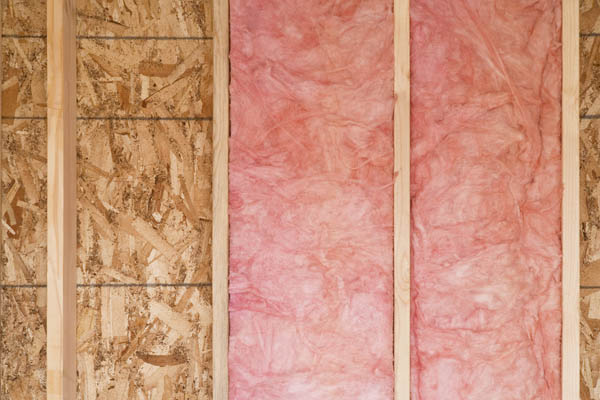 Insulation: R-3.8 insulation board (as recommended in IECC 2006 codes) is adequate for thermal bridging in most cases, yet newer codes encourage additional layers of insulation in wall cavities. The R-value requirements may necessitate changes to traditional building frames and building veneers to accomodate.
These layers do not result in significant energy savings; the savings that are incurred over time do not offset construction costs in a timely manner. Since insulation has diminishing returns across the board, the long-term efficiency of the structure does not increase proportionally to the R-value of the insulation.
Additional Expenses: A number of the 2012 recommended practices require services and products that are not traditionally implemented in multifamily construction. To facilitate these changes, multifamily firms would need to embark on various campaigns to create worker training programs, seek and obtain cost-effective contracts with third-party consultants, and plan to restructure previously accepted building systems.
The Bottom Line: To give multifamily firms an idea of what to expect, section B.10 of the NMHC and NAA’s analysis provides cost evaluations for different types of structures based on their climate zones. The 2010 Engineering News-Record’s Square Foot Costbook and “practical project costs” were used to create the evaluation, including “subcontractor costs for material, labor and taxes, and general contractor overhead and fees,” as well as a maximum 11 percent for overhead costs for the subcontractor. Price estimates are given per unit.
The estimates are humbling. Poor returns make the cost of meeting IECC standards unappealing to multifamily firms with flexible budgets and nearly unfeasible for affordable housing firms. The goals of energy efficiency and resource conservation risk being lost or grossly underrepresented in the industry without recommendations that yield more timely returns. As IECC continues to issues new standards for the industry that raise the costs of building without consideration for individual markets, affordable housing will undoubtedly fall behind without further government support.
What are your views on the cost of meeting the IECC standards? Have they affected your property or bottom line?