

 Voyager Suite
 Breeze
 Virtuoso
 Investment Suite
 RentCafe Suite
 REACH by RentCafe
 CommercialCafe Suite
 Elevate Suite
 Procure to Pay Suite
  Energy Suite
 Aspire
 RightSource
 Care Suite
 Matrix
 Yardi Kube Suite
 ScreeningWorks Pro
  Yardi Corom

















Many of us have changed the way we go about our daily lives since social distancing efforts began in late 2019. Not only have we rolled with the changes, we’ve embraced them, morphed them into something better, and created new ways to work with each other.
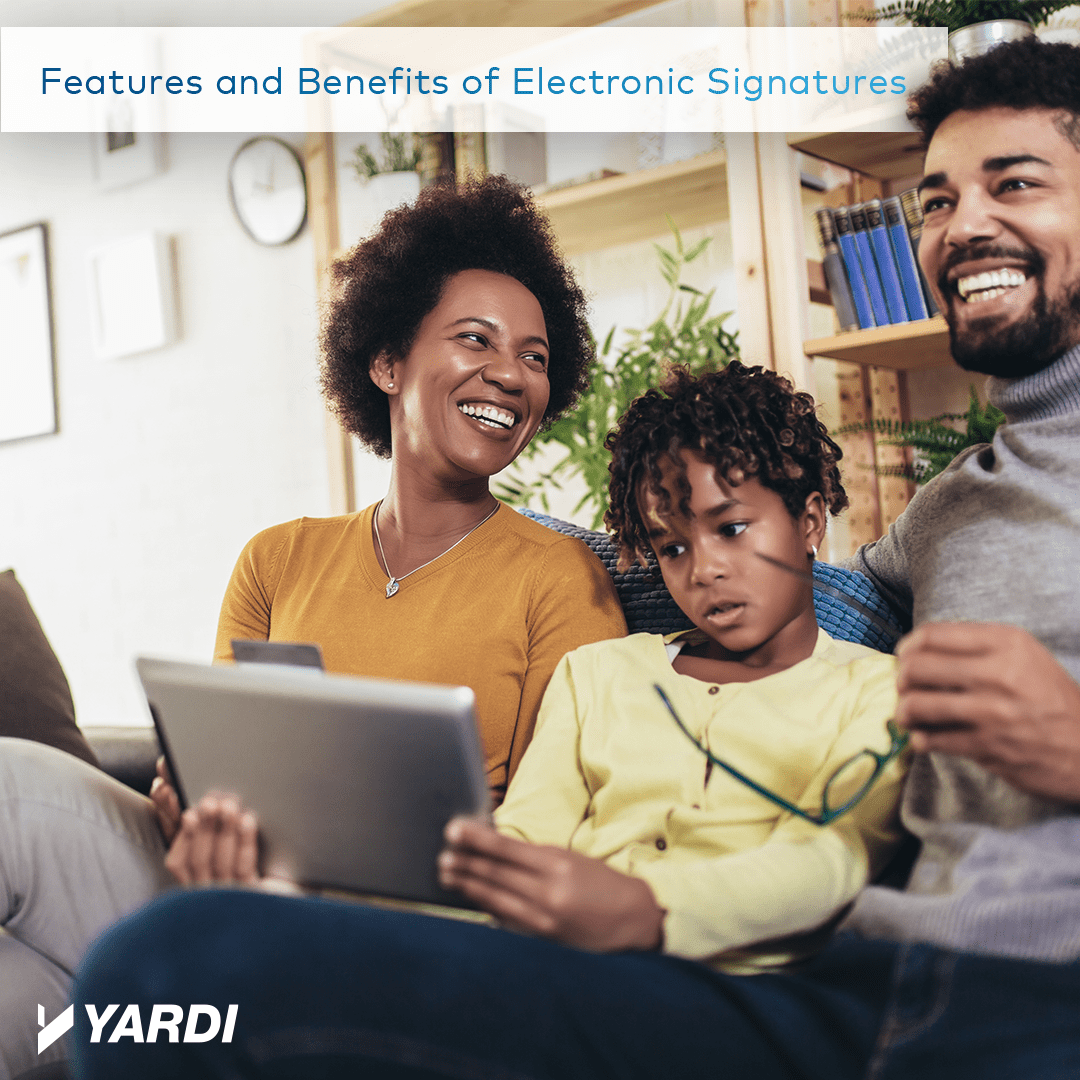
A major change affecting affordable housing providers and public housing agencies came in a notice from the United States Department of Housing and Urban Development (HUD) in 2020 by which HUD authorized use of electronic signatures in place of “wet” (i.e. ink) signatures to execute documents for many of its housing subsidy programs.
Examples of affected programs include:
- Project-based Section 8
- Rental Assistance Demonstration Project-based Rental Assistance (RAD/PBRA)
- Section 202 Senior Preservation Rental Assistance Contracts (SPRAC)
- Section 202/162 Project Assistance Contract (PAC)
- Section 202 Project Rental Assistance Contract (PRAC)
- Section 811 PRAC and Project Rental Assistance (PRA)
- Rent Supplement
- Section 236 (including RAP)
- Section 221(d)(3)/(d)(5) Below-Market Interest Rate (BMIR).
Why are e-signatures a game changer for subsidized housing?
Eliminating ink signature requirements save time and money for affordable housing providers and public housing agencies. Rather that dealing with paperwork, these organizations can now set up digital workflows that reduce paper usage and storage costs. Those online workflows can save significant staff hours and create more time to serve residents.
E-signatures are more convenient for affordable housing and PHA applicants and residents. They can execute documents when they have a free moment, instead of taking time off work or from childcare to visit an office to sign forms.
Audits are also faster, easier and safer with the use of e-signatures. Because workflows are paperless, auditors can monitor files without having to come into an office. Instead, they can access affordable housing and PHA files from a remote workstation to complete every step of the audit process.
What are HUD’s requirements for e-signatures?
As expected, there are rules and requirements associated with this change of procedure. For example, HUD requires that subsidized housing operators give the option for traditional, wet signatures upon request.
HUD also requires that e-signature procedures comply with existing e-transaction law. Those laws dictate that e-signatures are just as valid and enforceable as wet signatures if they meet specific standards.
To qualify as a valid e-signature, the following five requirements must be met:
- Electronic form of signature
- Intent to sign
- Association of signature to the record
- Identification and authentication of the signer
- Integrity of the signed record
More information on those requirements and Yardi’s ability to meet them can be found by downloading a white paper called Features and Benefits of Electronic Signatures in RentCafe Affordable Housing.
RentCafe Affordable Housing offers online portals for applicants and residents. With it, users can apply for affordable housing, provide documentation to qualify for a unit, pay rent, conduct annual certification of eligibility and more.
HUD’s notice approval of e-signatures makes RentCafe even more beneficial as organizations and users can take advantage of built-in technology that facilitates paperless workflows.
Want a demonstration of how it all works? Subsidized housing providers can call (800) 866-1144 to set up a demonstration of RentCafe Affordable Housing and/or RentCafe PHA, or visit yardi.com to learn more.