Voyager Suite
 Breeze
 Virtuoso
 Investment Suite
 RentCafe
 CommercialCafe Suite
 Elevate Suite
 Procure to Pay Suite
  Energy Suite
 Aspire
 RightSource
 Care Suite
 Matrix
 WorkCafe
 Yardi Kube Suite
 ScreeningWorks Pro
  Yardi Corom




















There is a moment in every major technology shift when the question changes from “Is this real?” to “Are we ready?” For AI in commercial real estate, that moment is now. Firms across every sector are piloting tools, setting up AI working groups that would have seemed theoretical three years ago. But in reality, AI in commercial real estate is not the same as AI everywhere else. And most firms, despite enthusiasm, are not yet positioned to benefit from what AI can actually do now.
Why AI in commercial real estate requires a different approach
When a retailer deploys AI to optimize inventory or personalize recommendations, it’s working with structured, high-volume inputs and millions of transactions. The hard work of normalization has largely been solved by the platforms those businesses already run on.
Commercial real estate does not have that luxury. A single institutional portfolio might span dozens of markets, hundreds of assets and thousands of leases, each negotiated individually, each with its own terms, exceptions and amendments. Rent rolls often live in spreadsheets and lease abstracts exist as scanned PDFs. Comparable data sits in broker databases that don’t talk to each other. Operating data is siloed in property management systems that weren’t designed to feed analytics platforms. Market intelligence arrives from a patchwork of third-party providers, each with different methodologies, coverage gaps and update cadences.
Commercial real estate is, at its core, a relationship-driven business built around bespoke assets in localized markets. Standardization has never been the point, but it does mean that before AI can do anything useful for CRE, the data has to be made coherent first. Most AI tools assume that work is already done.
The stakes are higher for CRE
In most industries, an AI error is a recoverable inconvenience such as a misclassified email or a slightly off product recommendation. In commercial real estate, the decisions AI is being asked to inform carry weight that compounds quickly.
Acquisitions teams are evaluating assets worth hundreds of millions of dollars. Asset managers are making hold/sell decisions that shape portfolio returns for years. Leasing teams are pricing space in markets where a single misread on demand or competitive supply costs real money. Capital markets professionals are structuring deals where the assumptions embedded in underwriting models ripple through internal rate of return calculations, debt sizing and investor presentations.
These are not decisions where “pretty good” is good enough. The difference between an insight grounded in verified, complete data and one generated from incomplete or misread inputs can be measured in basis points, in vacancy rate and in deal outcomes.
This is why AI built for commercial real estate cannot simply be AI built for somewhere else and pointed at commercial real estate problems. The underlying intelligence has to be purpose-built, trained on the right data, calibrated for the right context and designed to surface confidence alongside outputs so professionals can exercise the judgment that AI, at its best, is meant to support rather than replace.
Where most CRE firms are today
If you’ve been in a room with senior leaders at a commercial real estate firm in the last twelve months, you’ve heard some version of the same conversation. Everyone is paying attention and most firms have explored AI in some form. Many have deployed point solutions such as a lease abstraction tool or a generative AI assistant added to an existing platform. But there is a significant gap between firms experimenting with AI and those positioned to benefit from it at scale.
That gap includes these key areas:
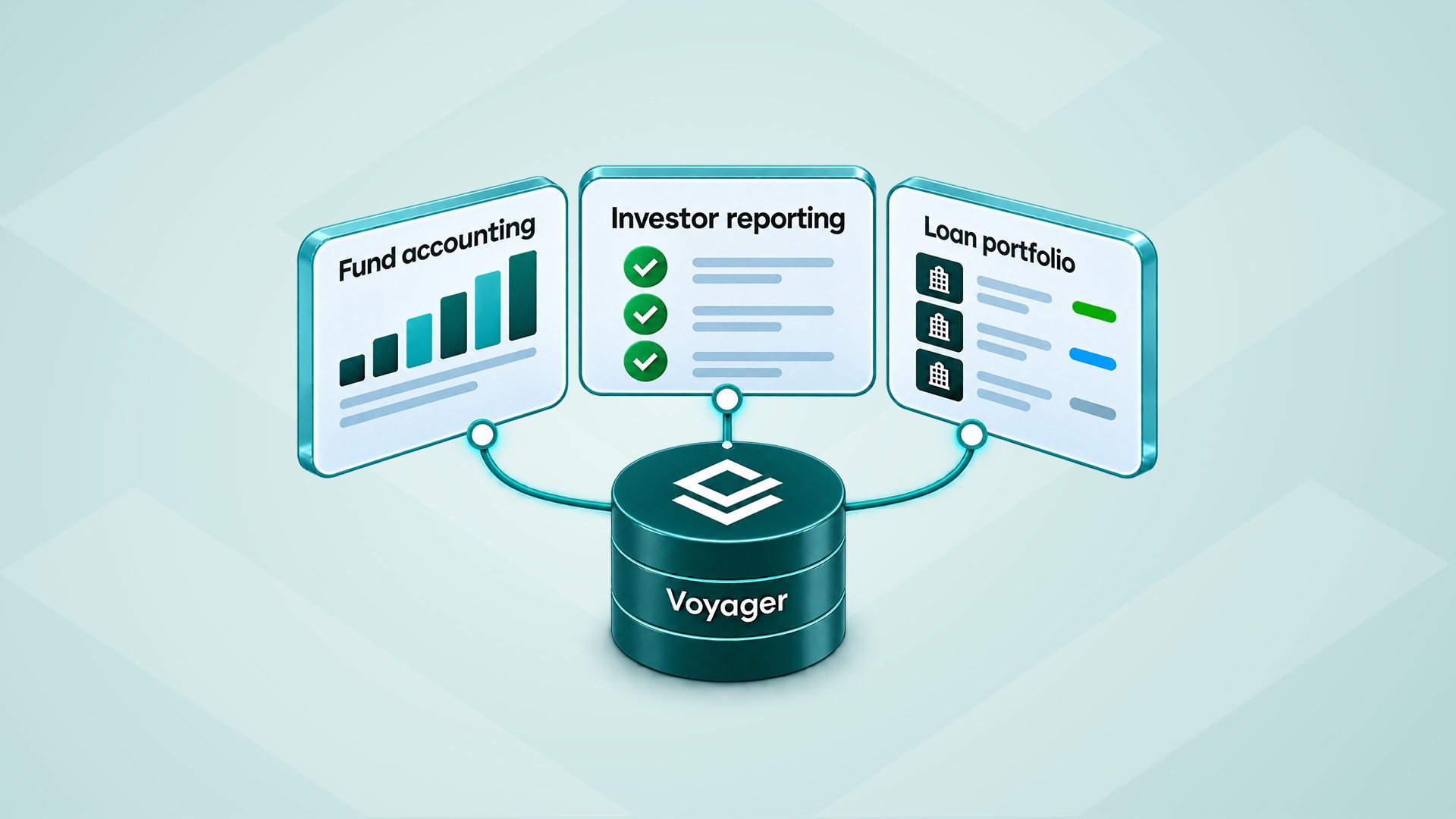
Data readiness. AI is only as good as the data it operates on. Firms that haven’t invested in unified data infrastructure are at a real disadvantage, because the outputs reflect the inputs.
Workflow integration. AI tools that exist outside the workflows where decisions actually get made tend to be used occasionally, not systematically. The firms seeing real returns aren’t just deploying tools, they’re redesigning how information flows through their organizations so that intelligence is built into the process, not layered on top afterward.
Organizational readiness. Teams that understand what AI can and can’t do, establish clear protocols for validating outputs and have leadership willing to redesign workflows around data quality are the ones extracting the most value. Teams that deploy AI without that foundation often find themselves managing output that looks authoritative but isn’t. The firms winning with AI right now aren’t necessarily the ones that moved fastest, but they’re the ones that moved most deliberately.
Why this moment is genuinely different
AI capability has caught up to the promise, and that changes things. Large language models can now read, interpret and synthesize unstructured documents including leases and reports at a level of accuracy and speed that wasn’t possible two years ago. Computer vision can extract data from floor plans and inspection reports that used to require manual entry. Predictive models trained on market transaction data can surface signals in rent trends, absorption patterns and capital flows that human analysts would take weeks to identify.
The competitive advantage in commercial real estate is going to come from turning that data into faster, more accurate decisions — from having intelligence built into how you operate rather than added on as an afterthought. Firms building that infrastructure now will be positioned to act when the market rewards decisive action. Firms still running disconnected pilots without a roadmap will be playing catch up.
Where to start
If you’re early in thinking through your AI strategy, the best first step is understanding what purpose-built intelligence looks like in commercial real estate.
Book an AI consultation to learn how intelligence built for commercial real estate operates differently from general-purpose tools. Not sure where your firm stands on AI readiness? Let’s talk about your goals.