Voyager Suite
 Breeze
 Virtuoso
 Investment Suite
 RentCafe
 CommercialCafe Suite
 Elevate Suite
 Procure to Pay Suite
  Energy Suite
 Aspire
 RightSource
 Care Suite
 Matrix
 WorkCafe
 Yardi Kube Suite
 ScreeningWorks Pro
  Yardi Corom


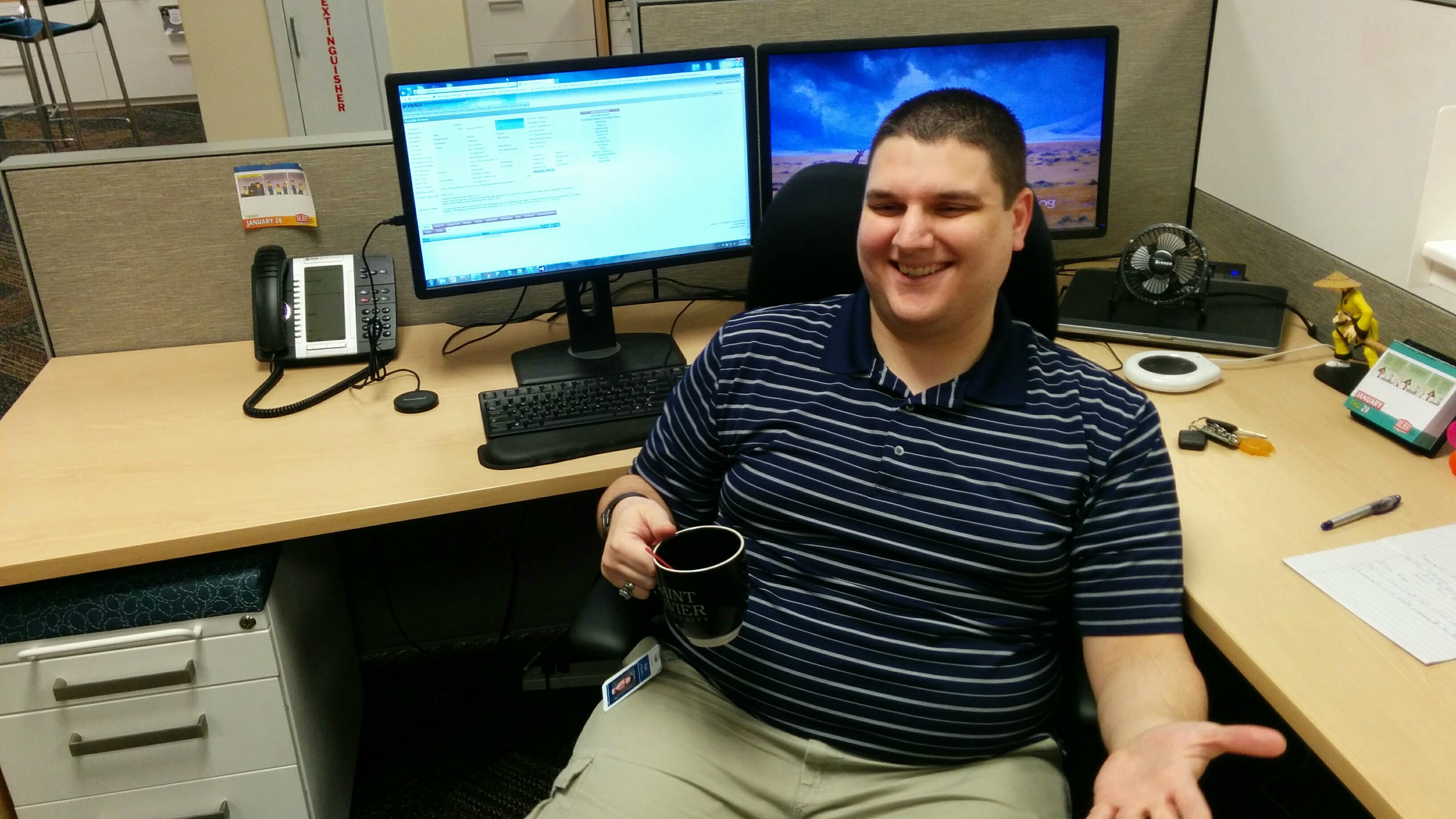
Ken Romero, Programmer, Affordable Housing, spends much of his work day adding new features and fixes to Yardi’s Beacon product while chugging away at multiple cups of black coffee. Fellow programmers and those on his QA team describe him as humble. They learned through national media that he’s probably a genius as well; Romero was one of only two people in the nation to accurately pre dict every winner of a 2014 midterm U.S. Senate seat accurately – one day before the results were compiled. His prediction success made him one of the first winners of The New York Times Upshot Cup.
Romero’s friend and fellow programmer, Bryan Busey, was the first to spread the word of Romero’s accomplishments through an email, “Just because you wouldn’t hear it from him, the article says it all. Mind you the only other individual who successfully did this was a Dr. in statistics.”
The young programmer first took interest in politics during the Bush-Gore elections when he was in the 6th grade. The elections had caused such commotion in his community that he began to investigate why: why do people fall on one side of an issue or the other? And why do they vote the way that they do? Since then, Romero has kept an eagle eye on American politics and social media, giving him the background needed to make his award-winning prediction.
Or was it luck? The Balance Sheet caught up with Ken to learn how a programmer made headlines as a political statistician.
What tools did you use to forge your predictions?
The biggest thing was my Twitter feed. My “Favorites” list is probably 60% media and political insiders who freely share their info.
I also have several pollsters, so every day during election seasons I see the up to date polling averages there. Over the years, I have added and subtracted Twitter accounts from this list to leave only the most reliably correct voices, while carefully maintaining voices from all sides to avoid ending up in a partisan echo chamber.
I also read a lot of articles about how polling is done and which polls had better track records, historically. I found info about past elections, and how they turned out versus what the polling was before the elections. Nate Cohn is a good source for those. He writes about his methods fairly often. I also used the Real Clear Politics website as a source of raw polling data.
That gave me an idea of the variables that mattered and the raw data that was available. From there, I examined the New York Times Upshot model, and adjusted the outcomes where their assumptions seemed wrong to me. None of this was anything I did to win this contest, though. It was just my normal reading, whatever I came across that seemed interesting. Finding the contest was sort of a bonus.
What similarities can you find between your skills as a programmer and the skills needed to accurately predict an election?
In both pursuits you are going to have a large amount of data and need some way to get value or meaning from it. Programming involves a lot of “If X is true then do Y” logic and in order to make anything useful happen in software, the first step is identifying every step of the process and determining what variables can change the process.
I used my experience as a programmer and with the logical thinking it requires to break down the complexity of the election into a series of smaller questions that were easier to analyze and answer.
When you aren’t working or predicting elections, what do you do for fun?
I am a huge fan of the Chicago Blackhawks and watch most of their games. I also have fantasy hockey and fantasy football teams and enjoy playing video games online with my friends. When I’m not watching sports or playing games I read non-fiction and fiction books and a variety of recommendation from The Transom by Ben Domenech. In total, I probably read for 5-6 hours a day on average.