

 Voyager Suite
 Breeze
 Virtuoso
 Investment Suite
 RentCafe Suite
 REACH by RentCafe
 CommercialCafe Suite
 Elevate Suite
 Procure to Pay Suite
  Energy Suite
 Aspire
 RightSource
 Care Suite
 Matrix
 Yardi Kube Suite
 ScreeningWorks Pro
  Yardi Corom


















When I first heard about Raspberry Pi, I started thinking about summer baking season. Then I started checking out the extensive publicity received by this British-based accessible computing project and got more excited about its potential as food for thought. The $32 computer, comprised of naked components on a board, went on sale Feb. 29 to great fanfare, and the first batch of available devices sold out within an hour.
RasPi, as it is also known, is the innovative design of a PC that’s only the size of a credit card. The intent is to provide the cheapest possible computer, with a basic level of functionality, to give access to technology to those who could not otherwise afford it. Sales are expected to be so brisk that initial orders are being limited to one piece of Pi per person.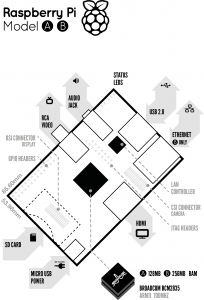
So far, it is acquiring equal parts acclaim and hand-wringing in the British press – the hand-wringers see the device as taking a step backwards in its simplicity. They argue that its users don’t need to recreate past simplistic programming experiences and that the device lacks the power to really have an impact.
The RasPi developers have created a charity that won’t get rich from the sales of their device, but instead will reinvest all the proceeds in better educating kids around the world about programming. One of their many goals is to get the RasPi into classrooms that wouldn’t otherwise have access to computers. They also want it to fall into the hands of those for whom a $350 laptop would be an improbable extravagance.
They’ve answered all the tech spec questions about their device on their website; see a diagram about how the computer is laid out at right.
The company puts it this way: “We don’t think that the Raspberry Pi is a fix to all of the world’s computing issues; we do believe that we can be a catalyst. We want to see cheap, accessible, programmable computers everywhere; we actively encourage other companies to clone what we’re doing. We want to break the paradigm where without spending hundreds of pounds on a PC, families can’t use the internet. We want owning a truly personal computer to be normal for children. We think that 2012 is going to be a very exciting year.”
What’s your take on the Raspberry Pi model? What change do you think it could influence on a global scale – or is it too basic to be a game changer?
Read more about the the Raspberry Pi launch:
Even usually stoic techie types are excited this week by the launch of the Raspberry Pi.
The aim must be for the next generation to learn to control computers, rather than be controlled by them.
With Raspberry Pi and Cotton Candy, Linux Launches a Revolution
Next piece of Raspberry Pi not available until late March, limited to one per user.