Voyager Suite
 Breeze
 Virtuoso
 Investment Suite
 RentCafe Suite
 REACH by RentCafe
 CommercialCafe Suite
 Elevate Suite
 Procure to Pay Suite
  Energy Suite
 Aspire
 RightSource
 Care Suite
 Matrix
 Yardi Kube Suite
 ScreeningWorks Pro
  Yardi Corom


















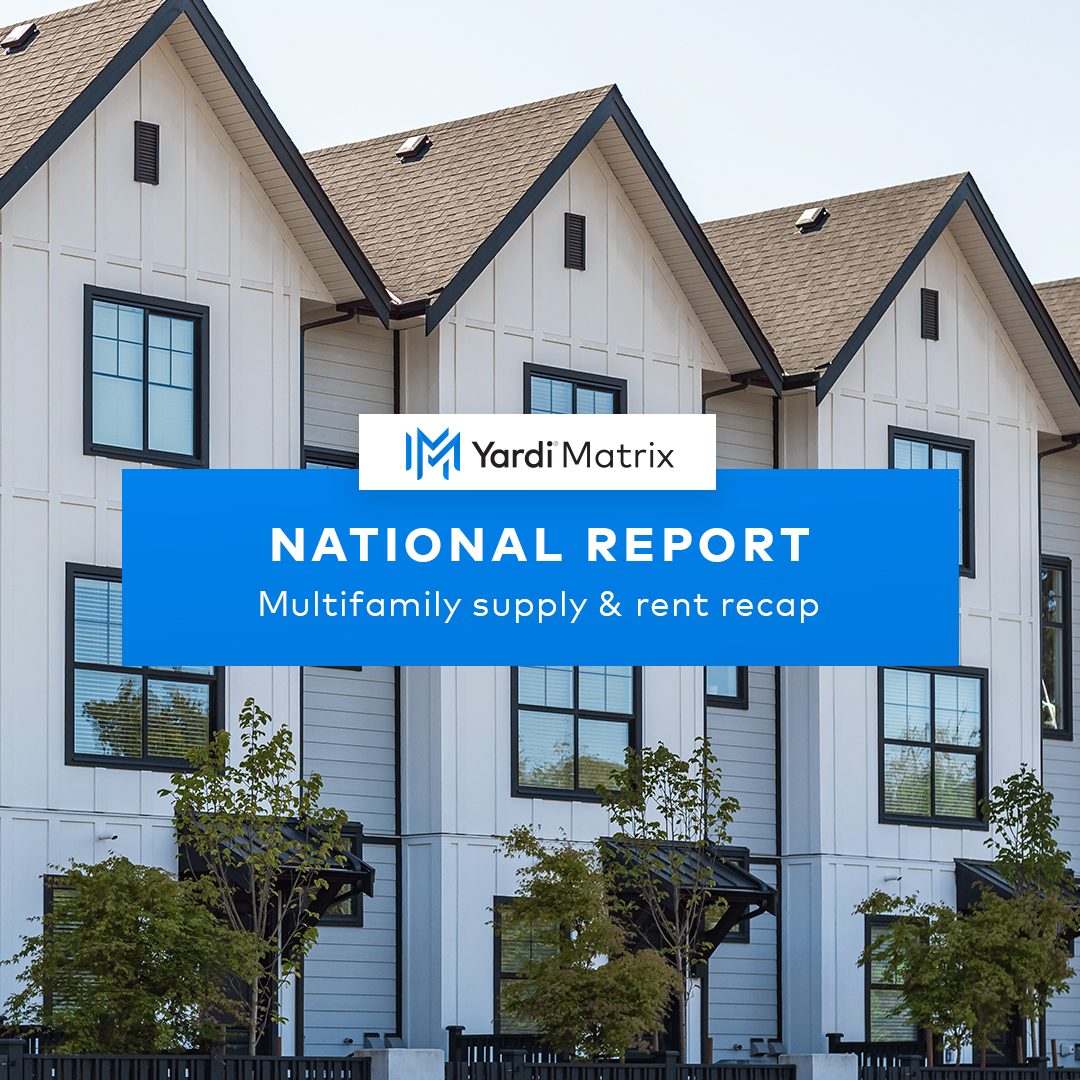
Multifamily asking rents rose for the third straight month in May, according to the latest National Multifamily Report from Yardi Matrix.
Despite the threat of a slowing economy looming, average U.S. asking rent rose $7 in May to $1,716, while year-over-year growth decelerated to 2.6 percent. That was the lowest level since March 2021.
For the year to date, rents are up $18, or one percent since January 1. The seasonal outline of growth is not far off a typical pre-pandemic year, although the rate of increase is lower.
“While performance displays resilience, the data is not unambiguously positive as it has been for most of the last two years,” states the report. “Rent growth has turned negative year-over-year in several metros as occupancy rates weaken amid slackening demand and rapid growth in new deliveries.”
Overall market attitudes remain positive. Renting is still cheaper than owning, and first-time buyers are renting longer. The stickiness of high-income renters likely contributes to the recent resurgence in high-end Lifestyle properties, in which rents rose 0.4 percent in May.
The average single-family unit rent reached $2,100 for the first time in May, about a year after topping the $2,000 mark. Year-over-year growth fell 40 basis points to 2.1 percent. SFRs are boosted by waning home sales attributed to high interest rates and limited inventory.
Gain more insights by downloading May’s Multifamily Report.