Voyager Suite
 Breeze
 Virtuoso
 Investment Suite
 RentCafe Suite
 REACH by RentCafe
 CommercialCafe Suite
 Elevate Suite
 Procure to Pay Suite
  Energy Suite
 Aspire
 RightSource
 Care Suite
 Matrix
 Yardi Kube Suite
 ScreeningWorks Pro
  Yardi Corom

















Though energy storage is a relatively new addition to the property operations toolkit, it offers vast potential. Battery systems have demonstrated multiple ways to enhance sustainability, cut costs and supply reliability.
A key tactic is load shifting, the process of obtaining power during off-peak hours and storing it for use during costlier peak hours, noted Elliotte Quinn, an energy and construction attorney with Charleston, S.C.-based law firm Parker Poe.
Batteries offer an alternative backup strategy to diesel generators, and can store solar power for use at night or on overcast days, Quinn noted.
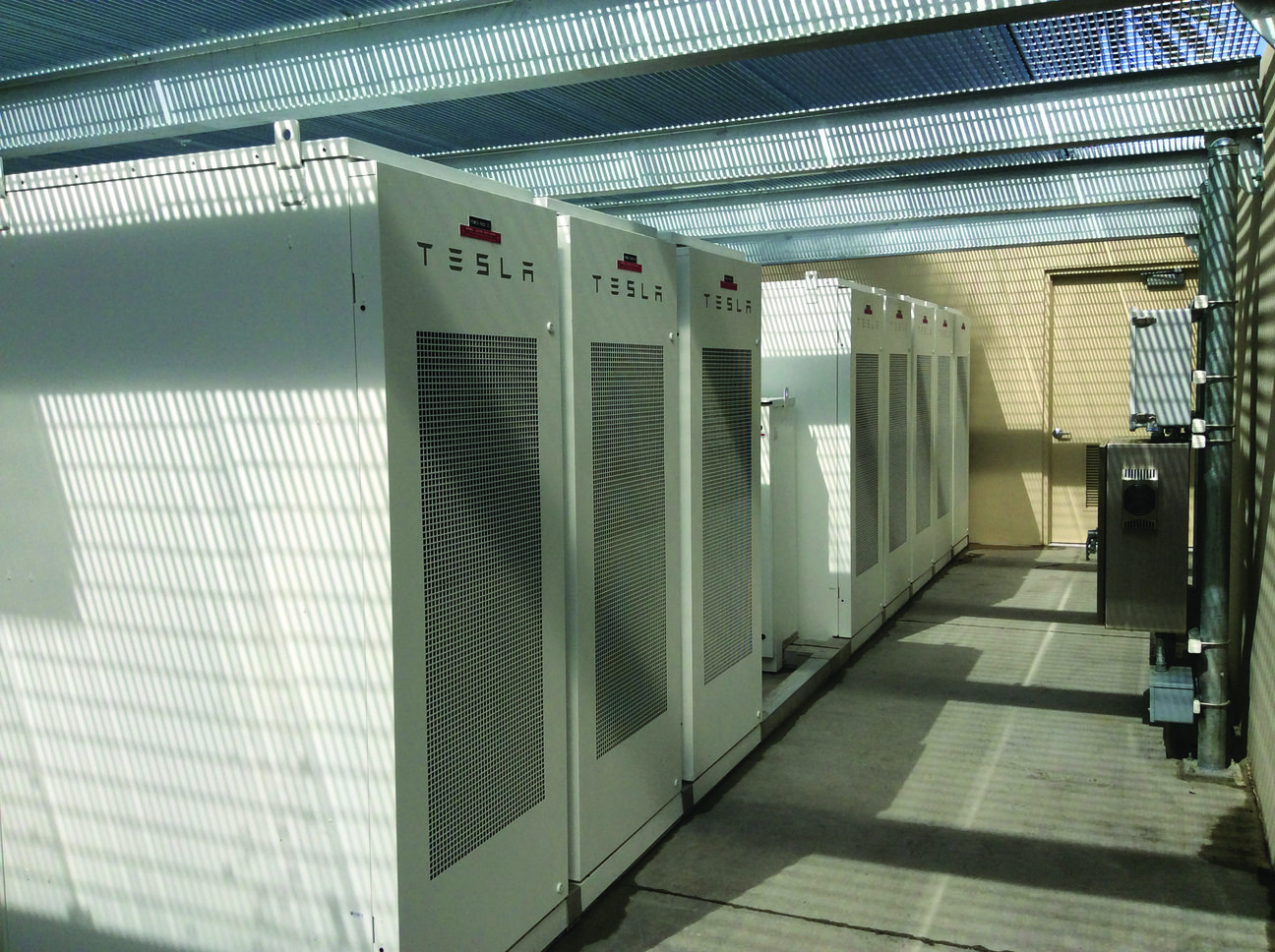
Earlier this year, The Irvine Co. launched a multi-property storage strategy at 21 office towers in Orange County, Calif. When requested by local utility Southern California Edison, the buildings switch their power source from the grid to a storage system that’s powered by Tesla batteries (pictured above).
The office portfolio becomes a “virtual power plant that can be used to take the load off the grid instantaneously,” explained Susan Kennedy, CEO of San Francisco-based Advanced Microgrid Solutions, the system’s designer and manager. Shifting to battery power reduces the load by 10 megawatts for as long as four hours to help SCE balance the grid.
Wholesale Changes
An order issued this year by the Federal Energy Regulatory Commission should make it easier for property owners to sell energy into the wholesale market, but there is a hitch. “If you do that, you’re making yourself subject to federal regulation,” said Quinn. Wholesale selling is likely to be the purview of larger owners, he predicted.
As is generally the case with newer technology, battery storage remains a work in progress. By most estimates, costs are dropping, yet the difficulty of predicting payback periods presents a challenge for owners that need to make a multimillion-dollar investment in the technology, observed Kyle Wamstad, an Atlanta-based attorney with Eversheds Sutherland (US) LLP who advises clients on storage systems.
Scale remains an issue, as well. Despite improved technology, the return on investment for battery storage systems “is not there at the building-size scale,” said Brad Pease, vice president of building science at Paladino and Co., a Seattle-based sustainability consulting firm. Noting that solar panel installation costs have plunged from $8 to $3 per kilowatt, he hopes that batteries will follow a similar trajectory.
The widely used lithium-ion battery has limitations, as well, in particular its four-hour maximum storage time. “You also have supply risks (because) the batteries use lithium and rare earth materials obtained from countries that may not be stable, or with which we don’t have the best trading agreements,” Quinn explained.
What’s in Store?
Expectations for the future of storage vary widely. The biggest gains will be driven by energy producers struggling to add enough capacity to meet demand, Pease predicted. They will spur building owners and developers to install ice batteries to reduce peak demand.
Nall envisions phase-change storage materials becoming less costly, and expects to see combined cooling-source and thermal-storage systems, a step that would make the technology more accessible to owners. Also possible is the introduction of pre-packaged or turnkey electrical systems, which would further simplify implementation.
Vehicle-to-grid storage offers yet another intriguing idea. “As more and more people drive to work in electric cars, which are essentially batteries on wheels … those batteries can be used as a storage system for the grid or the building,” Quinn said. “The interesting part is convincing vehicle owners to let someone else charge and discharge their car’s batteries.”
The Holy Grail of energy storage may be the flow battery, which never loses its charging capacity and can produce maximum output for much longer than its lithium-ion counterpart, Quinn noted.
Nevertheless, a formidable barrier stands in the way: “No one has been able to develop affordable flow batteries.”
Editor’s note: This article was first published in Commercial Property Executive. Reprinted with permission.