

 Voyager Suite
 Breeze
 Virtuoso
 Investment Suite
 RentCafe Suite
 REACH by RentCafe
 CommercialCafe Suite
 Elevate Suite
 Procure to Pay Suite
  Energy Suite
 Aspire
 RightSource
 Care Suite
 Matrix
 Yardi Kube Suite
 ScreeningWorks Pro
  Yardi Corom

















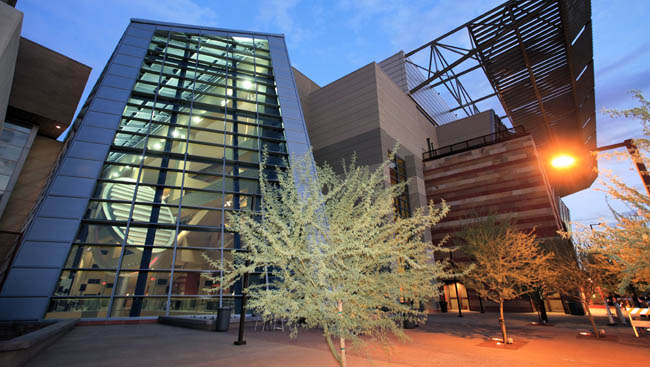
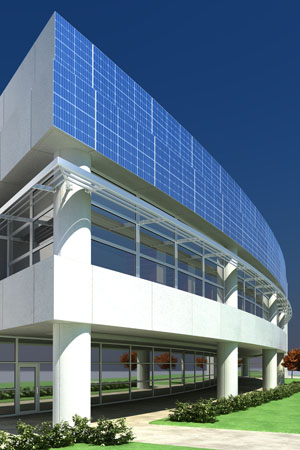
Building design has taken a big leap forward in the past decade. There is more attention paid to sustainability and efficiency, and buildings are better integrated into their environments, which by default makes them more attractive than the box-like and sometimes fortress-style structures of the ‘70s and ‘80s. However, such efforts still have a long way to go, and building owners and developers need to play a much bigger role in how properties are designed in order to achieve the increased sustainability and efficiencies that will be demanded by tenants and even required by municipalities in the years to come.

Indeed, engineering firm Syska Hennessy Group co-presidents Gary Brennen and Cyrus Izzo believe there needs to be a much more collaborative approach to development than tends to be the case today. The owner, design team, contractor and even facility operator tend to be “in various corners, kind of staking their claim and watching just their areas of interest,” noted Izzo. But ensuring the “right partner DNA,” aligning their interests from the beginning and sufficiently involving the owner/developer in the decision-making process is critical to what Brennen describes as “engineering the architecture.”
“Sometimes you get trapped with the aesthetic, but performance matters in these kinds of high-performance, sustainable buildings,” he noted. Owners need to ask questions like: How is the building massed? How is it oriented? What’s the glass and daylight condition? How do I keep solar gain out but good daylight in? “You’ve got to tune the design from day one … and then continue to tune the building after you occupy it to get the kind of results you want.”
That may require a 180-degree shift in thinking from the current tendency to check off the items needed to achieve a LEED rating. “That’s not really a holistic solution,” noted Izzo. “That’s probably not giving the ultimate owner or occupant the benefit … (of) a high-performance environment.” Instead, the score should be an outcome of a plan to attain a certain level of building performance. And it doesn’t stop there, as recommissioning every couple of years will better ensure the building maintains the intended performance level.
“For a savvy owner, it’s beneficial to see how they can continue to tune the systems in that building and really bring out the ROI dollars,” Izzo said.
 Shrinking the energy load used cuts costs; it also enhances the performance of renewable elements introduced into the building, which will help speed up the payback period. Some of the more successful renewable efforts, Syska Hennessy has found, include creative use of water, air, sunlight and even the Earth itself. One that has worked well is displacement ventilation, in which air is brought into the building at a low level, rising as it warms and thereby more naturally cooling the building using outside air. Photovoltaics are also becoming more cost effective, although Brennen noted that government rebates are still necessary to make them pencil out. Under-floor air has been less popular, but if done properly can work well, too, as can geoexchange techniques, in which the Earth is used as a heat sink—which reduces the need not only for chillers but for cooling towers, thereby saving water.
A final, simple though seemingly counterintuitive, measure is simply to raise the temperature set point of the building. That is easier said than done, though: In New York City, Izzo noted, “these temperatures are written right into leases. And these are long-term leases.”
The number of developers willing to experiment with such measures remains limited, but their high-profile successes will help spur confidence for others to proceed. The U.S. government continues to lead the charge, but private developers like The Durst Organization and Hines have taken such ideas seriously, as have owner-operators such as General Electric Co. and Intuit Inc.
Suzann Silverman is the Editor-in-Chief of Commercial Property Executive. Read more about innovations in building design and performance in “Building Evolution,” excerpts of the interview with Gary Brennen and Cyrus Izzo published in CPE in February 2012, as well as “Sustainable Solutions,” excerpts of the discussion on high-performance methods to achieve efficiency.