

 Voyager Suite
 Breeze
 Virtuoso
 Investment Suite
 RentCafe Suite
 REACH by RentCafe
 CommercialCafe Suite
 Elevate Suite
 Procure to Pay Suite
  Energy Suite
 Aspire
 RightSource
 Care Suite
 Matrix
 Yardi Kube Suite
 ScreeningWorks Pro
  Yardi Corom

















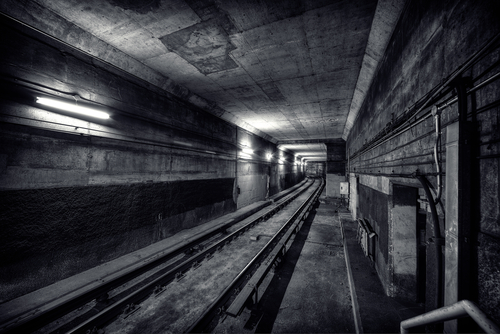
Beneath the cobblestones of New York’s Lower East Side, techn ology is about to present a curious lesson to the world—plants and trees can live a healthy life. We’re not talking about some new lab-modified plant hybrid, but rather about the possibility to light the underground with sunlight through an intricate system of solar panels.
The Lowline idea had first seen the light of ration back in 2009 when its creators, Dan Barasch and James Ramsey, had the fantastic ideato combine two plans that involved the underground: One to grow plants underground, and the other to install underground art in the New York City subway system. Introduced to the one-acre former Williamsburg Bridge Trolley Terminal, buried below Delancey Street in Manhattan and untouched since 1948, the two have seen more than just an abandoned trolley terminal; they’ve seen an underground park in one of the world’s most dense urban environments. And that was the beginning.
In their vision, the one-of-a-kind park would be nourished by a remote skylight, a type of solar technology proposed by James Ramsey, the principal of Raad Studio. After researching a series of alternatives including transportation of sunlight through fiber optic cables, the duo has been contacted by SunPortal, a three-year-old company based in the UK and South Korea that promotes “daylighting technology,” an emerging category of lighting that uses a complex series of mirrors and focusers able to transport daylight into the depths of the 112-year-old cavern.
In this approach, the process will begin on the street level above the park, with huge sunlight collectors and parabolic dishes that will collect and concentrate sunlight. The devices would be made from silver and glass to help efficiently concentrate and reflect light and repel dust that would otherwise dim the intensity of the lumens. In other words, sunlight would pass through a glass shield above the parabolic collector, reflected and gathered at one focal point, and directed underground. There, it would be transmitted onto a reflective surface on the distributor dish underground, transmitting that sunlight into the space.
SunPortal claims their technology can carry sunlight 650 feet, deeper than needed for the Lowline project. But it’s more than just a game of positioning mirrors. This technology is designed to transmit the necessary wavelengths of light to support photosynthesis, so that plants and trees can grow. Moreover, during the hours of sunlight, the space wouldn’t need electricity.
A prototype of the technology was presented at the Imagining the Lowline exhibit in September 2012 in an abandoned warehouse in the same part of the city as the location chosen for Lowline. 11,000 exhibit visitors saw with their own eyes the viability of the project.
Barasch and Ramsey recently launched a Kickstarter page to seek funding for a laboratory for solar research and public exhibition that will test and display their technology in front of audiences. By 2017, the Lowline fathers hope to have completed negotiations with the MTA and city officials so that construction can be finalized by 2018.