Voyager Suite
 Breeze
 Virtuoso
 Investment Suite
 RentCafe
 CommercialCafe Suite
 Elevate Suite
 Procure to Pay Suite
 Energy Suite
 Aspire
 RightSource
 Care Suite
 Matrix
 WorkCafe
 Yardi Kube Suite
 ScreeningWorks Pro
 Yardi Corom


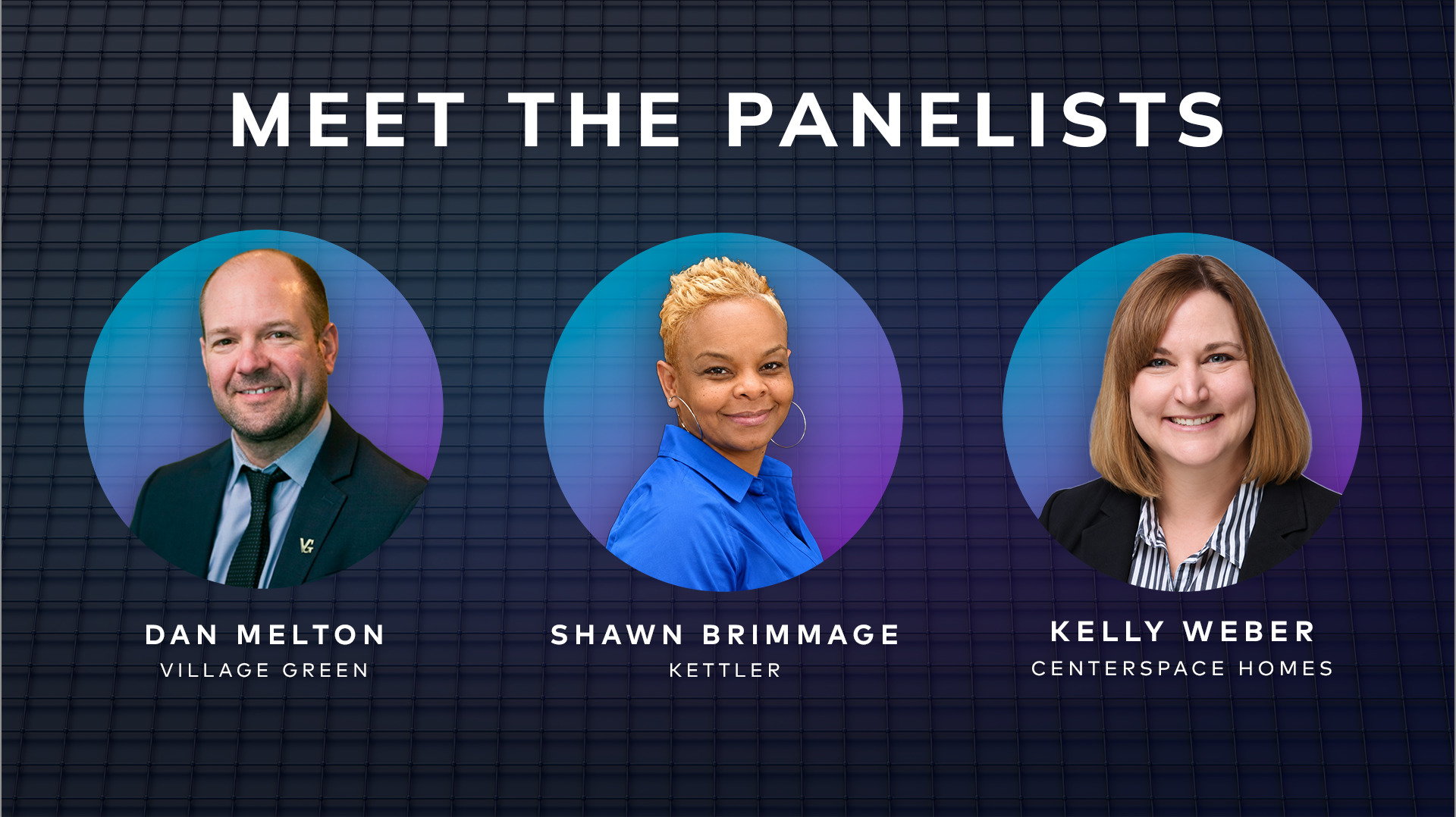
A multifamily AI strategy works best when it keeps people at the center. Leaders from Centerspace Homes, KETTLER and Village Green took on different projects, from resident follow-up to invoice processing to owner reporting, and each described the same approach: Use AI to make teams’ work easier and keep people involved.
But how do you build that kind of strategy? The three operators shared their answers in a panel of Yardi clients moderated by Nima Farkhak, sales director at Yardi. Their experiences point to practical ways to start with real problems, bring employees along and keep people in the loop.
Start with the problem, not the technology
The panelists agreed on a simple principle: solve problems rather than adopt AI for its own sake.
Centerspace Homes began using AI in leasing about five and a half years ago, long before today’s pressure to have an AI plan. The team treated it as a marketing project, not a technology one. “We were trying to solve a lead management problem,” said Kelly Weber, chief administrative officer at Centerspace Homes. Moving more leads to appointments helped the company reduce its advertising expense, which she called “a successful endeavor.”
KETTLER found its starting point by asking employees. Shawn Brimmage, vice president of technology at KETTLER, brought people from every department into one room to share what slowed them down, from major pain points to tasks that were simply monotonous.
“Everyone got an opportunity to be heard,” Brimmage said, giving KETTLER a path for future projects while keeping its first effort focused.
Involve your teams from the start
Weber said Centerspace’s site teams initially worried that AI could affect their jobs. The company responded with education. “We’re not here to replace people. We’re here to augment what you’re doing,” she said. Centerspace also asked field teams what they wanted from their chat agents, putting them “on the bench with us” as the tools took shape. Today, she said, those teams are “leaned in now more than ever.”
KETTLER took a similar approach when it came to invoice processing. Brimmage said teams were hesitant at first, so the company explained that the change would simplify their work and free them to do other things. Her advice is to make sure teams know “you’re looking for ways to make their jobs easier, not to get rid of them.”
Village Green’s unit count grew almost 15% over the past 12 months, and its goal is to approach 100,000 units with the same size support team it had at 40,000. Dan Melton, vice president of technology at Village Green, said that isn’t about replacing people. It’s about empowering them to be more efficient and grow in their career.
Where a multifamily AI strategy supports your people
Once you know the problem and have your teams on board, AI can take on routine pieces while people handle the work that needs judgment. These three examples show how that looks in different parts of the business.
Resident follow-up
Centerspace uses Yardi Chat IQ for leasing, renewal and rent collection follow-up. Weber explained that residents often miss a reminder for one of two reasons. They have a question or obstacle, or they simply forgot. “We’re letting AI handle the pieces where they just need a nudge,” she said, while keeping people involved when a resident needs help. Where to live is one of the biggest decisions a person makes, she added, so Centerspace is careful about how automation affects residents.
The team has seen renewals wrap up more promptly and rent arrive earlier in the month. Reminders prompted more residents to sign up for autopay so they’d stop receiving reminders. After a two-month pilot of its delinquency reminders, Centerspace rolled them out to all of its properties. Weber called it “a win-win-win” that also helps clients collect rent faster.
Invoices and approvals
Before KETTLER centralized invoice processing, each property handled invoices on site, which made them hard to track when vendors asked about payment. Moving the work to one place gave vendors a clear destination and gave site teams less to manage.
With that foundation, KETTLER turned on the AI functionality native to Yardi Procure to Pay that reads and codes incoming invoices. The company then started using Smart Approval, which approves routine invoices without individual review, beginning with a conservative approach. Once it worked as intended, KETTLER began talking opening up approval criteria.
Keep people in the loop
Automation still needs oversight. “Automation doesn’t mean you automate it and walk away,” Brimmage said. KETTLER asks someone to cross-check results now and then to confirm the process works as intended.
Training can build that habit. Village Green encourages employees to read generated reports, add their own notes and look for mistakes before sharing results with clients, and it incentivizes them to catch errors. Weber added that training should include teaching people to have AI critique its own work.
Build on connected data
Melton said Village Green spent years moving to a single technology stack. When analytics came from separate tools, building what he called “a Rosetta Stone of all of our information” was painful.
Melton described the benefit of the alternative: When everything lives in the same place, “you can literally lean on what your data is telling you.” Melton pointed to Village Green’s single source technology stack as the reason its automated tools line up.
That helps your people as much as it helps AI. When leasing, maintenance, accounting and resident data live in one place, teams and AI work from the full picture instead of fragments. As you evaluate technology, ask how it will work with the systems your business already depends on.
Take the next step at your own pace
For teams just getting started, Melton’s advice is to crawl, walk, run. Weber’s is to start small. “I wouldn’t put too much pressure on yourself to be the expert overnight,” she said. She suggested finding low-hanging fruit and working with partners, because “success begets success.”
Starting with real problems, involving your teams and keeping people in the loop builds the experience for the next project. That’s the thinking behind Yardi Virtuoso Enterprise, which brings AI into leasing, maintenance, accounting and resident services on a single data foundation, from lead to lease to ledger, so your teams can spend more time on the work that needs a person.
Explore how Yardi Virtuoso Enterprise can support your team’s next step with AI.
Key takeaways
- Start with problems your teams recognize
- Involve employees early and show them the benefit
- Keep people in the loop as AI takes on more work
- Build on connected data
FAQs
Where should a multifamily team start with AI?
Start with a problem your teams already recognize. Centerspace Homes began with lead management. KETTLER asked employees from every department to share what slowed them down, then ranked the ideas together, which put approvals and month-end accounting first.
How do you help employees embrace AI?
Involve them early and show them the benefit. Centerspace asked field teams what they wanted from its chat agents and explained that AI is there to augment their work, not replace it.
How do you keep people involved as AI takes on more work?
Check the results and set guardrails. KETTLER cross-checks automated results, Village Green encourages employees to review reports and add context before sharing them, and Centerspace trains teams to have AI critique its own answers.