

 Voyager Suite
 Breeze
 Virtuoso
 Investment Suite
 RentCafe
 CommercialCafe Suite
 Elevate Suite
 Procure to Pay Suite
  Energy Suite
 Aspire
 RightSource
 Care Suite
 Matrix
 WorkCafe
 Yardi Kube Suite
 ScreeningWorks Pro
  Yardi Corom


















Real estate investment teams work with property data every day. Consolidations run against each asset’s general ledger, investor reports draw on operating results and debt schedules track the property behind the loan. Everything that sits above the asset depends on what’s happening underneath.
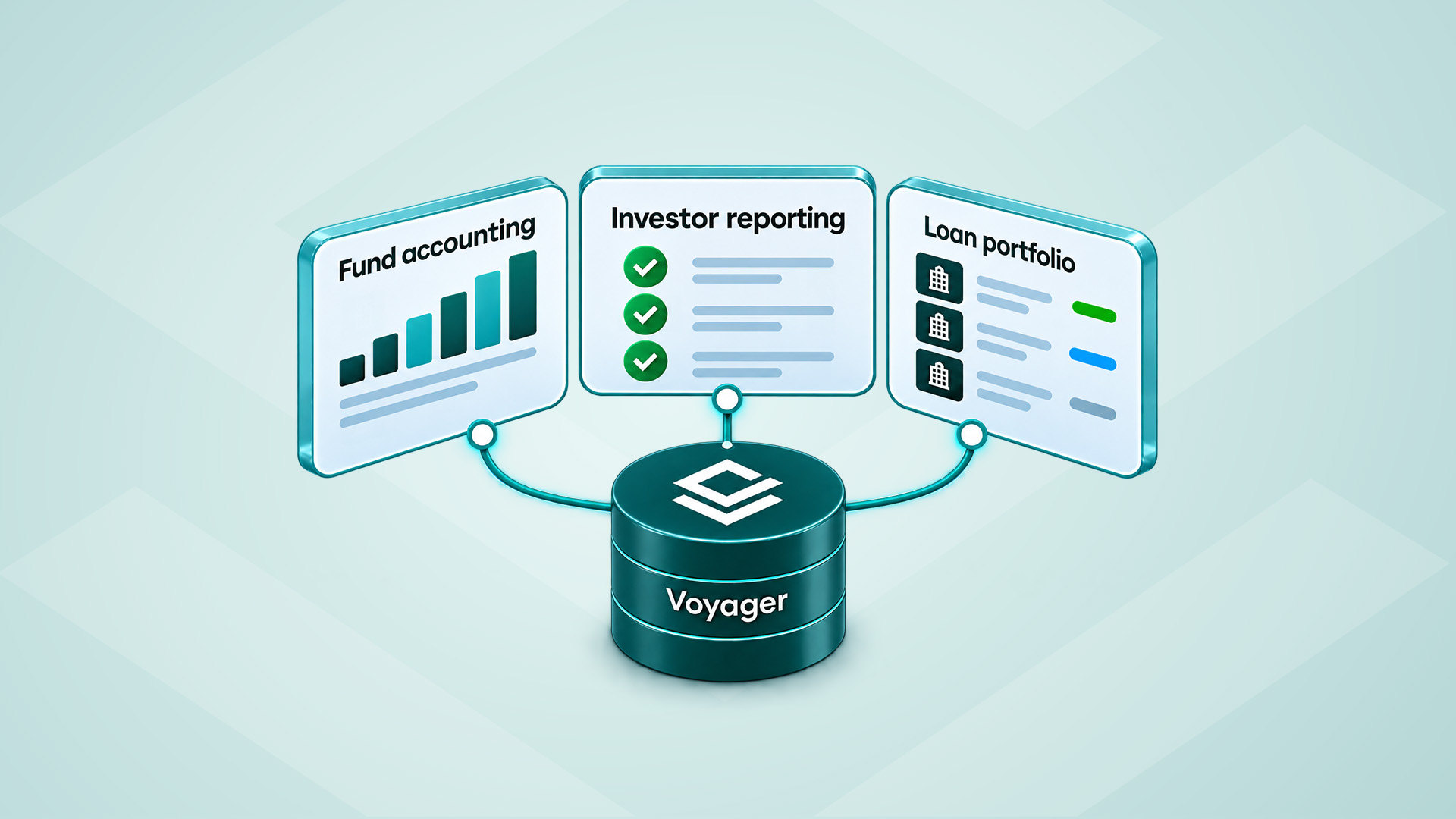
When property and investment data sit on separate systems, that data moves through exports, spreadsheets and reconciliations before reaching the people who need it. When both live on the same system, data flows directly from the property ledgers to the investment ledgers, eliminating handoffs and reconciliation.
Yardi Investment Suite runs on the same platform as Yardi Voyager, so investment lifecycle management, from acquisitions through reporting, all work from the same source the property team already works from.
Key takeaway
Yardi Investment Suite and Yardi Voyager offer real estate companies a fully connected foundation for the investment lifecycle, with property data flowing directly to investment operations.
How the Yardi Investment Suite & Voyager integration works
Connectivity is the pillar across Yardi solutions: all the data you need in one environment, without manual reconciliation and transfers. The same applies to Yardi Investment Suite.
The Investment Suite automates investment lifecycle management, from pipeline management and investor relations to ownership accounting and debt tracking. When connected to Yardi Voyager, it pulls property data directly from the system, so investment operations run on the same numbers as property operations.
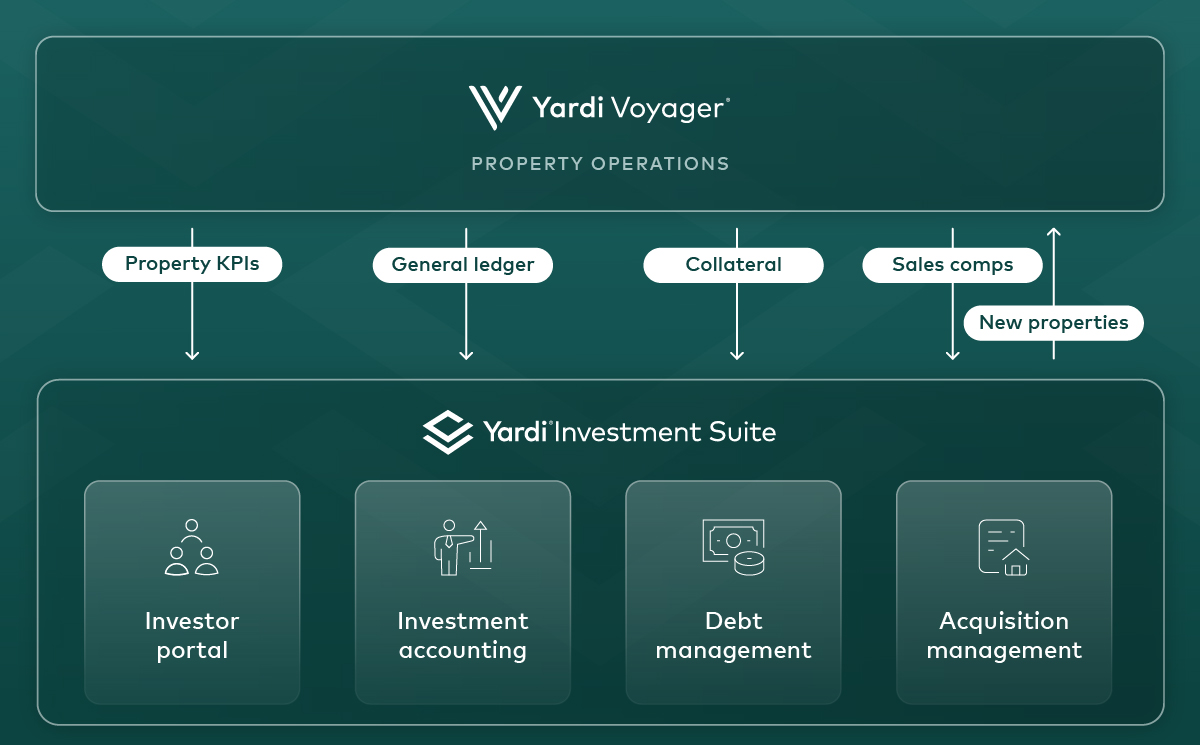
That shared foundation enables:
- Property and investment accounting on one ledger
- Acquisitions handed off to operations without rekeying
- Property KPIs published straight to the investor portal
- Investor reports built directly from operating data.
Here is what that looks like across each step of the investment lifecycle.
Investor relations: One source for operations & investors
Yardi Investment Suite gives your team a central place to manage investor relations, from capital raising and onboarding to capital transactions and reporting. It also includes an investor portal, used today by 100K+ investors, that provides self-service access to published investment details, metrics and documents.
When the suite is used with Voyager, property data is pulled directly from Voyager into the investor relations workflows, connecting back to the system in several ways:
- Up-to-date property data published to the portal, including occupancy and rent rolls
- Summary views of the properties inside each investment, sourced directly from Voyager
- Investor statements generated directly from underlying accounting data and published to the portal
- Distributions processed through the accounts payable workflow already in Voyager.
The result is a portal your investors can trust, as it works from the same data your team does.
Investment accounting: Property & entity books on one ledger
The investment accounting side of the Investment Suite handles accounting for ownership structures such as funds, joint ventures, partnerships and REITs, supporting over 1.2 million entities across its client base. This includes consolidations, eliminations, allocations, capital transactions, management fees, NAV calculations and more.
When the investment accounting solution is connected to Voyager, financial data from operating properties feeds the accounting processes without imports or reconciliation:
- Property books and entity-level books run on the same ledger, from asset up to the fund or investor
- Period-end consolidations and equity pickups run against numbers already in the property books
- Financial reports can drill from the fund or entity level down to the operating property
- Capital activity connects from investor-level transactions to the property books.
For firms managing complex ownership structures, this removes the manual work of tying entity-level books back to operating results.
Acquisition management: One flow from deal to asset
Yardi Investment Suite centralizes deal information from sourcing through close. Acquisitions, dispositions, comps and due diligence documents live in one place, so the acquisitions team can move a deal through approval without switching tools or rekeying data.
The pipeline management solution’s connection to Voyager works in both directions:
- Sales comps for new deals are built from property data already in Voyager
- Dispositions draw on the operating history of properties in the portfolio
- New properties are automatically created in Voyager from data captured during the deal process
- Actual property performance is tracked against initial underwriting assumptions.
The result is a shorter path from deal close to first day of operations, with no reconciliation or handoff.
Debt management: Loans tied to their collateral
For real estate firms with debt obligations, Investment Suite tracks the entire loan portfolio in one place, supporting any loan type, from fixed- and variable-rate to construction loans and lines of credit. Loan terms, critical dates, covenants, escrow, maturities and payments stay in a single system.
Through its connection with Voyager, the debt records connect to the properties they finance:
- Loans link to Voyager properties as real estate collateral
- Principal, interest and other loan-related charges post directly to the property books
- Covenant tests draw on Voyager account trees, budgets and property data.
This provides greater visibility across the debt portfolio, with covenants and payments tracked against the same operational data the property team closes on.
Why the property-to-investor connection matters
The Yardi Investment Suite and Voyager integration changes how investment managers run their operations. Beyond the time saved on reconciliation and reporting, it delivers confidence in the numbers, speed in decisions and room to grow without proportional overhead.
| Workflow | With separate platforms | With Yardi |
| Period-end close | Manual reconciliation between property and entity books | Consolidations run on numbers already in the property books |
| Investor reports | Created by exporting and manually rebuilding | Built directly from live accounting data |
| New deals | Require rekeying between systems | Flow straight into the property system |
| Debt tracking | Loans and covenants tracked separately from the properties | Debt records connect back to the properties they finance |
For investment managers, this is what running investment lifecycle management on one platform delivers: property, accounting, debt and investor operations working from the same source of truth.
Curious to see how the connected solution works for your portfolio? Book a short demo.
Frequently asked questions
Does Yardi Investment Suite connect with Voyager?
Yes. Yardi Investment Suite runs on the same platform as Yardi Voyager. Property data captured in Voyager is pulled directly into the suite, so investor reporting, ownership accounting, pipeline management and debt tracking all work from the same source as property operations. There are no exports, imports or manual reconciliation between the two.
How does the connection between Yardi Investment Suite and Yardi Voyager help with investor reporting?
With Yardi Investment Suite, investor reports are built directly from live property and accounting data in Voyager. Investors see the same numbers the property team works from, with no data re-keying or manual transfers needed.
How does the Yardi Investment Suite and Voyager integration impact period-end close?
With Yardi, period-end consolidations, equity pickups and minority interest calculations run against numbers already in the property books. Close cycles shorten because the manual work of moving and matching data disappears.
How does the connection help with acquisitions?
Sales comps for new deals are built from property data already in Voyager, and dispositions draw on the operating history of properties in the portfolio. When a deal closes, the property is created in Voyager from data captured during the deal process in the Investment Suite. The acquisitions team hands off to operations without rekeying, so the path from deal close to first day of operations gets shorter.
What data flows from Yardi Voyager into Yardi Investment Suite?
Property KPIs such as occupancy and financial performance, property attributes, general ledger data, budgets, account trees and property records for collateral all flow from Voyager into the Investment Suite. Investor portals show property-level metrics, investment accounting draws on the property GL, acquisitions pull comps from existing property data and debt records link to Voyager properties as collateral.
Does Yardi Investment Suite require Yardi Voyager?
Virtuoso for Investment Management, the platform combining the deal, accounting and investor workflows, can run standalone. The debt management solution requires Voyager. Firms with both Investment Suite and Voyager in place get the full value of the connected platform.
Can Yardi Investment Suite be added to an existing Voyager environment?
Yes. Real estate firms already running Yardi Voyager can add the Investment Suite alongside it. The suite runs on the same platform, so there is no separate implementation for property data, no reconciliation setup and no additional data sources to keep in sync.