

 Voyager Suite
 Breeze
 Virtuoso
 Investment Suite
 RentCafe
 CommercialCafe Suite
 Elevate Suite
 Procure to Pay Suite
  Energy Suite
 Aspire
 RightSource
 Care Suite
 Matrix
 WorkCafe
 Yardi Kube Suite
 ScreeningWorks Pro
  Yardi Corom



















3D printing (also known as additive manufacturing and stereo lithography) utilizes an extruder to construct objects a single layer at a time, in varying micron thicknesses, according to the specifications of a CAD program. These printers can use a wide range of materials, from various plastics and PVC, to aluminum and titanium. Watch as a rack of fold-up multi-tools is ‘grown’ in just a few hours:
The advantages of 3D printing, over traditional manufacturing, are that it is better, faster and cheaper than its predecessor. The technology is in its fourth decade and applications already run the gamut. 3D printing is used for military, medical, engineering tasks of every stripe, and has also been employed to make jewelry and footwear. It has great potential as a future method for creating artificial limbs for amputees.
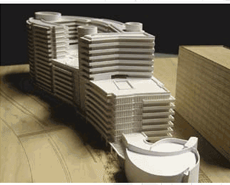
 Within the real estate world, architects and developers are familiar with the technology as it is used for 3D rendering of scale building project models that can be presented to investors, owners, approval bodies and financiers. CAD and concept modeling applications are one of the best established consumer uses of 3D printers.
So why does this technology still seem to be flying under the radar? Blame popular media coverage, which overwhelmingly focuses on the novelty aspects of the technology (“You can use it to build Legos!”), while simultaneously posturing that widespread access to such devices exists only in the far future.
There seems to be an unwritten law that if you write about 3D printing you must, in the title, reference the fact that it will either shape the future or change the world. Heavy hitters like Forbes, CNET, and Technology Review have bought in. There’s even unrealistic concern that consumers with access to 3D printers could “pirate” popular toys like Legos. But you won’t be running out to Best Buy to pick one up anytime soon – price point on a 3D printer is around $250,000.
Incredible hi-tech applications of the technology are already in widespread use. Aircraft carriers on deployment print spare parts for fighter jets, eliminating the need for costly and time-consuming resupply. NASA is redesigning space exploration according to a build-what-you-need-when-you-get-there model. And now home-use rigs are available that cost the same as what you just paid for your MacBook Air.
The anticipated tipping point is the world-changing, future-altering aspect of 3D printing technology that gets tech experts excited. What happens to manufacturing when we shift from buying things to buying the CAD programs that build things? It is easy to envision an iTunes model for just about anything you want built. Should we be worried that The Pirate Bay is one of the leading distributors of 3D printer CAD programs?
Whole industries are already planning for a transformation away from a business model that requires stockpiled inventory, and shipping, and delivery schedules. While much of the coverage still focuses on 3D printer-built paperweights and puzzle boxes, the reality is much more serious, and exciting.
Speaking of exciting, here are the Statue of David and Master Chief launching a catapult attack on a giant monster, all courtesy of 3D printing… changing the world and rewriting the future one tiny shot at a time. Enjoy!
What uses could you foresee for a 3D printer in your life or daily work, or are you already utilizing this technology?