

 Voyager Suite
 Breeze
 Virtuoso
 Investment Suite
 RentCafe Suite
 REACH by RentCafe
 CommercialCafe Suite
 Elevate Suite
 Procure to Pay Suite
  Energy Suite
 Aspire
 RightSource
 Care Suite
 Matrix
 Yardi Kube Suite
 ScreeningWorks Pro
  Yardi Corom

















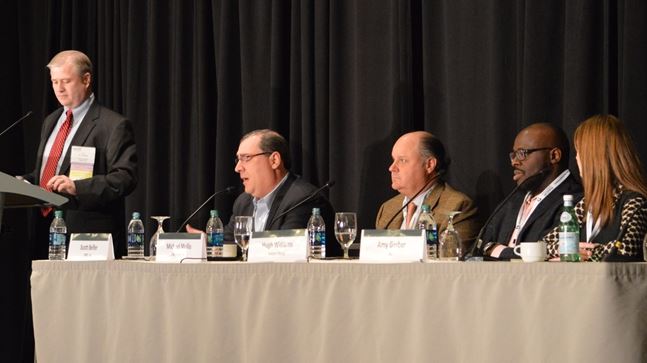
Accessibility on several counts tops the list of secrets to success in e-commerce. That was the determination of a session on e-commerce site and building selection at NAIOP’s second annual E.Con e-commerce conference, held late last week in Atlanta. Moderator K.C. Conway, senior vice presid ent of credit risk management at SunTrust Bank, led the spirited discussion among attendees and panelists Scott Belfer, senior vice president at CBRE Inc.; Amy Gerber, executive vice president with JLL; Michael Mullis, senior vice president of real estate for J.M. Mullis Inc.; and Hugh Williams, principal with Avison Young.
The top seven drivers were determined to be:
- Proximity to customer demand clusters. While e-commerce consumers currently accept an average delivery time of three to five days, next-day deliveries are growing in popularity. Developers that can offer their e-commerce tenants fulfillment centers with cost-effective same-day and next-day delivery will have an advantage.
- Access to high-quality labor. Community colleges and universities become increasingly important as tenants seek sources of quality surge labor.
- Proximity to 3PLs. Ground and air hubs are still the life source of e-commerce.
- Avoiding driver vacuums. Ground transportation is in a precarious state. The nation is facing a projected shortage of 240,000 truck drivers. While this issue is sorely overlooked, panelists agree that any city or state that manages to address this concern would be appealing.
- Opportunities for infill buildings. While 1 million-square-foot distribution centers for Amazon and Walmart have recently grown in popularity, panelists foresee a high demand for smaller DCs within metropolitan areas. This will facilitate faster and less expensive delivery options for consumers. Automation may also decrease the need for large footprints, since there will be fewer humans and personal vehicles to accommodate.
- Heavy power and life systems. Large numbers of employees, an increasing amount of automation and a growing number of fresh produce businesses call for heavy power loads. Tenants will seek DCs that can be properly insulated and equipped for heating and cooling without blackouts or brownouts.
- Local incentives. Traditionally, tax incentives would come higher on the list. The Marketplace Fairness Act stalled in the House of Representatives, but it succeeded in bringing the national sales tax to the forefront of conversation. Once such a measure succeeds—and no member of the discussion doubted that it would—e-commerce tenants will want to be in D.C. in locations that offer additional incentives. Improvements to infrastructure such as roads, extended rails and enhanced port access will attract tenants. Developers should also consider states that offer grant reimbursements to train employees, property tax relief while building, sales tax sharing based on local transactions, and inventory exemption outside of the Freeport exemption.