

 Voyager Suite
 Breeze
 Virtuoso
 Investment Suite
 RentCafe Suite
 REACH by RentCafe
 CommercialCafe Suite
 Elevate Suite
 Procure to Pay Suite
  Energy Suite
 Aspire
 RightSource
 Care Suite
 Matrix
 Yardi Kube Suite
 ScreeningWorks Pro
  Yardi Corom

















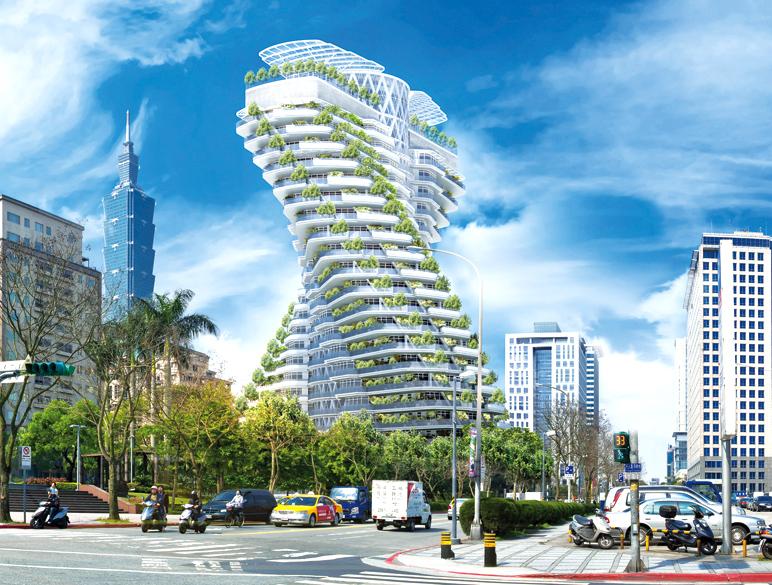
Traditional sustainable buildings capitalize on resource conservation and economic efficiency. With vertical forests or “treescrapers,” innovators in Europe and Asia are meeting sustainability standards while expanding upon the benefits of greenery for multifamily residents.
In the Unites States, sustainable construction highlights efficient appliances, energy and water conservation. Exceptional properties include recycled materials, passive temperature control, and meet net-zero standards. Integrating greenery into construction is still considered a rarity.
Yet the exceptional features are becoming the standard in developed nations throughout Europe in Asia. In addition to resource and costs efficiency, policy makers enforce the creation of structures that improve resident wellbeing and environmental health.
To name a few, Germany has led Europe with sustainable mandates for new construction; green roofs with solar panels are required to cover 50 percent of all new commercial buildings in France, as well as notable sustainability mandates for residential construction; and Singapore’s aggressive blueprint for sustainable investments will keep the nation at the top of the list for earth-conscious countries in Asia.
It is within this progressive atmosphere that the first vertical forests broke ground in 2011. Vertical forests and treescapers are urban buildings that take greenery beyond ground-level landscaping and atriums. Trees, shrubs, and groundcover are incorporated throughout the structure. Multifamily owners and managers have much to gain by these stunning construction techniques.
By investing in greenery throughout the property, owners, managers, and residents position themselves to experience:
- resident retention
- increased tenant satisfaction
- reduced stress
- less noise pollution
- reduced CO2
- increased oxygen output
- natural storm water and runoff management
- reduced heating and cooling costs
Architect Vincent Callebaut’s Agora Tower in Taipei, Taiwan is one of many treescrapers currently under construction. To be completed this year, the 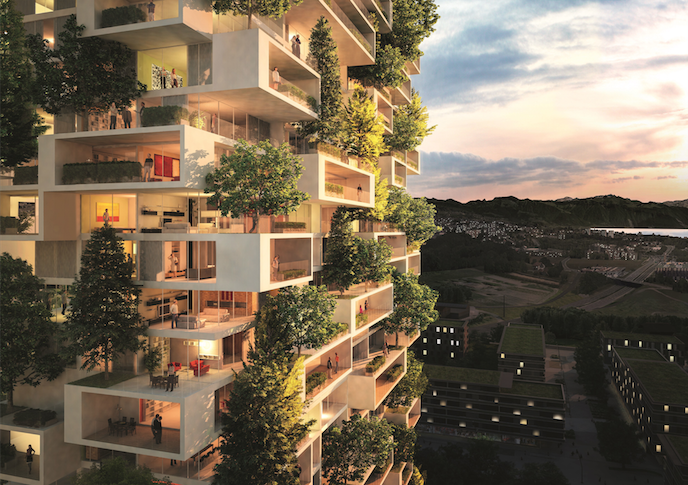 Agora Tower has received LEED Gold certification. The design is also Green Building Label approved, the standard for high environmental quality issued by the Home Affairs Ministry of Taipei.
To help achieve its sustainability certifications, Agora Garden is clad with crystalline facades that include multilayer glass. The layers include polyvinyl butyral, air space, and integrated blinds that work together to reduce solar radiation in summer and heat loss in winter. The building also recycles organic waste, greywater and rainwater.
Residents will be able to enjoy the fruit of the building, which includes suspended orchards, organic vegetable gardens, medicinal herb gardens and an aromatic garden. The edible plants will supplement residents’ food supply while permitting the mental health benefits of gardening.
Architect Stefano Boeri has solidified plans for Tour des Cedres, a luxury apartment treescraper in Lausanne, Switzerland. The 36-story structure will be home to 100 cedar trees, 6,000 shrubs and 18,000 plants. Construction will begin in 2017.
On first impression, it would seem that vertical forests would be cost prohibitive. Uniting woodlands and architecture poses a few unique challenges: structures must accommodate the additional weight of trees and soil; water drainage issues must be addressed, and the concrete must resist the destruction caused by tree roots. Owners must also sacrifice potential revenue-generating square footage to make room for greenery.
With those factors taken into consideration, the construction costs of such a project are only 5 percent more than a traditional skyscraper of comparable size. Vertical Forest, the first of its kind by Boeri Studio completed in 2014, cost $87.5 million. PR Newswire reports several new multifamily skyscrapers in New York that range from $500 – $600 million with fewer healthful features.
To date, there are currently six publicized treescapers in different phases of construction. The emergence of vertical forests throughout developed countries demonstrates that green buildings have exceeded trend status. Advanced green features are standards that internationally renowned architects build upon. Multifamily firms of the United States stand to experience significant gains by exploring such vast possibilities.