

 Voyager Suite
 Virtuoso
 Investment Suite
 RentCafe Suite
 REACH by RentCafe
 CommercialCafe Suite
 Elevate Suite
 Procure to Pay Suite
 Aspire
 Yardi Kube Suite
 Yardi Corom












Offices need to instil a sense of FOMO (fear of missing out) to bring people happily – and willingly – back to work post-pandemic.
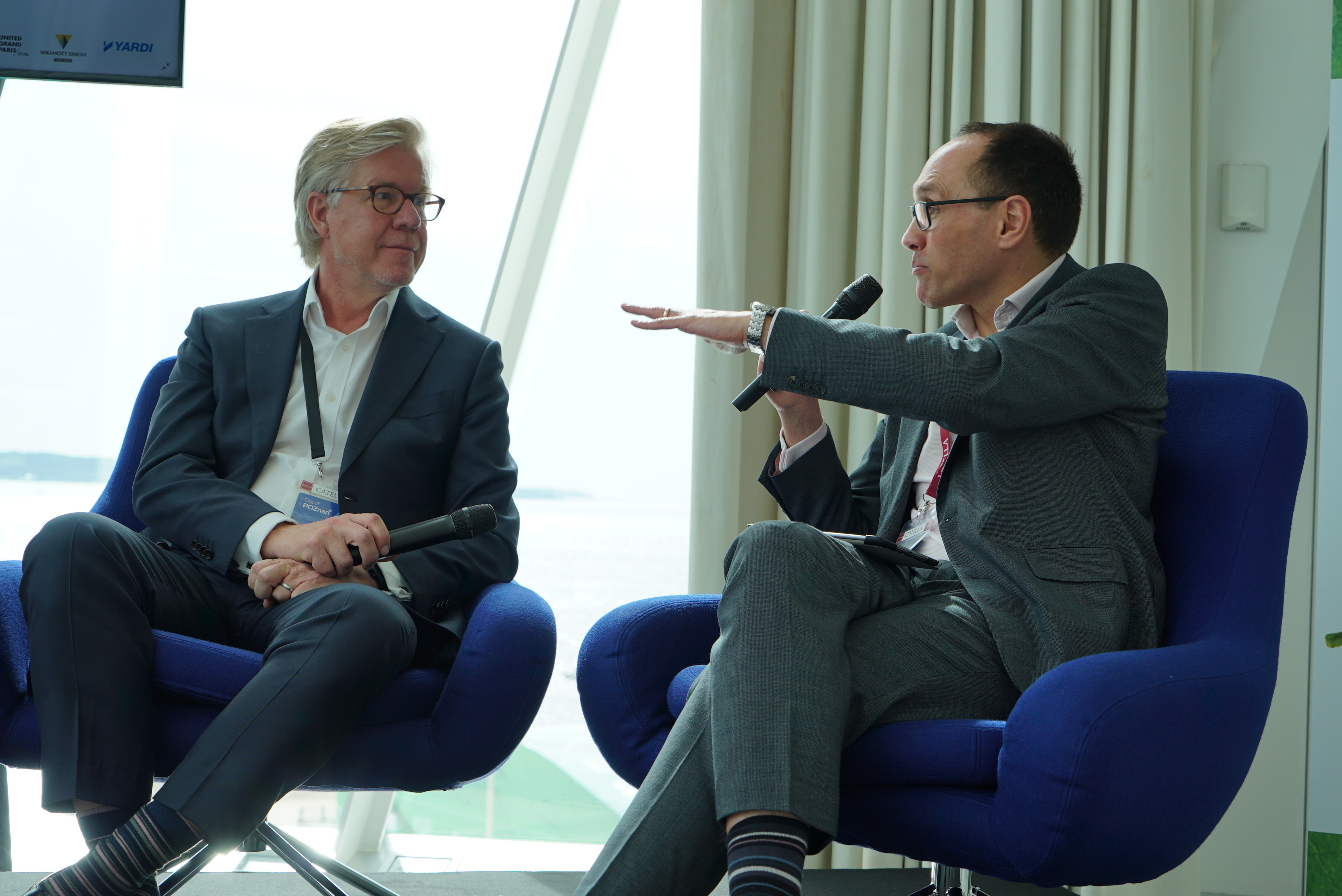
“Forward-thinking occupiers know that quality of space matters, and they are prepared to pay for it,” said Stephanie Crombie, head of sustainability at architecture practice Morrow + Lorraine on EG’s Future of Offices panel at MIPIM.
“You need an amazing space that will give people FOMO if they aren’t there,” she added. “Our clients are saying they want to make their offices better and they want amazing spaces. We are doing a lot more fit-outs that are less office-looking and more hotel-looking.”
Bradley Baker, chief executive of developer CO-RE London, added: “You don’t want a sterile environment. You want something that will reflect your brand. We have around 50-70% of employees back in our office and that is entirely down to individual choice.
“There is no official policy, and I think people have wanted to come back because we have an interesting building.”
Difficult balance
The pressure is on not just to lure people back into offices, but to do so in a way that protects talent retention. For many businesses, there is a real fear that prescribing a strict return-to-work policy could see staff leave for firms offering a less rigid work environment as the war for talent reaches new heights.
Melanie Williams, head of global real estate at law firm DWF, said: “We are finding that the war for talent is just so tough in professional services, so we have to be very understanding. We have lost a lot of loyalty because people have been at home for so long they have lost that team spirit. It is a very complicated issue with a lot of psychology involved.
“We have to be understanding. We also have another challenge, which is that we are accountable to our shareholders and ESG is a very important part of our business. So we can’t be seen to be saying to people, come in and burn fumes in your car, park in the car park, burn fumes in the office and then burn fumes when you go back home again.
“So we are in this very difficult balance – of trying to balance all of this with bringing back team spirit and morale, and getting people back around their colleagues to learn.”
James Lowery, UK and Europe chief executive at Essensys, added: “Life and work have become so intertwined over the past two years. To unpick that could be detrimental, especially when the war for talent is so tough. Maintaining and retaining that talent should be a top priority.”
Luring talent
And so the debate swings back to the other ways employees could be lured back to the workplace, with the power of inspiring office design and development topping the list.
Morrow + Lorraine’s Crombie said: “If it is the right space then, after so long at home, people have really started to see the value of the office as a physical manifestation of the company culture and identity. There is a real opportunity to make the most of this.“
Revisiting the ESG point, DWF’s Williams emphasised again how key it will be to create sustainable, as well as attractive and engaging, office buildings to lure and keep talent. “Lots of people, especially younger people, will just turn around and say ‘I don’t want to work in a dirty building, I won’t do it’. But it’s not just them, it’s our clients, too.”
Speaking of clients, occupier behaviour and trends cannot be overlooked in this dissuasion. They are, after all, the ultimate market drivers.
“The big question is whether occupiers are looking for the same volume of space they have had traditionally when they renew their leases,” said Neal Gemassmer, Yardi’s international vice president. “The other question is, are they looking for the same duration?
“What we are seeing with global renewals at the moment is that the volume of space is coming down and the duration of the lease is coming down. It’s all part of the big social experiment as businesses explore how much people actually need to be in the office.
“But that is the situation. On a global level the volume of space required by corporate occupiers is coming down, and landlords need to be aware of that.”
The trick is to find or create space that “offers flexibility in times of uncertainty”, he added.
Still positive
But while occupiers might be looking for a reduction in space for now, CO-RE’s Baker is convinced this could change over time. He said that a CO-RE survey of 125 large corporate occupiers conducted in June 2021 revealed that, while all of those surveyed said that the majority of people would be working from home in June of that year, within three years they predict we will be back to nearly full occupancy – albeit using a hybrid model.
“There is a tendency to have knee-Jerk reactions to things,” he said. “When the pandemic hit, suddenly the office was dead. In 2021 there were lots of very serious players saying that the office was no more and that there would be no need for an HQ. One year later, and it’s a different ball game.
“When you really sit down and look at the situation rationally, it doesn’t go to those extremes. And the vast majority of occupiers that we speak to are still very positive.”
The panel
Bradley Baker, chief executive, CO-RE London
Stephanie Crombie, head of sustainability, Morrow + Lorraine
Neal Gemassmer, vice president, Yardi
James Lowery, UK and Europe chief executive, Essensys
Melanie Williams, head of global real estate, DWF