


 Voyager Suite
 Virtuoso
 Investment Suite
 RentCafe Suite
 REACH by RentCafe
 CommercialCafe Suite
 Elevate Suite
 Procure to Pay Suite
 Aspire
 Yardi Kube Suite
 Yardi Corom












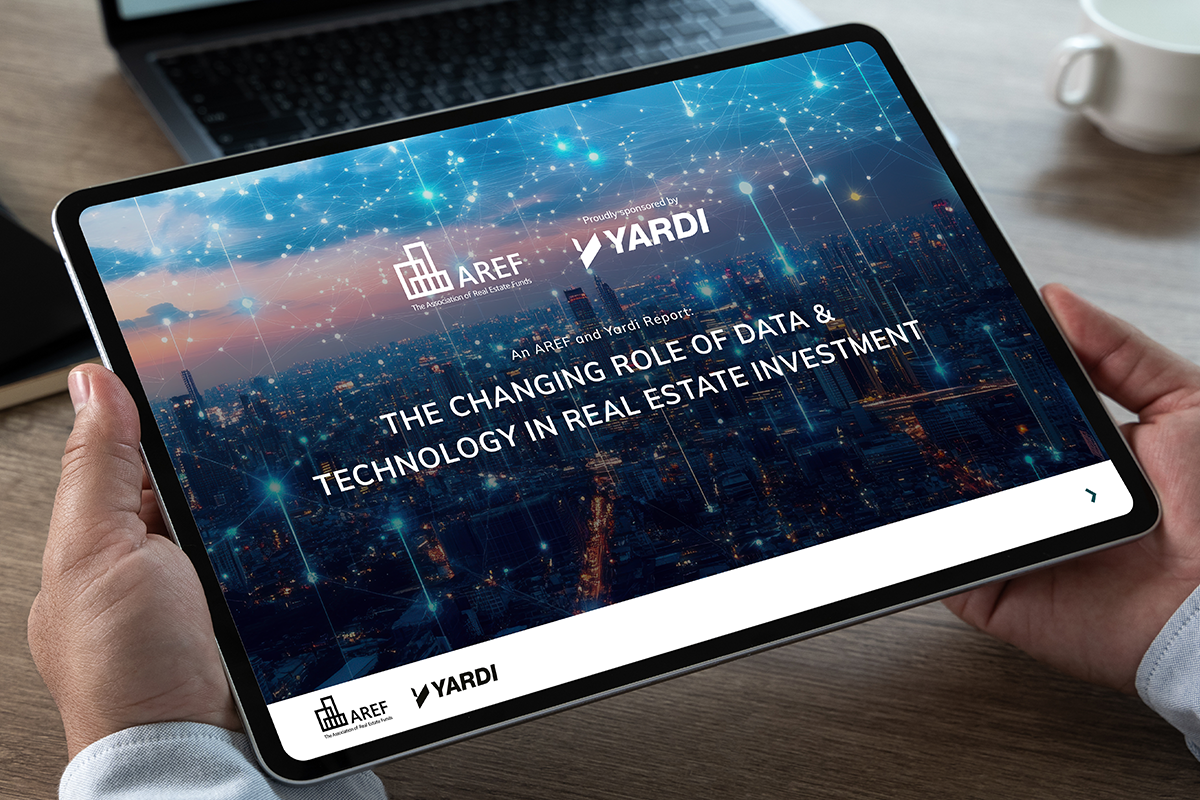
The real estate funds industry is in a significant transition. Market repricing, rising operational costs, tightening regulation, and growing ESG expectations are changing how fund managers operate, allocate capital and communicate with investors. As these pressures intensify, data and real estate investment technology are increasingly central to how firms respond and compete.
To explore how fund managers are responding, Yardi and the Association of Real Estate Funds (AREF) conducted in-depth interviews with senior leaders from 10 UK-based real estate investment firms, representing more than 40% of AREF’s fund membership. This qualitative research was complemented by a targeted survey of executive and senior management respondents from a further 14 fund and investment management firms.
The findings offer a robust and representative snapshot of how the sector is approaching data, technology and digital transformation today, with deeper insights available in the full report.
Key Findings
The research highlights a sector that is actively transitioning toward more data-driven, technology-enabled operating models, but with uneven progress across firms.
Technology is increasingly viewed as a strategic enabler
Around 80% of interviewed firms describe their approach to real estate investment technology as proactive or forward-thinking, rather than purely support-oriented. However, only 28% consider themselves “ahead of the curve,” underscoring a gap between ambition and digital maturity.
Data fragmentation remains a major barrier to efficiency
Despite growing investment in technology, most firms continue to rely heavily on spreadsheets and siloed systems. More than 60% of participants identified operational efficiency as the primary driver of their technology strategy, while over 50% cited poor data quality, fragmentation and system integration complexity as their biggest challenges.
“The only reason we exist is to deliver investment returns for our clients, and technology has to serve that goal. If you don’t get the data right – centralised, accurate and accessible – you can’t make decisions quickly, reduce costs or improve performance.”
Stephen Walker, Head of AI & Technology – Real Estate and Alternative Investments, Aberdeen
Ongoing Themes in Data & Technology
The research highlights several clear themes shaping the future of real estate fund management:
- Fund management technology is now a strategic priority, not just an operational tool, with most firms taking a proactive approach to digitalisation.
- Data fragmentation remains a major challenge, with heavy reliance on spreadsheets and siloed systems limiting efficiency and scalability.
- AI for real estate investment is viewed as an efficiency multiplier, helping automate manual tasks while supporting, not replacing, human decision-making.
- Investor reporting expectations are accelerating, with demand shifting from quarterly updates to near-real-time, transparent, and tailored reporting.
Overall, the findings point to a sector-wide transition in how investment management teams approach data, technology and reporting. Watch the webinar to see the discussion or download the report to see the full story.
Strategies for AI Adoption
- Determine a clear and sensible roadmap with solid, structured data.
- Utilise a platform that is rigorous, secure and user-friendly.
- Provide expertise both within the company and from external resources.
Want to learn more? Reach out to our team to hear more about Yardi’s AI strategy and vision: [email protected]
AI is only as good as the data underneath it. Yardi connects your portfolio, properties, and teams into one source of truth – so AI can finally work for commercial real estate.
One platform. One dataset. Smarter decisions.